His works were shaped through his nursing background and childhood memories in a family junkyard.
Standing before a Joshua Limon Palisoc sculpture can feel both unsettling and strangely spiritual at the same time.
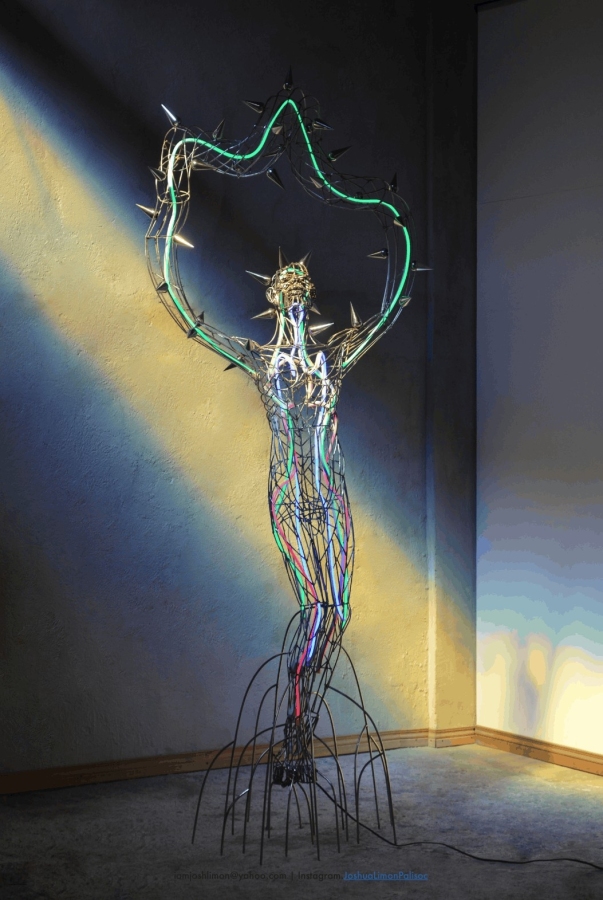
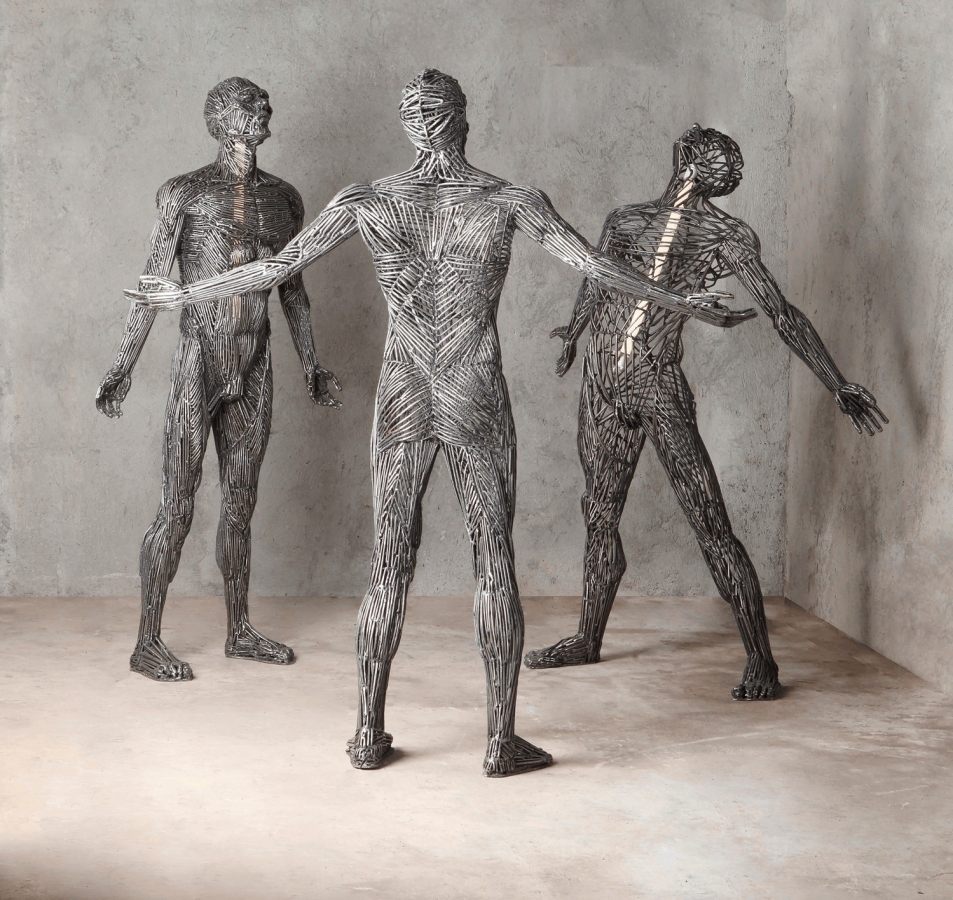
At first glance, you see bodies made from welded metal rods — fragile human forms twisted into poses of surrender, prayer, grief, rebirth, or transcendence. Look longer, and the works begin to feel almost alive. Light pulses from inside some of them. Others appear wounded open, exposing glowing interiors like souls escaping flesh. There is beauty in them, but also discomfort. They force viewers to confront mortality, identity, shame, healing, and the invisible weight of simply being human.
And perhaps that is precisely the point.
For Palisoc, the award-winning Filipino visual artist from Nueva Ecija, art is not merely about sculpture. It is about excavation — of the self, of memory, of spirituality, and of humanity’s fractured relationship with one another and the world around them.

In an exclusive interview with radar.ph, Palisoc explained that his fascination with the human body has always gone beyond anatomy.
“Curiosity has always drawn me toward exploring the body — its grand design, the physical, the sensual, and the spiritual,” he shared. “At the same time, there is something disenchanting in realizing that beneath our constructs of status, morality, and identity, we are all flesh and bone.”
That fascination began early.
Growing up in Guimba, Nueva Ecija, Palisoc spent much of his childhood inside his family’s junkyard business, surrounded by discarded metal, wood scraps, bottles, and debris. While other children saw waste, he saw possibility. He drew figures obsessively, cut them from paper, and imagined what objects could become through his hands.
But his upbringing also shaped the emotional contradictions embedded in his works today. Raised in a conservative Catholic environment where emotions, sexuality, and questioning were often suppressed, Palisoc developed what he describes as a lifelong “push and pull between logic and instinct, control and spontaneity.”
Before fully embracing art, he first studied nursing at the University of Santo Tomas, where exposure to illness and death deepened his awareness of life’s fleeting nature. Eventually, he followed his instinct and pursued fine arts at the University of the Philippines Diliman, graduating Magna Cum Laude in 2016.
Swipe or click arrows to see photos
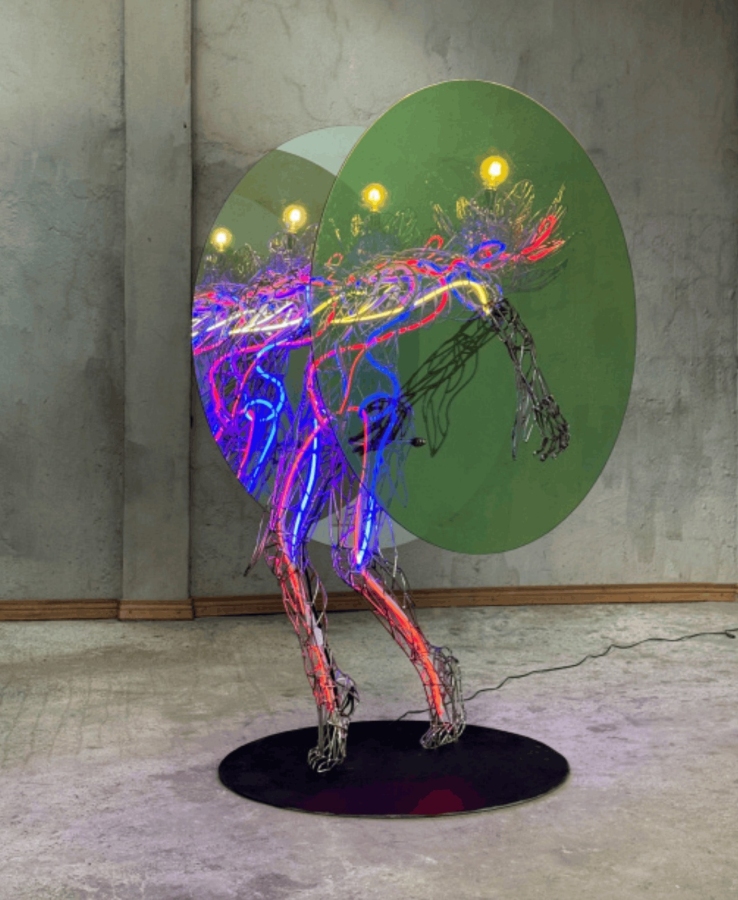
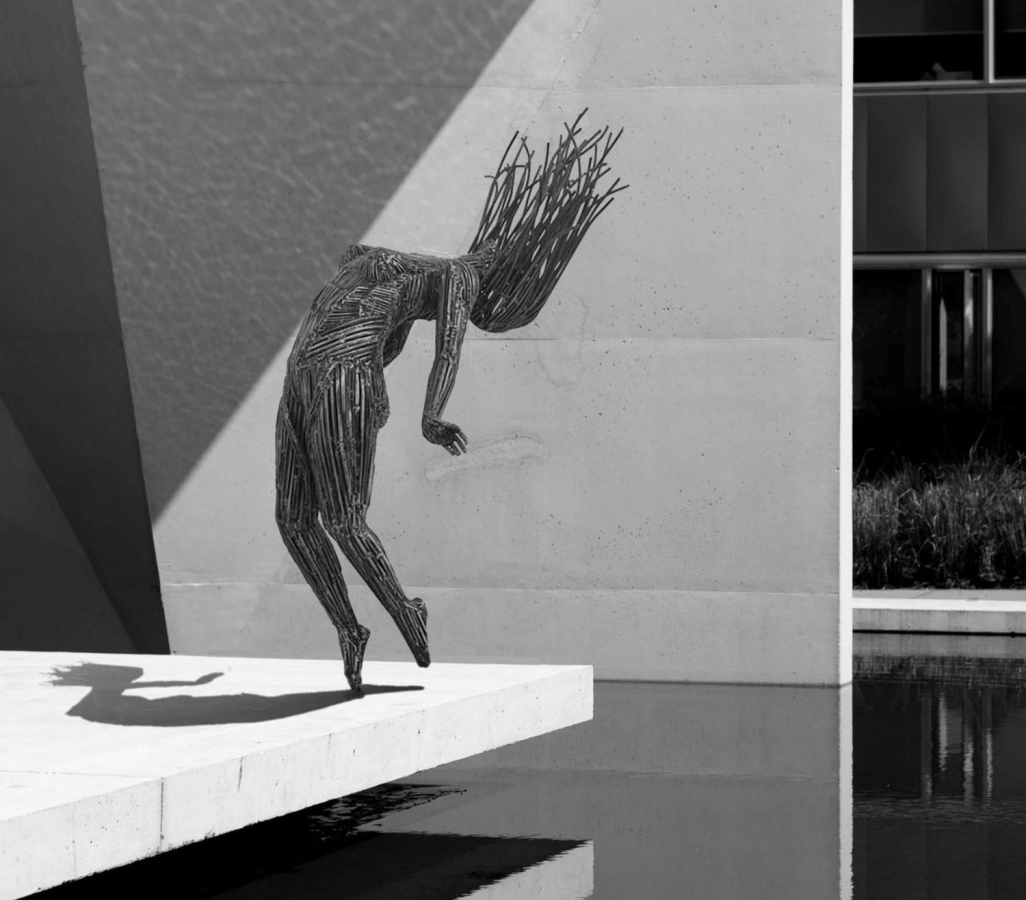
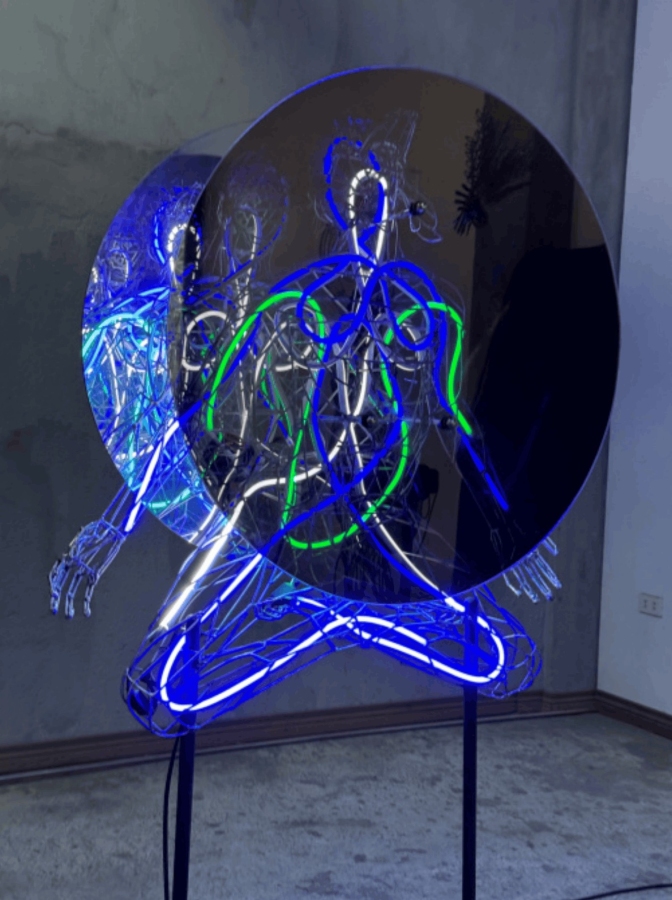
Since then, Palisoc has steadily become one of the country’s most compelling contemporary sculptors.
His works have been exhibited at Pinto Art Museum, Ayala Museum, Art Fair Philippines, Altro Mondo, Eskinita Gallery, and international exhibitions in Berlin, Florence, and Italy. He was also part of Eskinita Gallery’s prestigious TUKLAS Artist Discovery Program under the mentorship of the late sculptor Riel Hilario alongside renowned artists Renato Habulan and Alfredo Esquillo.
His 2020 solo exhibition “Ephemeral Vessels,” staged during the height of the pandemic, earned international attention after being featured by publications such as My Modern Met and Colossal. Meanwhile, his work “Sisidlan ng Kalawakan” eventually became part of Pinto Art Museum’s permanent collection.
Yet despite the growing recognition, Palisoc’s process remains deeply intimate and almost ritualistic.
“Repetition, for me, becomes a form of prayer, meditation, and veneration,” he told radar.ph. “Through laborious and repetitive processes, I enter a space of reflection where the act of making becomes devotional.”
That devotion can be felt in every welded strand of steel.
The artist describes his process as a form of “sympathetic magic,” where the act of cutting, bending, welding, and assembling allows objects to absorb memory, intention, and presence. His sculptures — often illuminated from within — become vessels not only of identity, but of collective consciousness itself.
“I am exploring identity beyond the personal, toward something collective — humanity itself,” he said. “I reflect on how we have become separated from the land, from nature, and from one another, while searching for ways we might return.”
That search has become increasingly visible in his more recent exhibitions such as “Dambana ng Kapwa,” where towering diwata-inspired installations explored precolonial spirituality, ecology, healing, and Filipino interconnectedness.
Even his choice of medium carries symbolic weight.
“Metal, with its permanence and endurance, brings me back to why our ancestors created sculptures in the first place — to become sentinels that mark something important: a belief, a cultural value, a memory, or a vision for the future.”
In many ways, Joshua Limon Palisoc’s sculptures feel exactly like that: relics from both the past and the future. They are haunting yet tender, heavy yet vulnerable — mirrors of a humanity still trying to understand itself.
And perhaps that lingering feeling viewers experience while standing before his works is not discomfort after all.
Perhaps it is recognition.
READ:
Recoloring PH art mainstream with fruity and fluid hues of Idwardo
JT Gonzales
February 20, 2026
Lawton Ladao turns childhood memories into vivid canvases
radar Lifestyle
May 3, 2026
Beyond the bear aesthetic: DJ Amago explores intimacy and connection
JT Gonzales
May 25, 2026