Scientists challenge the retirement process and propose recycling worn-out flags instead.
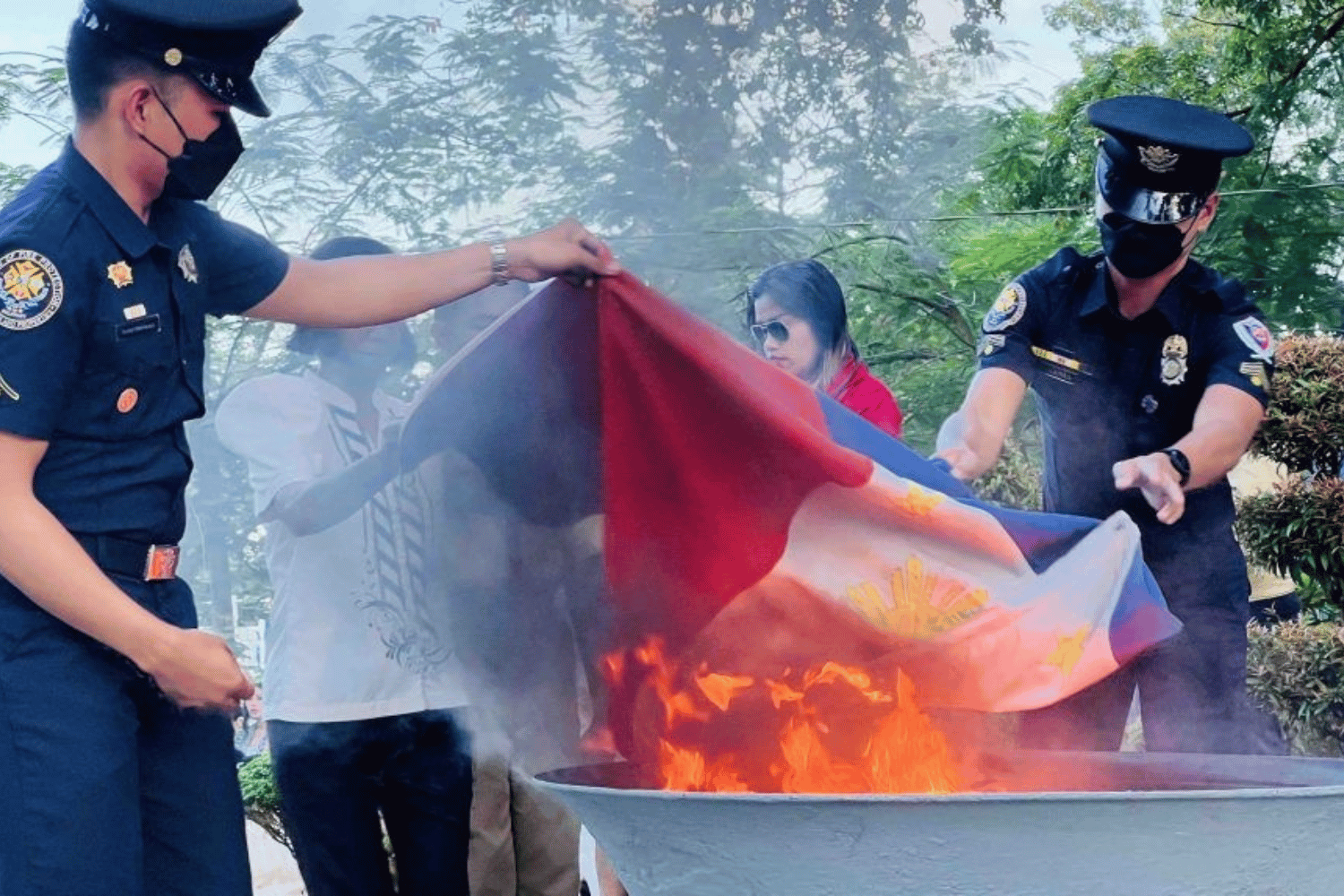
In the lead-up to Independence Day, thousands of worn-out, faded, or damaged Philippine flags from government offices and public schools were burned as part of the traditional, respectful retirement of the national symbol.
However, the Department of Science and Technology’s Philippine Textile Research Institute (DOST-PTRI) seeks to change this, proposing that old flags be recycled and repurposed instead.
Under the current Flag and Heraldic Code, damaged or unserviceable Philippine flags must be “solemnly burned” to prevent misuse or desecration.
But textile researchers argue that modern flags are often made from synthetic materials such as nylon, which can release greenhouse gases and other pollutants when burned. Even after disposal, residual synthetic fibers may persist in the environment.
Instead of ending a flag’s service life in flames, DOST-PTRI is proposing a certified recycling process that would recover textile fibers while ensuring the flag can no longer be recognized in its original form.
Through fiber recovery techniques, worn-out flags could be shredded, processed, and converted into new textile materials.
Researchers said the recovered fibers could potentially find new life in government-issued items such as ceremonial lanyards, medal ribbons, and other official textiles. In some cases, recycled fibers may even be blended with new materials for future fabric production.
The proposal is part of efforts to modernize standards surrounding the Philippine flag, including updates to manufacturing specifications and quality certification systems.
READ: