The new collection brings traditional Filipino craft firmly into the modern era.
A jeepney signboard becomes a bag. Repurposed denim meets traditional Filipino textile patterns. And one of the country’s best-known handicraft stores is finding new ways to make Filipino design feel unmistakably contemporary.
Tesoro’s Philippine Handicrafts is putting the spotlight on sustainable fashion through pieces that combine reused materials, traditional craft and images drawn from everyday Filipino life.
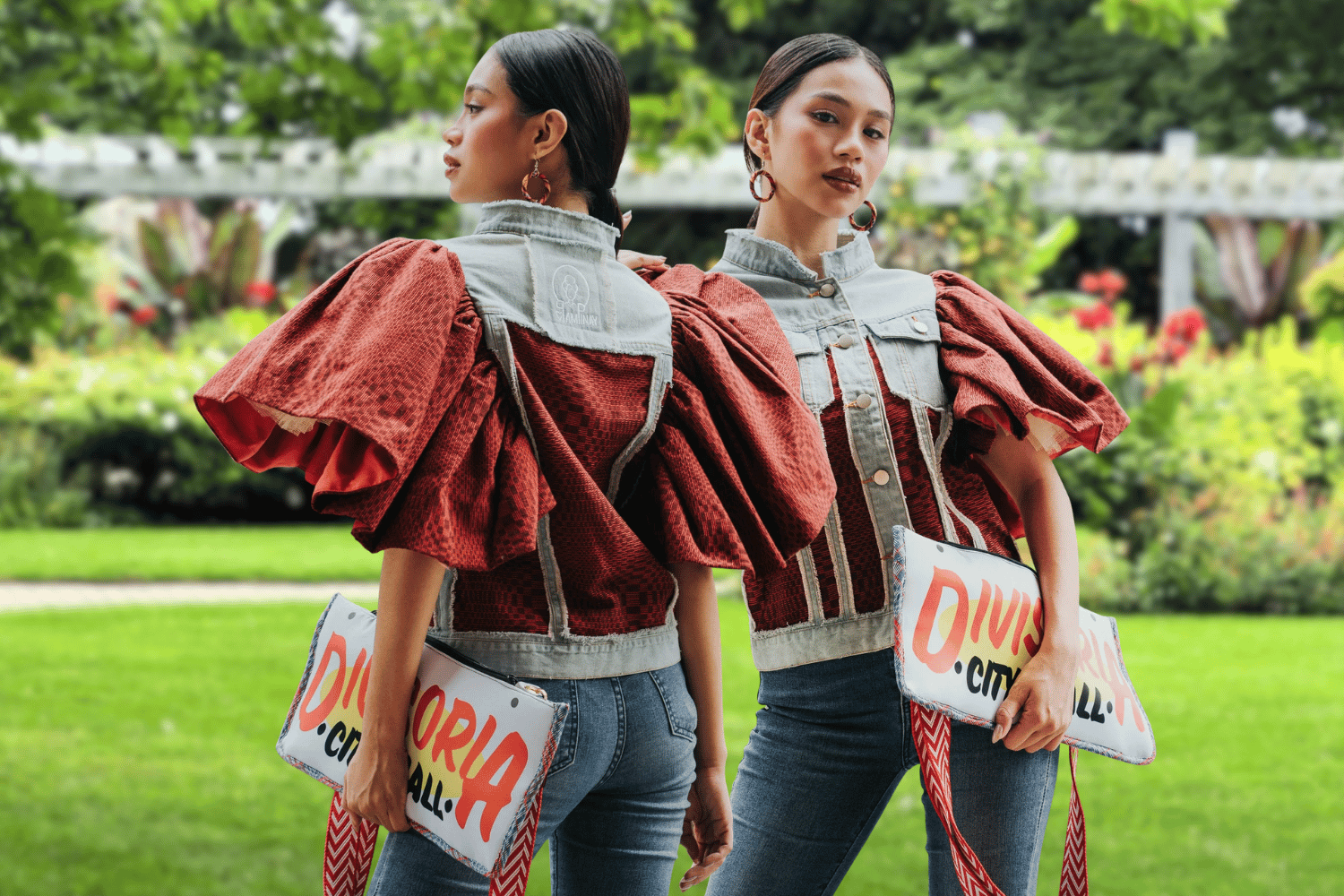
In a recent social media post, Tesoro’s showcased pieces including the Mariposa Denim Binakol Bolero and the Pasada Bag, describing them as proof that “giving materials a new life can come with plenty of personality.”
The Mariposa Denim Binakol Bolero, currently listed at ₱15,999, transforms denim into a dramatic Filipiniana-inspired silhouette. Its structured bodice and oversized butterfly sleeves are paired with contrasting woven textile details, creating a piece that bridges traditional Filipino aesthetics and contemporary streetwear.
Meanwhile, the Pasada Bag turns one of the most recognizable sights on Philippine streets into fashion: the hand-painted route and destination signs associated with jeepneys.
One version prominently carries the words “DIVISORIA CITY HALL,” transforming something normally spotted behind a jeepney windshield into a statement accessory. The campaign pairs it with denim and the Mariposa bolero, creating a look that is unmistakably Filipino without relying solely on conventional formalwear.
The pieces are being promoted by Tesoro’s with Pampinay, whose branding appears alongside Tesoro’s in the campaign images.
The sustainability angle also gives the collection particular relevance at a time when the fashion industry is confronting the enormous amount of clothing and textile waste generated by constant production and consumption.
Instead of treating used materials as something disposable, the pieces demonstrate how textiles can be reworked and given another purpose—and how sustainability does not necessarily have to look plain or utilitarian.
There is also history behind the store carrying them.
Tesoro’s Philippine Handicrafts was established in 1945 by Salud and Nestor Tesoro and grew into one of the country’s most recognizable destinations for Philippine-made handicrafts, apparel and souvenirs.
For decades, the company has helped put Filipino craftsmanship before both local shoppers and foreign visitors, carrying products that draw from weaving, embroidery, woodcraft and other traditional practices.
The latest pieces push that idea into decidedly contemporary territory.
The Mariposa bolero takes denim—a material worn around the world—and gives it a distinctly Filipino silhouette. The Pasada Bag goes even further by elevating an ordinary piece of Philippine street culture into something meant to be carried as fashion.
It is sustainability with a sense of humor, nostalgia and identity.
Because sometimes, giving something a second life does not mean hiding where it came from.
Sometimes, you put “DIVISORIA” across it in giant letters and carry it proudly.
READ: