DTI rules prohibit merchants from adding surcharges for card payments, but some fees are allowed.
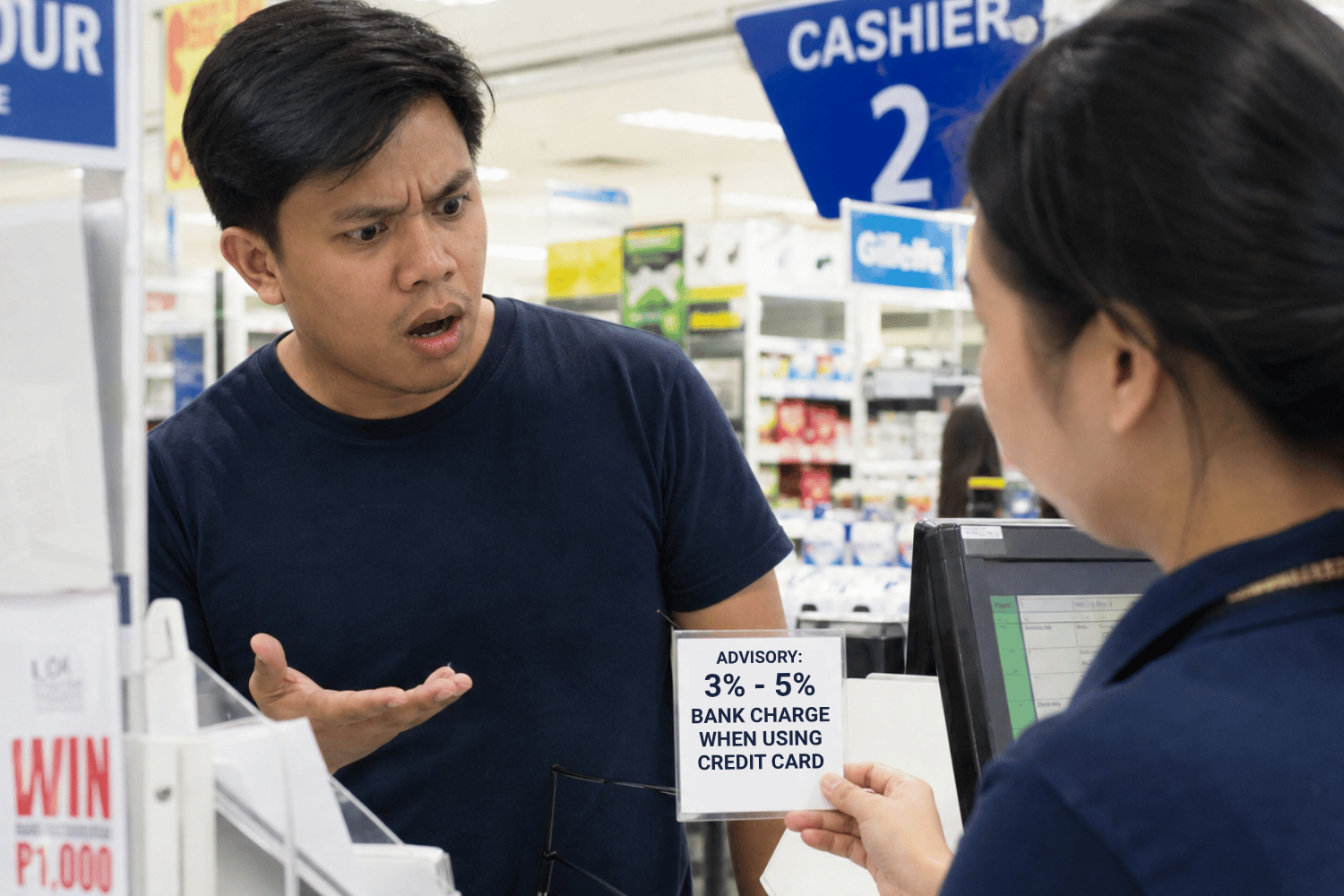
A 3% or 5% credit card surcharge can turn an ordinary purchase into a more expensive one at the checkout counter. But if a merchant is adding that amount simply because you chose to pay by card, the extra charge may violate consumer protection rules.
Under DTI Administrative Order No. 21-03, sellers of consumer products and services cannot impose an additional charge on customers simply because they choose to pay using a credit, debit or prepaid card, QR code, electronic fund transfer or another available digital payment method.
In other words, a business generally cannot advertise an item at ₱10,000, then tell you at checkout that it will cost ₱10,500 because you pulled out your credit card.
The reason a merchant gives for the extra charge does not necessarily change the rule. Calling it a “bank charge,” “processing fee” or “terminal fee” does not automatically make it acceptable if the amount is being added to the selling price because of the payment method.
That is important in a country where cards and other digital payments have become an increasingly ordinary way to pay for everything from groceries and meals to appliances and other big-ticket purchases. A surcharge that looks small on one transaction can add up quickly for consumers who regularly use their cards.
It also puts merchants in a difficult position because accepting card payments comes with costs. Banks, card networks and payment providers charge businesses for processing transactions, so a merchant still has to account for that expense even when it cannot simply add a card surcharge at checkout.
There is a distinction, however, between a prohibited surcharge and a legitimate discount.
Exemptions to the rule
A business can structure its pricing around a cash discount, provided the selling price is properly presented. There is a difference between an item carrying a ₱10,000 selling price with a ₱500 discount for cash payment and an item advertised at ₱9,500 that suddenly costs ₱10,000 when the customer uses a card.
That fine line can be easy for consumers to miss, particularly when the additional amount only appears after they have already decided to buy.
There are also transactions where separate rules apply.
Government payments, for instance, can carry convenience fees for electronic payments under a separate DTI-Department of Finance framework. That is why a traveler paying the ₱1,620 travel tax at the airport can end up paying ₱1,640.51 by credit card or e-wallet, with the additional ₱20.51 representing a 1.266% merchant discount rate listed in TIEZA’s 2026 Citizen’s Charter.
The airport example is a useful reminder that not every additional fee attached to a digital payment is automatically illegal. Government collections operate under a different framework, and the rules allow certain electronic-payment convenience fees.
For ordinary purchases, however, consumers have grounds to question a separate charge simply because they used a card.
As pointed out by Joram Bonus in a recent social media post, consumers who encounter such a surcharge can raise the issue with the merchant and, if the charge is not removed, report the practice to the DTI.
That conversation, however, does not have to turn into a confrontation at the counter. The cashier is often simply following the payment policy set by the business, so a polite question about the charge can go a long way before taking the matter further.
After all, paying by credit card should not mean paying more for the same product simply because the money changes hands electronically. A customer may have chosen a card for convenience, security, rewards or simply because that is how they prefer to pay. In some cases, it may even be the only practical payment option available at that moment.
And the convenience does not belong to the customer alone. A cashless transaction also saves a business from handling bills and coins, finding change, counting cash and managing the risks that come with keeping money on the premises. It can make checkout faster and reduce some of the friction that comes with cash transactions.
So if convenience is the reason for the charge, perhaps it is worth remembering that the convenience works both ways. A consumer should not have to pay extra simply for choosing a payment method that also makes doing business easier.
READ:
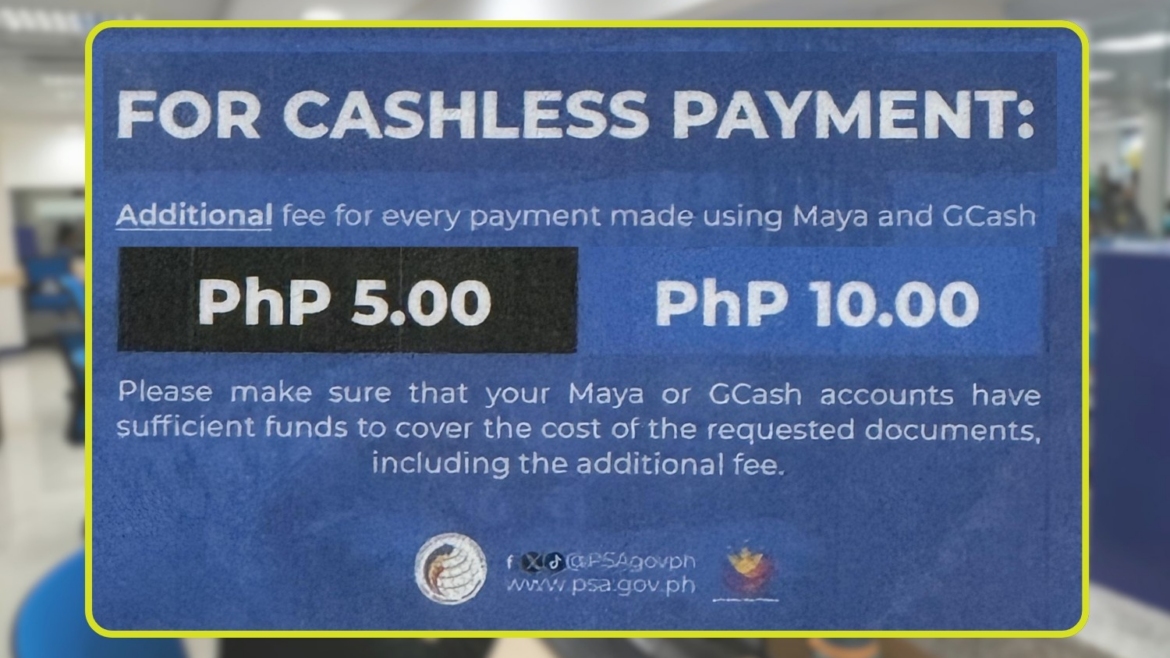
PSA office adds fees for in-person cashless payments
Justin Aquino
July 23, 2026
BSP nudges banks, e-wallets that have yet to lower or remove transfer fees
radar Business
July 21, 2026

FACT CHECK: Did rage bait grocery senior discount post lie by omission?
radar Business
August 3, 2026