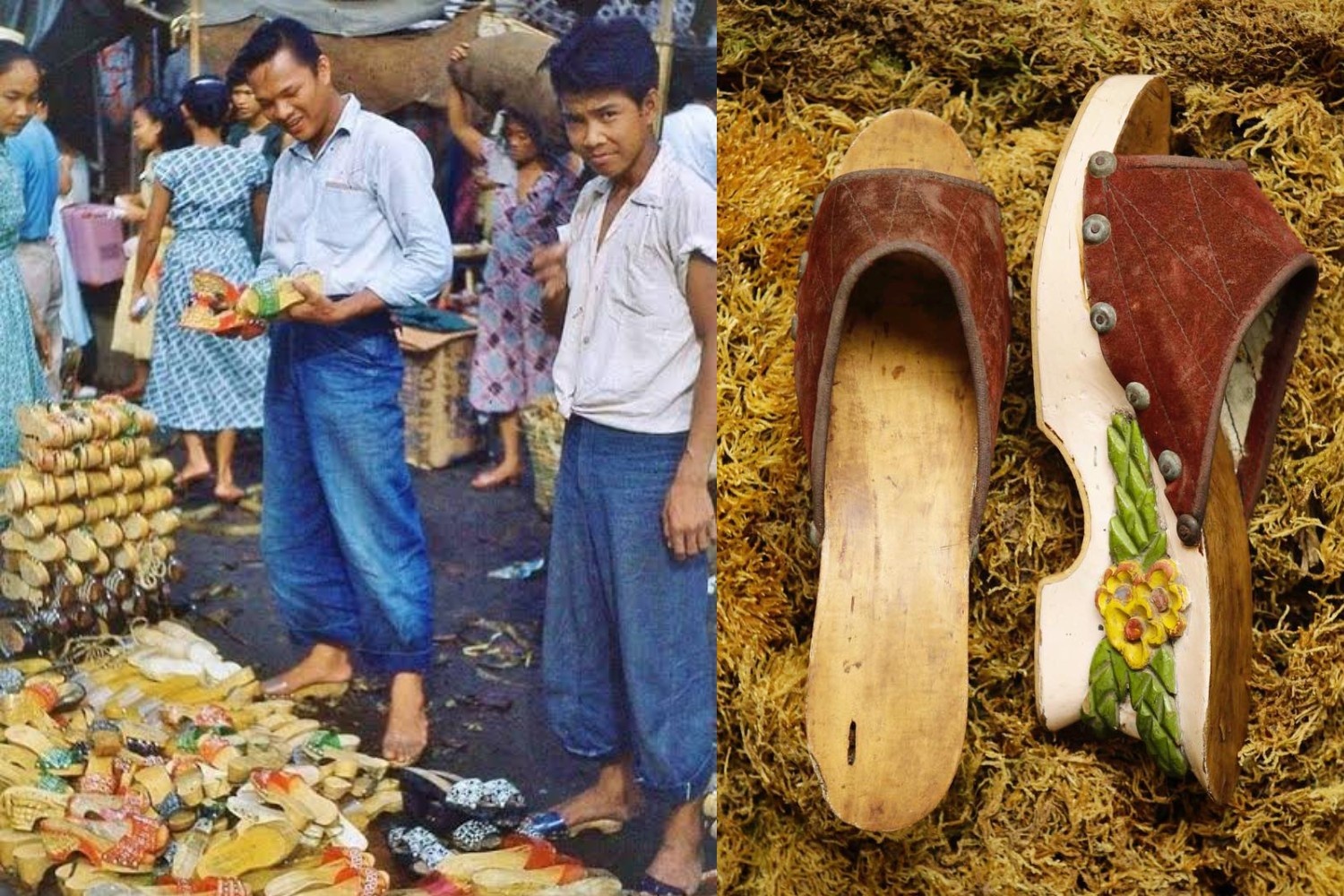
Steps through history: Rediscovering the bakya—from the 1950s golden age in Paete to its 2026 reclamation as a symbol of Filipino street style.
If you think “going out in slippers” is peak casual, wait till you hear this: generations before Gen Z discovered slides and Crocs, Filipinos were already rocking wooden clogs that literally announced their arrival with every step. The bakya wasn’t just footwear—it was everyday life, street style, and survival gear rolled into one. And while it may sound old-school now, its story hits surprisingly close to how trends rise, fall, and get reclaimed today.
The bakya, derived from the Hokkien word ba̍k-kiah (木屐), points to centuries of cultural exchange between Filipino and Chinese communities. Crafted from light local woods like santol, laniti, or langka, each pair featured a thick wooden sole and a strap—often made of rattan, cloth, or later, rubber—secured with tiny nails called clavitos.
Its appeal was simple: durability and practicality. In an era when roads were unpaved and flooding was common, bakya allowed wearers to walk through mud without ruining more delicate footwear. It became the great equalizer—worn by farmers, vendors, children, and even townsfolk heading to market.
Between the 1930s and 1950s, the bakya industry thrived, especially in Paete, Laguna, a town renowned for its woodcarving. Artisans elevated the humble clog into something decorative, carving floral and geometric patterns into the sides, turning everyday footwear into functional art.
Yes, men wore them too
A common misconception today is that bakya was primarily for women. Historical photos tell a different story. The footwear was largely unisex, with men, women, and children alike wearing it as part of daily life. In many rural communities, it wasn’t unusual to see entire families stepping out in matching wooden clogs—function over fashion, long before the idea of gendered footwear took hold.
From everyday essential to “bakya crowd”
As modernization swept through the Philippines, the bakya’s dominance began to fade. The arrival of cheap, mass-produced rubber slippers—lightweight, quiet, and more comfortable—slowly pushed wooden clogs out of daily use.
But the shift wasn’t just practical. It became cultural.
The word “bakya” itself evolved into slang—a shorthand for anything considered lowbrow, unsophisticated, or “pang-masa.” Films, TV shows, and even audiences were labeled “bakya” to imply a lack of refinement. What was once a symbol of everyday Filipino life became, unfairly, a marker of class divides.
In many ways, the bakya didn’t just disappear from streets—it was pushed out of status.
A cultural comeback
Today, the bakya is finding new life—not as daily footwear but as a symbol of heritage.
It is now a staple in cultural presentations, worn with Filipiniana attire and featured in traditional dances like the Bakya Dance. Designers and cultural advocates are also reintroducing it in modern fashion, blending traditional craftsmanship with contemporary aesthetics.
More importantly, there is a growing movement to reclaim the word “bakya”—not as an insult, but as a badge of identity. A reminder that Filipino culture, no matter how humble its origins, carries its own artistry and history.
More than just wooden clogs
The bakya’s journey—from necessity to stigma, and now to cultural pride—mirrors the story of many Filipino trends. What was once everyday becomes “uncool,” only to be rediscovered and rebranded by a new generation.
And if Gen Z has proven anything, it’s this: nothing stays outdated forever—especially when it has a story worth bringing back.
Once a practical necessity and later a cultural slur, the bakya (wooden clog) is being reclaimed by a new generation of designers and advocates as a sustainable symbol of Filipino heritage.
READ: