This elusive Palawan fruit is worth hunting down for its unforgettable sweetness.
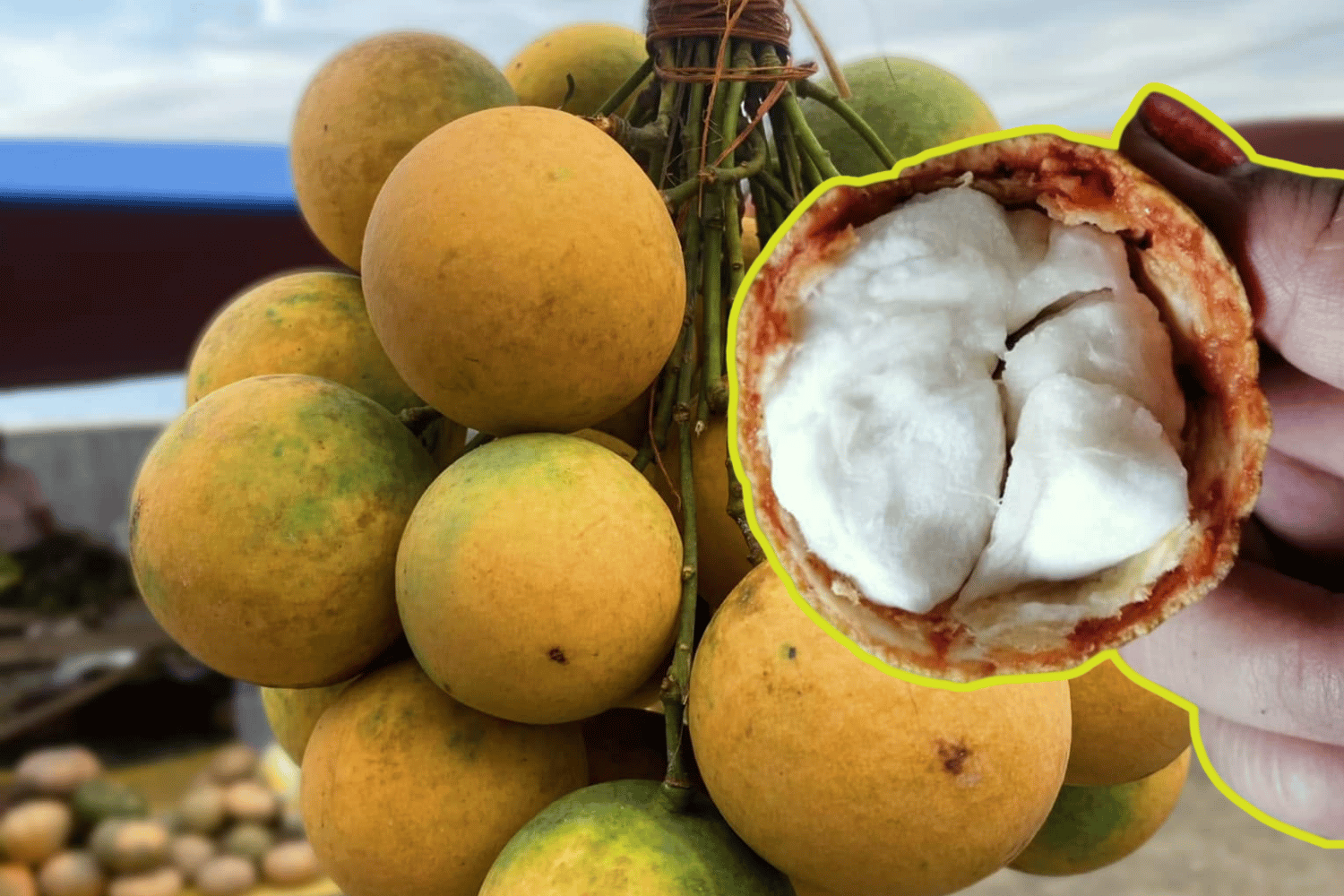
You spot what looks like a bright yellow ball sitting on a market stall in southern Palawan. It doesn’t have the spikes of a marang or the familiar shape of a santol. Crack it open with your hands, and inside is a creamy white flesh that locals have quietly enjoyed for generations.
Meet mararing—one of the Philippines’ rarest native fruits, and it’s finally back in season.
From August to October, mararing ripens in the rainforests of Palawan before making its brief appearance in municipal markets, where lucky visitors and locals get only a few weeks to savor what many describe as one of the island’s sweetest natural treasures.
Despite the similar-sounding name, mararing is not the same as the more familiar marang grown in Mindanao.
Scientifically known as Xanthophyllum amoenum, mararing is a completely different species native to the rainforests of Palawan, as well as parts of Malaysian Borneo. It grows on mid-canopy forest trees, making it far less common than many commercial tropical fruits.
Its appearance is deceptively simple.
The fruit starts out green before turning bright yellow as it ripens. Beneath its thick shell lies a soft, creamy pulp wrapped around several seeds. Unlike jackfruit or durian, the brittle rind can be cracked open by hand without the need for knives or special tools.
Its flavor is what keeps people searching for it every year.
The flesh is intensely sweet with a smooth, custard-like texture that melts in the mouth. Some compare it to longan because of its pure sweetness, while others say it resembles an exceptionally sweet santol with a creamier consistency.
Because mararing grows wild rather than in commercial orchards, it remains one of the country’s most underappreciated native fruits.
Foraging communities harvest the fruit from Palawan’s forests before bringing it to local markets such as those in Aborlan and other municipalities in southern Palawan. It also occasionally appears during agricultural fairs and fruit festivals that celebrate the province’s remarkable biodiversity.
Its limited availability is part of its charm.
Outside its short harvest season, mararing is almost impossible to find, making it a seasonal delicacy rather than an everyday snack.
Its obscurity also reflects a larger story about the Philippines’ incredible but often overlooked food heritage.
While imported fruits and commercially grown varieties dominate supermarket shelves, many endemic fruits like mararing continue to thrive quietly in the country’s forests, known mostly to local communities that have preserved knowledge of them for generations.
For travelers planning a trip to Palawan over the next few months, tasting mararing offers more than just a new flavor.
It is an opportunity to experience a piece of the island’s natural heritage—one that cannot be replicated anywhere else and one that reminds Filipinos that some of the country’s greatest culinary discoveries are still hidden in its forests.
READ: