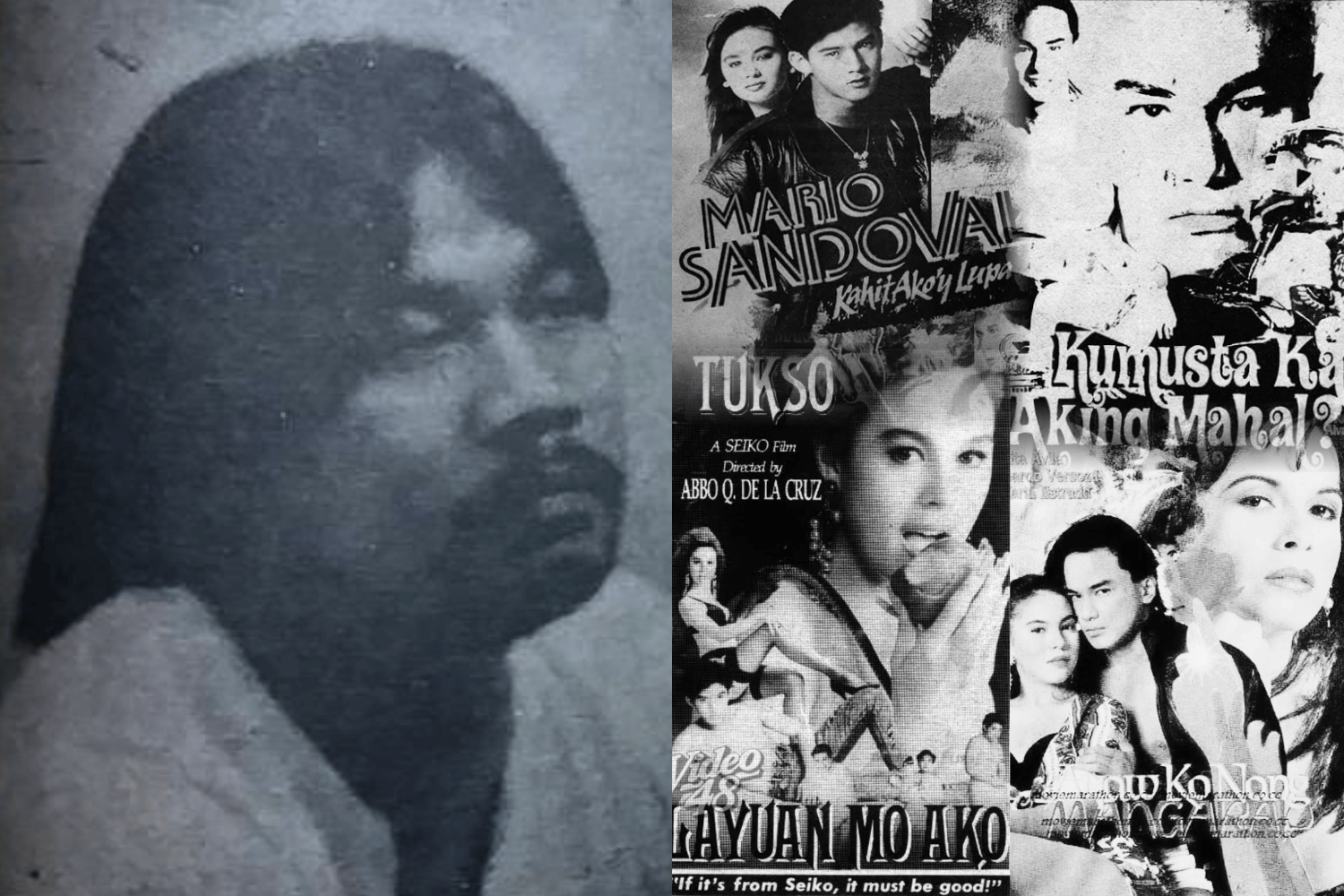
Using the name Rico Mambo allowed filmmaker Abbo Dela Cruz to enter two forms of film genres.
Moviegoers in the 1990s knew the name Rico Mambo.
It appeared on posters of provocative films, often starring Rosanna Roces and other screen sirens at the height of the country’s sexy movie boom. For many Filipinos, Rico Mambo became synonymous with the era of “TF” or titillating films that dominated local cinemas.
But Rico Mambo was never actually a real person.
The famous name was the pseudonym of filmmaker Abbo Dela Cruz, an accomplished Filipino director, writer, and actor whose career extended far beyond the sexy film genre. Throughout the late 1980s and 1990s, Dela Cruz directed a wide range of commercial dramas, romances, thrillers, and action films, including “Mario Sandoval: Kahit Ako’y Lupa,” “Kumusta Ka, Aking Mahal,” “Ayaw Ko ng Mangarap,” “Sana’y Laging Magkapiling,” and “Tukso, Layuan Mo Ako!”
Despite his diverse body of work, Dela Cruz became best known under the Rico Mambo alias, which he adopted to separate his mainstream filmmaking career from the sexually explicit commercial films that became some of the biggest box-office attractions of the decade.
During the mid-to-late 1990s, Philippine cinema was experiencing the height of the “pito-pito” era, where movies were produced on extremely tight budgets and shot in as little as seven days. Sexy dramas and erotic thrillers became one of the industry’s most profitable genres, with production companies such as Seiko Films regularly releasing titles that drew huge audiences.
Using the name Rico Mambo allowed Dela Cruz to navigate both worlds—maintaining a separate identity for his adult-oriented commercial films while continuing to build his reputation as a respected filmmaker under his real name.
Under the Rico Mambo alias, Dela Cruz directed several of the decade’s best-known sexy films.
Among them was “Nang Mamulat si Eba: Part 2” (1996), a sequel starring Rosanna Roces that explored female sexuality and same-sex relationships—subjects rarely tackled openly in Philippine cinema at the time.
He also directed “Patikim ng Pinya” (1996), a sexy-comedy featuring Rosanna Roces and Leandro Baldemor that became one of the genre’s signature titles.
Another was “Nene” (1998), released during the final years of the sexy film boom before the genre gradually faded from mainstream theaters in the early 2000s.
Although these films were marketed primarily for their provocative content, many also explored themes of female sexual liberation, social taboos, jealousy, and complicated relationships, making them more nuanced than their marketing often suggested.
Dela Cruz remained active in Philippine cinema until his passing in 2008, leaving behind dozens of directing credits across multiple genres. His legacy spans both mainstream commercial filmmaking and one of the most controversial yet commercially successful chapters in Philippine movie history.
Today, the name Rico Mambo remains one of the most recognizable in Philippine pop culture, instantly evoking memories of the country’s colorful ’90s movie industry.
The twist is that the legendary director audiences remember never really existed. Behind one of Philippine cinema’s most infamous names was Abbo Dela Cruz—a prolific filmmaker whose alter ego became even more famous than his own name.
READ: