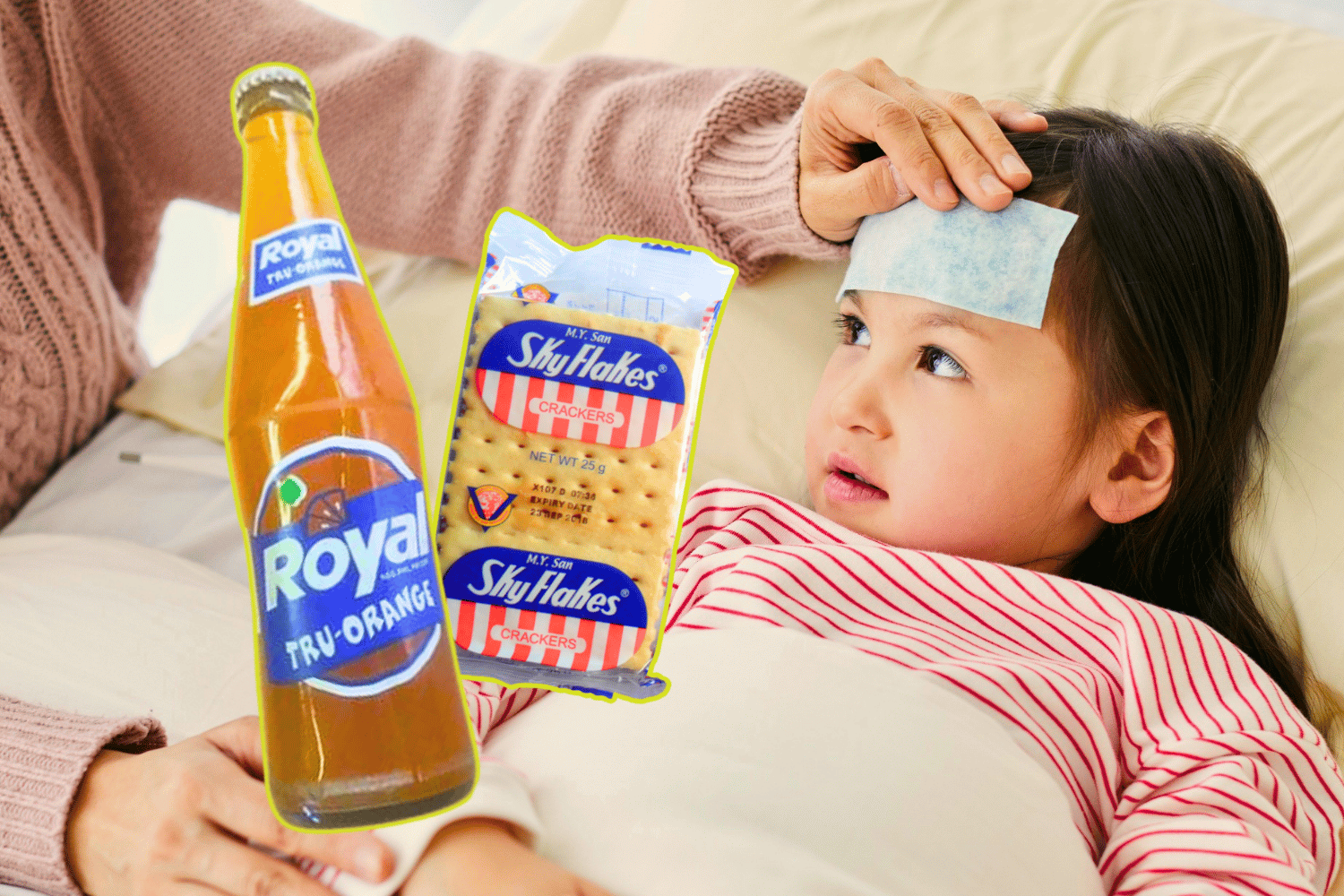
The appeal of the Royal and SkyFlakes combo had little to do with medicine.
You wake up with a fever. Your forehead is burning, your body aches, and you’re pretty sure you’ll miss school.
An hour later, your mother returns from the neighborhood sari-sari store carrying two things: a bottle of Royal Tru-Orange and a pack of SkyFlakes.
Suddenly, being sick doesn’t feel quite as terrible.
For generations of Filipino children, especially those who grew up in the 1980s and 1990s, the appearance of the Royal-and-SkyFlakes combo was practically part of the healing process. It was prescribed for everything—fever, flu, cough, stomachache, diarrhea, even simple exhaustion. Whether or not a doctor recommended it was almost beside the point. Filipino moms and grandmothers had already made up their minds.
The combination became so iconic that decades later, mentioning it instantly triggers childhood memories among Batang ’80s and Batang ’90s.
When getting sick had a silver lining
Part of the appeal had little to do with medicine.
Back then, soft drinks were not everyday beverages in many Filipino households. They were reserved for birthdays, fiestas, Christmas gatherings, or special family occasions. The same was true for store-bought snacks and crackers.
A child confined to bed with a fever was suddenly given access to treats normally kept out of reach.
The result was a strange psychological association: sickness meant discomfort, but it also meant Royal and SkyFlakes.
Many Filipinos now laugh about secretly enjoying this part of being ill.
The theory behind the remedy
Parents also had practical explanations.
Illness often leaves a bitter taste in the mouth. Children lose their appetite and refuse to eat. The sweet citrus flavor of Royal seemed to cut through that bitterness, while the carbonation felt refreshing.
The sugar provided a quick burst of energy, making a lethargic child appear more lively.
To parents, the improvement was visible. The child was drinking, nibbling on crackers, and looking less miserable. Therefore, the remedy must be working.
The Vitamin C myth
Royal’s orange flavor also created another enduring belief.
Many Filipinos grew up thinking the soda was somehow medicinal because it contained vitamin C and tasted like oranges. Since oranges were associated with health and immunity, the drink acquired an almost therapeutic reputation.
Over time, the distinction between orange juice and orange soda became blurred in the minds of many families.
What actually helped?
Modern medicine offers a more nuanced answer.
SkyFlakes remains a sensible choice for people suffering from nausea, diarrhea, or loss of appetite. Its bland flavor and simple carbohydrates make it easy to digest and unlikely to upset the stomach further.
Royal, however, fares less well under medical scrutiny. Doctors generally discourage sugary soft drinks during illness, particularly when dehydration is a concern. Excess sugar can sometimes worsen diarrhea and does little to support recovery.
In short, SkyFlakes had genuine medical value. Royal mostly provided comfort, hydration, and a much-needed morale boost.
A cure that was really about care
Yet reducing the tradition to science misses why it became so beloved.
The Royal-and-SkyFlakes combo was never just food. It was a signal that someone was taking care of you.
It was your mother checking your temperature. Your grandmother sitting beside your bed. Your family trying to make a miserable day a little easier.
The combination may not have cured every fever it was credited with defeating. But for millions of Filipino children, it delivered something almost as important.
Proof that they were loved.
READ: