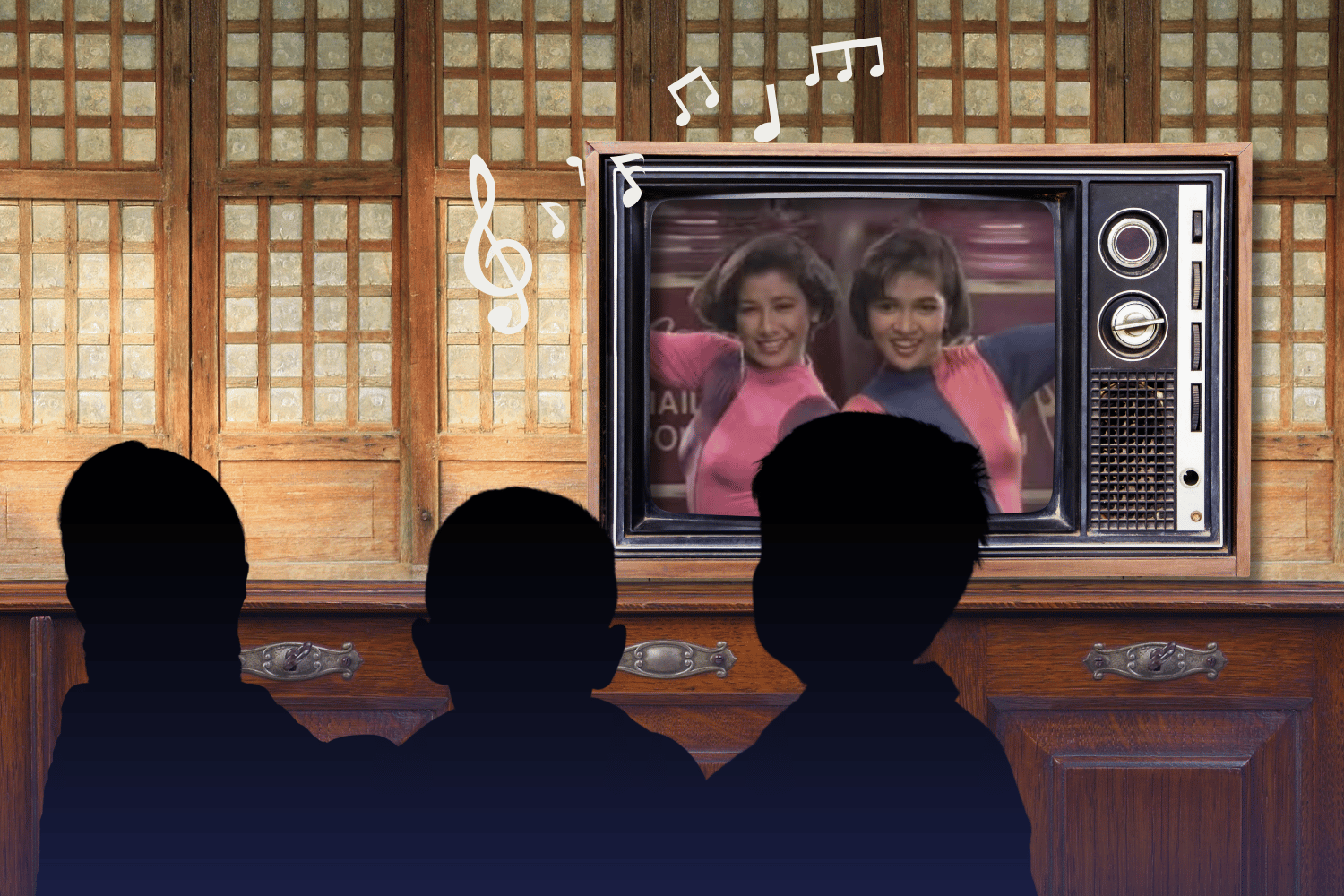
Filipino children of the ’80s and ’90s transformed living rooms into stages by reciting every jingle and voiceover from classic television advertisements.
I grew up in a time when kids did not just watch TV commercials. We performed them.
The moment a familiar ad came on, every child inside the house suddenly became a backup singer, voiceover artist, or commercial actor. Somebody would instantly start singing “🎵 I love you, Sabado… pati na rin Linggo… 🎵” while another kid perfectly delivered the next spoken line with matching emotion and timing. Sometimes we even anticipated the commercial before it aired. The first few notes of a jingle were enough for an entire living room to sing along in unison.
And somehow, nobody found that strange.
Back then, TV commercials were part of childhood itself.
I can still vividly remember singing along to the Caronia commercial as if it were an actual pop song. The Coca-Cola jingles felt like national anthems for happiness. Mentos commercials somehow became unforgettable despite feeling so foreign and imported. Even cigarette ads like Marlboro carried this larger-than-life cowboy coolness that made their voiceovers instantly recognizable.
Then there were the commercials that practically became permanent fixtures of Filipino life. The Sarsi “Angat Sa Iba” campaign was impossible to ignore, while that classic Bear Brand commercial featuring the lolo became so familiar after airing for years that it almost felt like part of every Filipino family’s daily routine. Some ads stayed on television for so long that entire generations of children grew up with them.
There were commercials we memorized line for line.
Not just the songs, but the pauses, the delivery, the facial expressions, and even the exact way actors smiled before saying their punchlines.
Sometimes, I honestly think Filipino kids of the ’80s and ’90s memorized commercials faster than school lessons.
The funny thing is we never sat down trying to memorize them. They simply became part of our daily lives because television itself occupied such a huge space in Filipino homes back then.
There was no internet. No TikTok. No YouTube. No second screen distracting you while watching TV.
When a commercial aired during primetime, practically the entire country saw it together. Kids absorbed everything because there were only a few forms of media competing for our attention: television, radio, newspapers, and magazines. That was it.
And because we kept hearing the same commercials repeatedly, they naturally became embedded in our heads.
But repetition alone was not the magic.
The commercials themselves were built differently.
The jingles were simple, melodic, and emotionally direct. They did not try too hard to be ironic, cryptic, or overly artistic. The melodies were easy enough for children to sing after hearing them only a few times. The lyrics clearly mentioned the product. The emotion was immediate. You instantly understood what the commercial wanted you to feel.
That era mastered what people now call “LSS” or last song syndrome.
Even the voiceovers had incredible discipline. Deep announcer voices confidently explained product benefits in the clearest possible way. Commercials did not dance around the message. Shampoo ads told you your hair would become beautiful. Milk commercials promised strength. Soft drink ads sold joy and togetherness. Fast-food commercials made ordinary meals feel magical.
Everything was straightforward, memorable, and emotionally sincere.
Today, commercials feel very different.
A lot of ads now seem obsessed with being visually shocking, hyper-stylized, or aggressively quirky. Some try so hard to look cinematic or “viral” that you finish the ad without remembering the actual product. Others disappear instantly because people are half-watching while scrolling through their phones.
And maybe that is the biggest difference between then and now.
Before, media was concentrated.
Today, attention is scattered everywhere.
Back then, one television commercial could unite millions of Filipinos because everybody encountered the same thing at the same time. A catchy jingle could dominate playgrounds, classrooms, and family gatherings because there were fewer distractions competing against it.
Now, audiences are split across streaming apps, social media feeds, YouTube algorithms, podcasts, online games, and endless scrolling.
I sometimes miss the simplicity of those years.
I miss how commercials once sounded heartfelt instead of calculated. I miss how a 30-second ad could become part of national culture. Most of all, I miss that strange little moment in Filipino childhood when every kid inside the house instinctively sang along the moment a familiar commercial appeared onscreen.
When a commercial aired during primetime, practically the entire country saw it together. Kids absorbed everything because there were only a few forms of media competing for our attention: television, radio, newspapers, and magazines. That was it.
READ:

I got drunk on sweet, freshly harvested tuba as a kid
Matahari
May 2, 2026
I learned Tagalog from komiks—and got accused of cheating for being too good
Matahari
April 22, 2026
Makeshift Betamax theaters started my love for cinema
Matahari
May 14, 2026