These are five foods that help the poorest Filipinos survive hunger
For some Filipino families, the question is no longer what to eat for breakfast, lunch, or dinner. It is whether there will be anything to eat at all.
According to the Philippine Statistics Authority (PSA), approximately 4.84 million Filipinos lived below the food poverty threshold in 2023, meaning their incomes were insufficient to meet even their basic food requirements.
The Department of Science and Technology’s Food and Nutrition Research Institute (DOST-FNRI) also found that 31.4% of Filipino households experienced moderate to severe food insecurity in its 2023 National Nutrition Survey.
Behind these statistics are families surviving on what Filipinos call pantawid-gutom—cheap, filling meals that temporarily relieve hunger but may not provide adequate nutrition.
Here are five foods that illustrate this struggle.
1. Pagpag: Food recovered from garbage
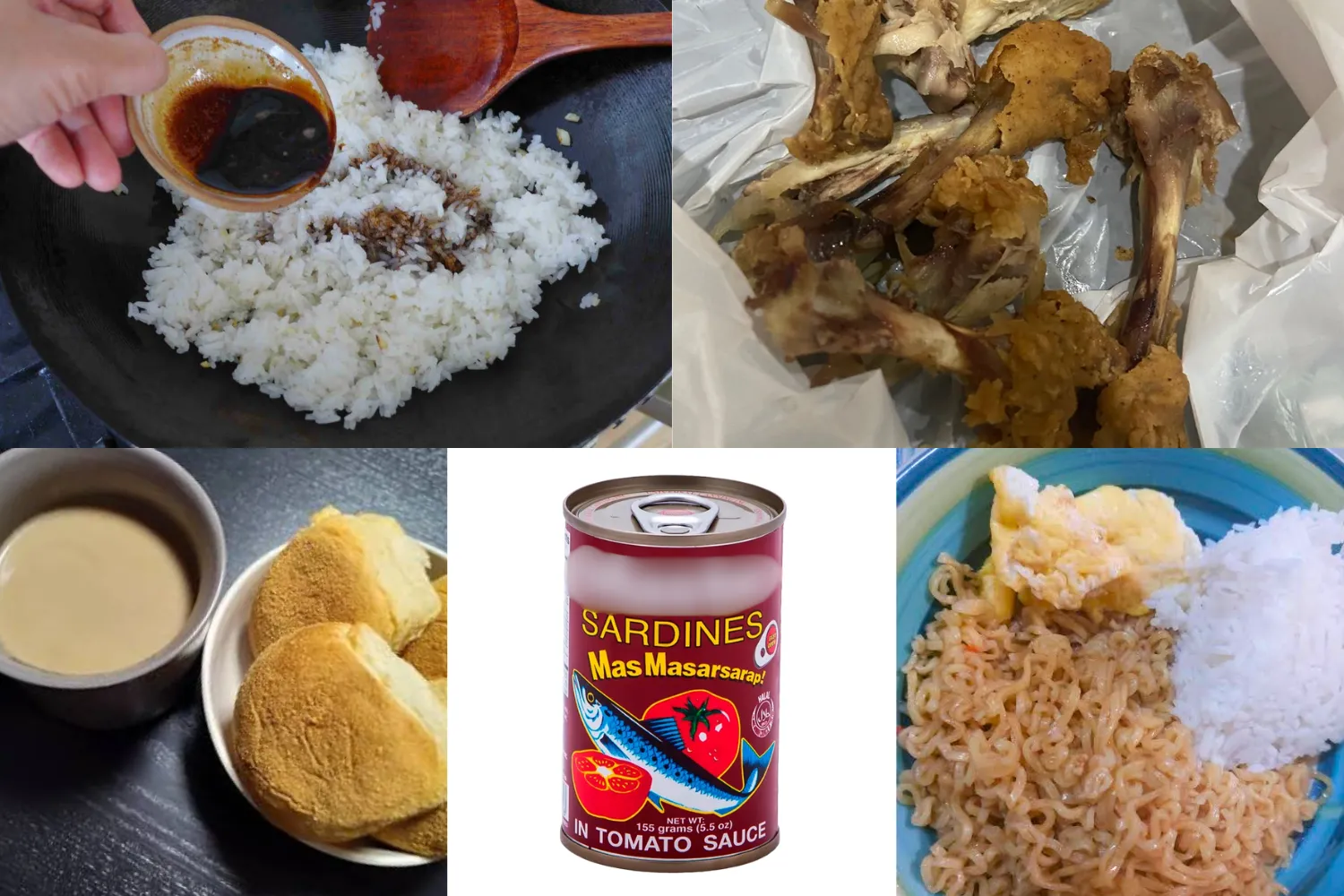
In some impoverished communities, discarded chicken and other restaurant leftovers are recovered from garbage, cleaned, cooked again, and sold as pagpag.
For families who cannot afford fresh meat, it becomes a desperate source of calories and protein.
But the health risks are serious. According to the United States Department of Agriculture (USDA), certain bacteria can produce heat-resistant toxins that remain dangerous even after food is reheated.
Food recovered from garbage may also be exposed to chemical contaminants and disease-causing microorganisms.
What should have been thrown away becomes someone else’s dinner.
2. Instant noodles with rice
One packet of instant noodles can feed several people when mixed with plenty of water and served over rice.
It is cheap, convenient, and filling.
However, this combination is dominated by carbohydrates and can contain substantial amounts of sodium, while providing limited protein and essential micronutrients.
The World Health Organization (WHO) recommends that adults consume less than 2,000 milligrams of sodium daily, warning that excessive intake increases blood pressure and cardiovascular disease risk.
Without vegetables, eggs, or other nutritious additions, regularly depending on this meal can contribute to nutritional deficiencies.
3. Rice with salt, soy sauce, or oil
When there is no money for ulam, plain rice mixed with salt, soy sauce, or leftover cooking oil becomes the entire meal.
It may satisfy hunger temporarily, but it cannot provide all the nutrients necessary for healthy growth.
Nutrition experts describe this problem as hidden hunger, when people consume calories but lack essential vitamins and minerals.
According to the WHO, inadequate nutrition can contribute to anemia, impaired development, and other health problems.
For growing children, prolonged nutritional deficiencies can have lasting consequences.
4. One can of sardines for the whole family
Sardines are actually among the more nutritious affordable foods available to Filipinos.
They provide protein, calcium, and omega-3 fatty acids.
The problem begins when one small can must feed an entire family.
To stretch the meal, families add water, misua, or vegetables, making the portions appear larger.
But while the soup increases in volume, the nutrients from the sardines must still be divided among everyone.
One can of sardines simply cannot meet the nutritional requirements of five or six people.
5. Coffee and bread instead of a proper meal
For some struggling workers, breakfast is nothing more than instant coffee and pandesal. Sometimes, the same combination replaces lunch.
The carbohydrates and sugar provide quick energy, while caffeine may temporarily suppress appetite.
However, the WHO emphasizes that a healthy diet requires sufficient protein, vitamins, minerals, and dietary variety.
Regularly replacing proper meals with coffee and bread can contribute to nutritional deficiencies, while frequent consumption of sugary beverages increases the risk of tooth decay.
The real cost of food poverty
The consequences of inadequate nutrition are already reflected in Philippine health statistics.
According to DOST-FNRI’s 2023 National Nutrition Survey, 23.6% of Filipino children under five were stunted, while 5.6% suffered from wasting.
These conditions reflect serious nutritional challenges, particularly during the critical years of childhood development.
The issue is not that every inexpensive food is unhealthy. Rice, sardines, and bread can all form part of a nutritious diet.
The real problem is when families cannot afford enough food or sufficient dietary variety.
For the poorest Filipinos, eating is not always about making healthy choices. Sometimes, it is simply about making sure nobody goes to sleep hungry.
And that is the cruelest reality of food poverty: a stomach can be full while the body remains malnourished.
READ:

Five things I hope the Philippines fixes before I die
Matahari
June 17, 2026
Street food is a cultural treasure — but our stupid LGUs are killing it
Matahari
July 9, 2026
Why one pack of pancit canton can feel ‘bitin’ and two ‘sobra,’ according to science
Rei Marquez
October 28, 2026