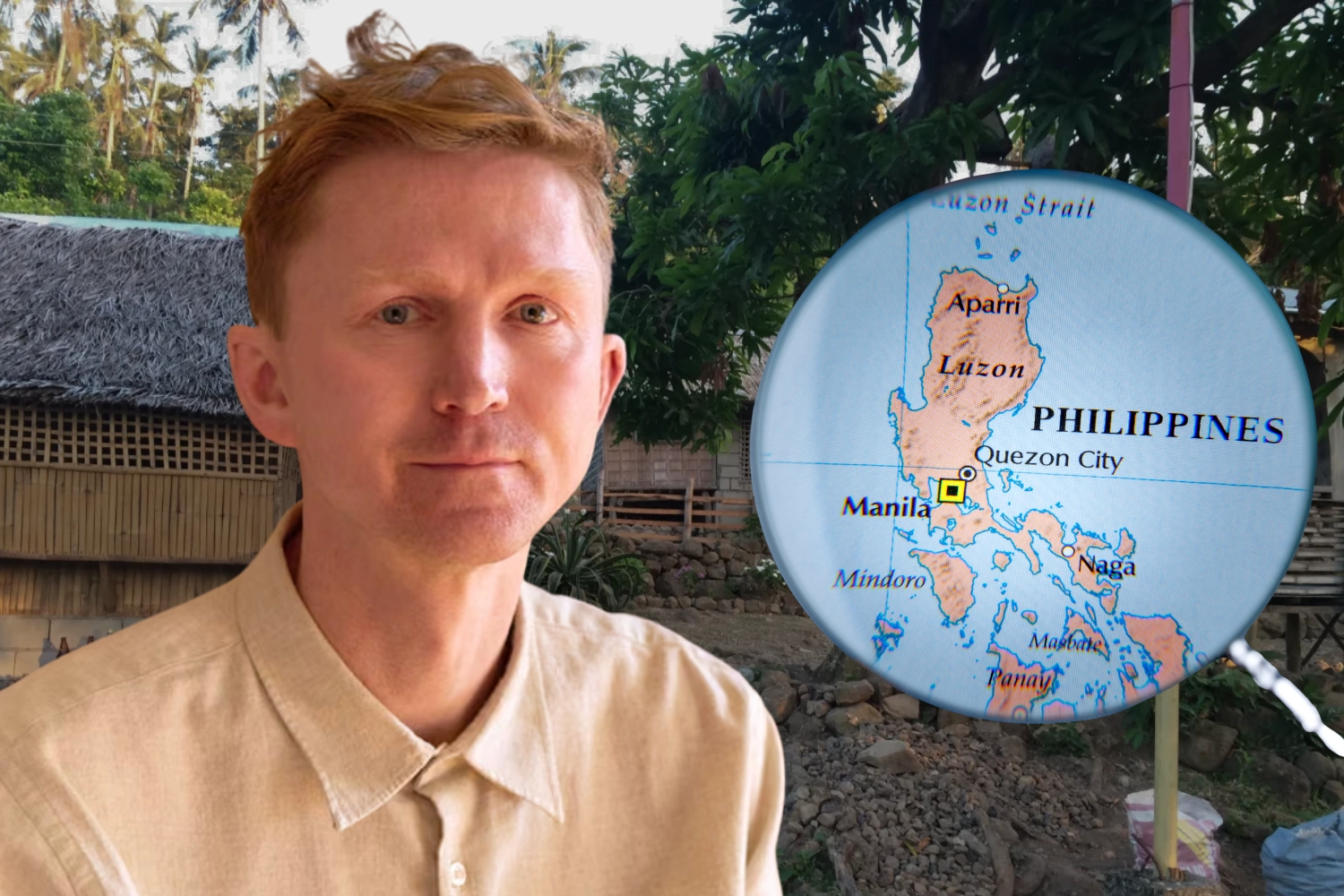
A Welsh author said an attempt to expose an online scammer led him to a postal address in the Philippines, giving him an unexpected glimpse into the country’s links to the wider problem of organized online fraud in Southeast Asia.
In a Nov. 1 essay for The Guardian titled “Like many authors, I’m bombarded by scam fan mail. I wasn’t prepared for what would happen when I wrote back,” Joe Dunthorne recounted receiving emails from people claiming to be fans of his work. His books include the novels “Submarine,” “Wild Abandon,” “The Adulterants,” poetry collection “O Positive,” and nonfiction “Children of Radium.”
The messages praised his novels and nonfiction and offered to promote his books through city-wide book clubs and reading communities—“if only” he transferred “a few hundred dollars to cover costs.”
Rather than simply reporting and blocking the sender, Dunthorne decided to engage with someone claiming to be the founder of the Berlin Book Club. When they began discussing payment, he insisted on sending cash instead of using Cash App or making a bank transfer, as requested.
He told the sender he had “500 US dollars (₱31,800) in crisp notes in an unmarked envelope” and lived near the post office. After several exchanges, the supposed book club founder finally gave him a physical address.
“Neither of us commented on how unusual it was for the founder of the Berlin Book Club to have a postal address in the Philippines,” Dunthorne said.
Curious about the address, he turned to Google Maps. What he found was “a rural two-lane road with palm trees, a junk shop, an evangelical church and a large building hidden behind high white walls.”
He didn’t send any money, and instead shared the details he received with the Philippines’ cybercrime agency.
He connected the experience to the wider problem of organized scam networks operating across Southeast Asia, including the Philippines, Myanmar, Laos, and Cambodia.
He cited the March 2024 raid on a compound in Bamban, Tarlac, where authorities rescued nearly 700 people “who had been trapped there and forced to work as scammers.” Dunthorne described the compound as resembling “a hybrid between a call centre and a prison,” with rows of computers, green screens, and cramped dormitories fitted with bunk beds. He also recounted how another nearby compound reportedly had its own brothel, karaoke suite, and torture room.
The Bamban compound was linked to former mayor Alice Guo, who was convicted of qualified trafficking in persons for her role in providing financial support to labor trafficking through companies operating at the site. On Nov. 20, 2025, the Pasig Regional Trial Court sentenced Guo and seven co-accused to life imprisonment and fined each ₱2 million, according to the Department of Justice.
Dunthorne also cited Winston Casio, spokesperson for the Presidential Anti-Organized Crime Commission, who warned that the “amount of money” these criminal networks have “is their potent tool against law enforcement.”
He also questioned the role of artificial intelligence in making these scams more convincing. He said scam emails had reached “a new level of personalisation” and were often “sophisticated enough to bypass a spam filter and reach our inboxes.” He pointed to lawsuits and settlements involving AI companies accused of using copyrighted books and other works to train their systems, including Anthropic’s Claude and Google’s Gemini.
“So when writers receive these AI-assisted scam messages, we know we are being manipulated by a version of ourselves,” he said.
In the end, Dunthorne doubted whether AI companies “might go out of their way to halt the criminal misuse of their technology,” as it’s “making them fantastically rich.”