His artistic identity was shaped by geography.
You stand before one of Raymond “Jong” Tangiday’s sculptures expecting to admire craftsmanship. Instead, you find yourself staring into a forgotten Philippines.
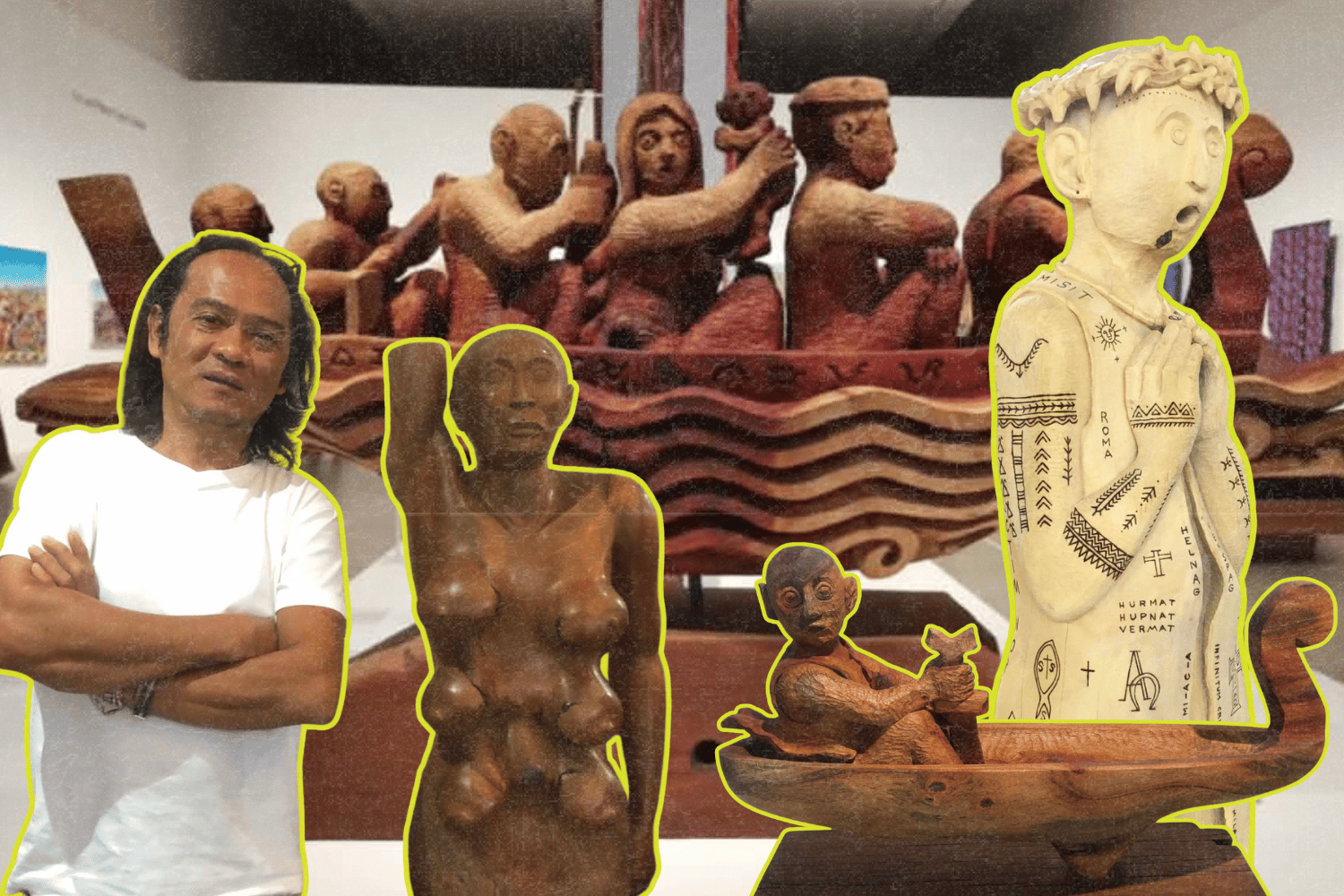
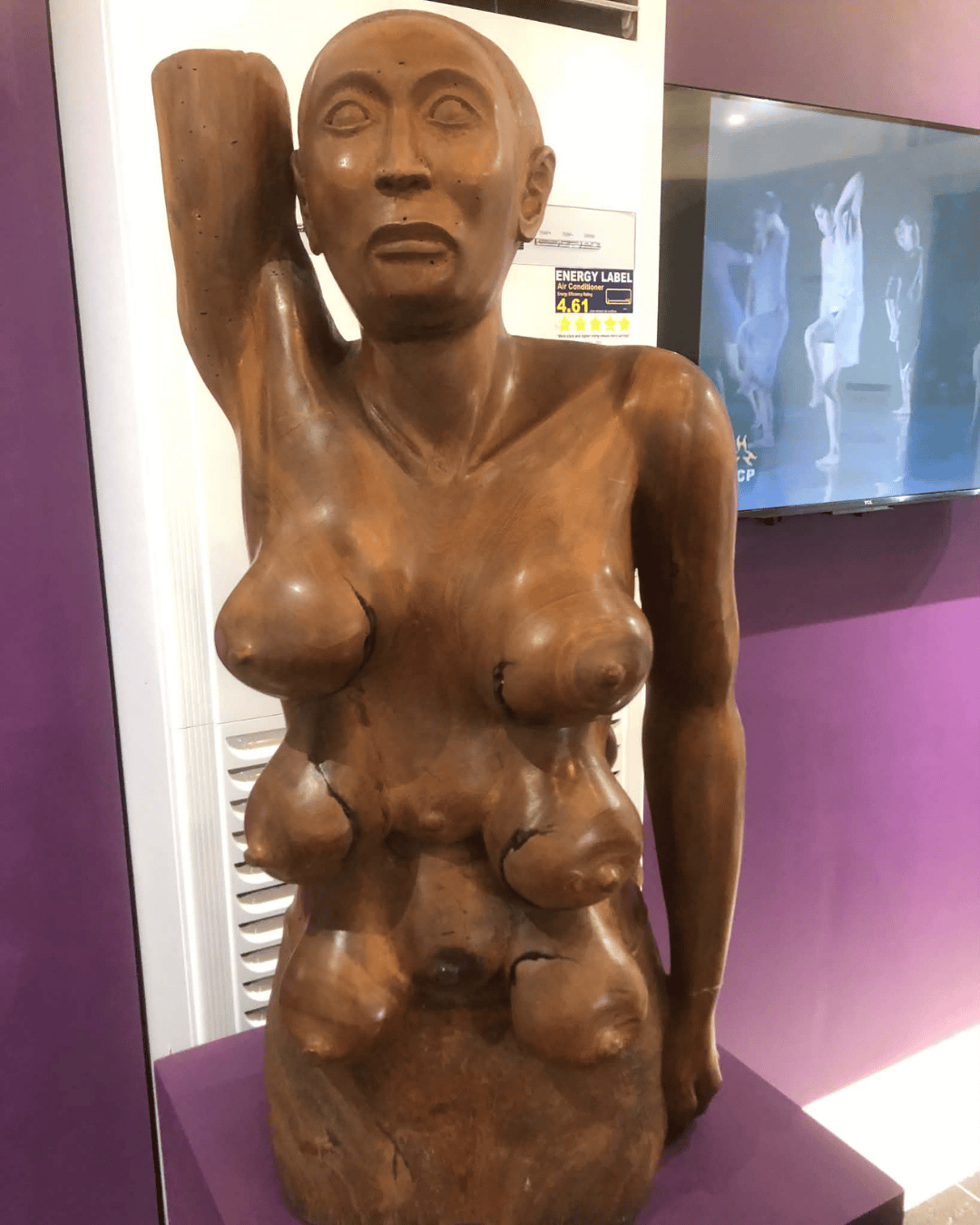
A woman with many breasts cradles a child. A serpent-like boat slices through mythical waters. Baybayin characters crawl across wood. Echoes of the Manunggul Jar emerge not as archaeological artifacts but as living stories.
Long before Spanish colonizers arrived, the Philippine archipelago was already home to thriving communities, rich mythologies, indigenous scripts, and complex belief systems. For Tangiday, these are not relics trapped in museums or history books. They are stories that deserve to be seen, discussed, and remembered by a new generation.
Every sculpture he creates is an invitation to rediscover the Philippines before colonization.
“As a son of migrants—my father’s family is Ilocano and my mother’s is Batangueño—but having been born and raised in Davao City, I became fascinated by the different cultures, practices, and beliefs of pre-colonial Philippines,” he says.
That fascination has shaped one of the country’s most distinctive artistic voices.
Based in Davao City, Tangiday has built an acclaimed career creating intricate sculptures from mahogany, driftwood, and reclaimed materials. His works delve into indigenous mythology, folklore, and pre-colonial history, earning recognition both in the Philippines and abroad. One of his sculptures from the ongoing Once Upon a Pre-Colonial Time series was acquired by the Queensland Art Gallery | Gallery of Modern Art Foundation in Australia and featured in the prestigious 11th Asia Pacific Triennial of Contemporary Art.
Yet despite the international recognition, Tangiday remains rooted in a simple mission: to tell stories that many Filipinos have forgotten.
“We have such colorful, mystical traditions that can become subjects for visual art,” he says. “But Western influence has become very common in the contemporary art scene, especially with modern technology.”
Rather than imitate global trends, Tangiday digs deeper into local memory. His sculptures resurrect figures like Mebuyan, the Mindanao goddess of the underworld, reinterpret symbols from the Manunggul Jar, and weave Baybayin into his compositions—not as nostalgic ornaments, but as reminders that Filipino identity existed long before colonial rule.
Research is only the beginning.
“I do research and then I just play with my imagination. I usually let my hands and mind guide the process. Honesty matters most to me. I don’t worry about what people will say about my work.”
That honesty extends even to how he sees his medium.
Swipe or click arrows to see photos
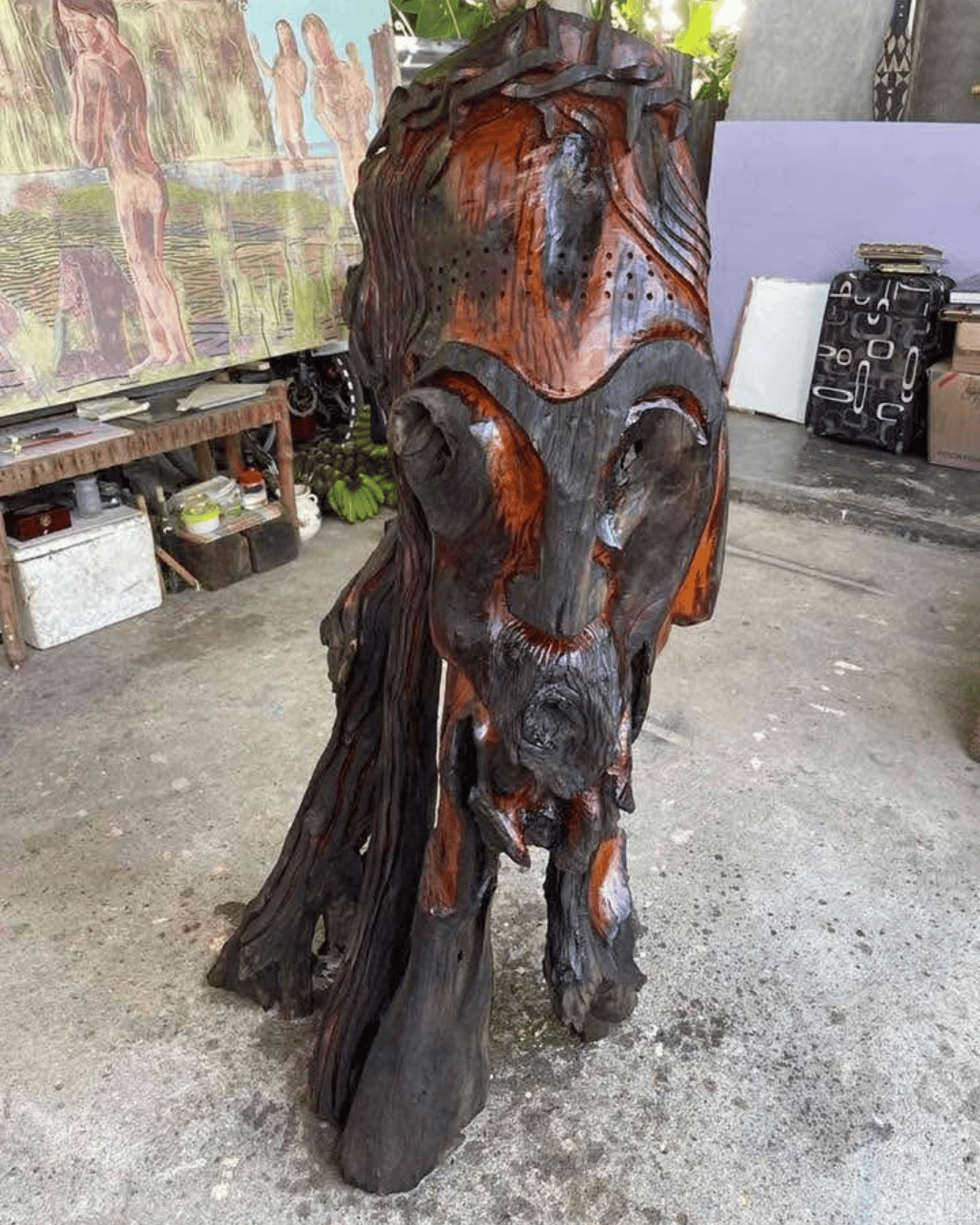
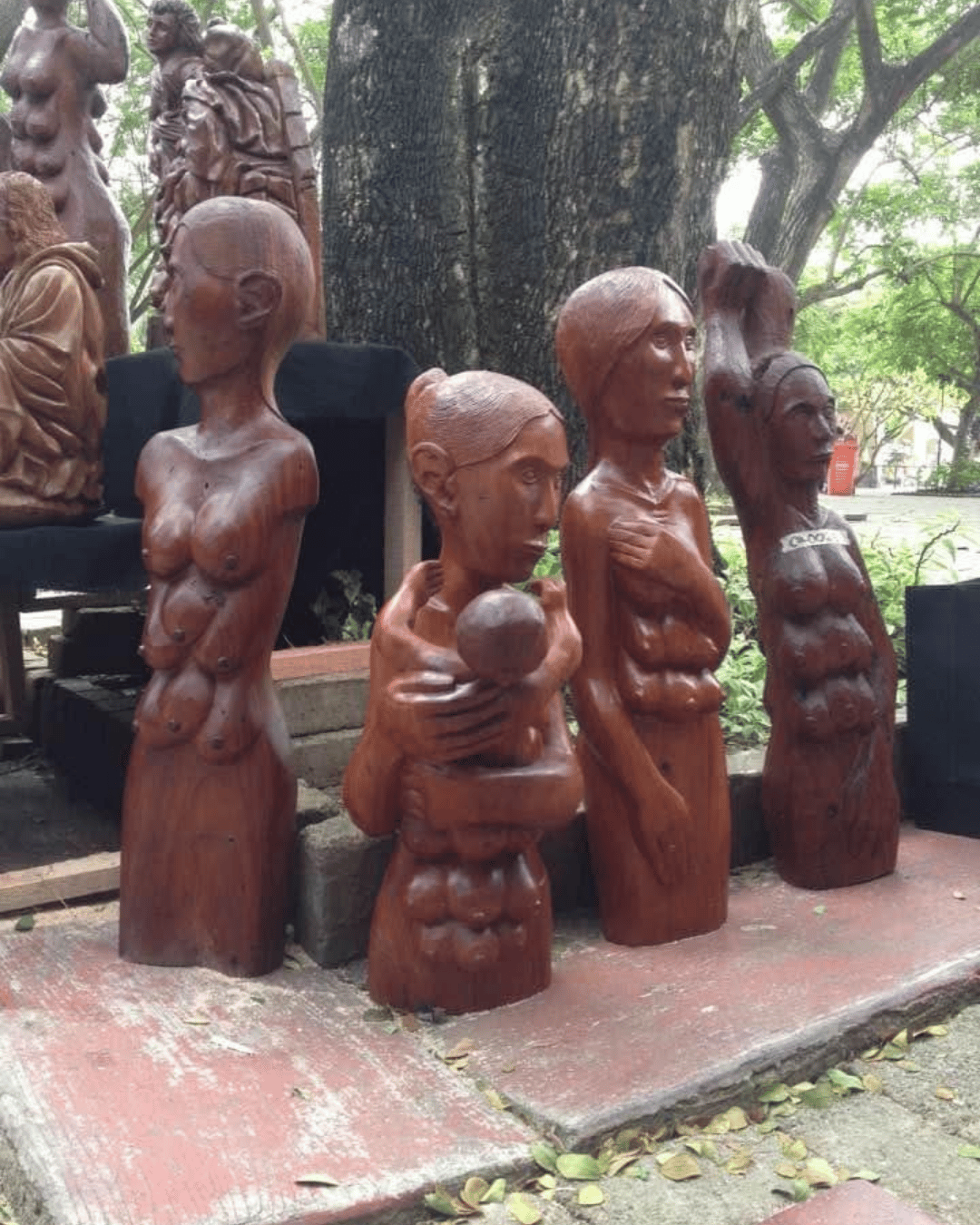
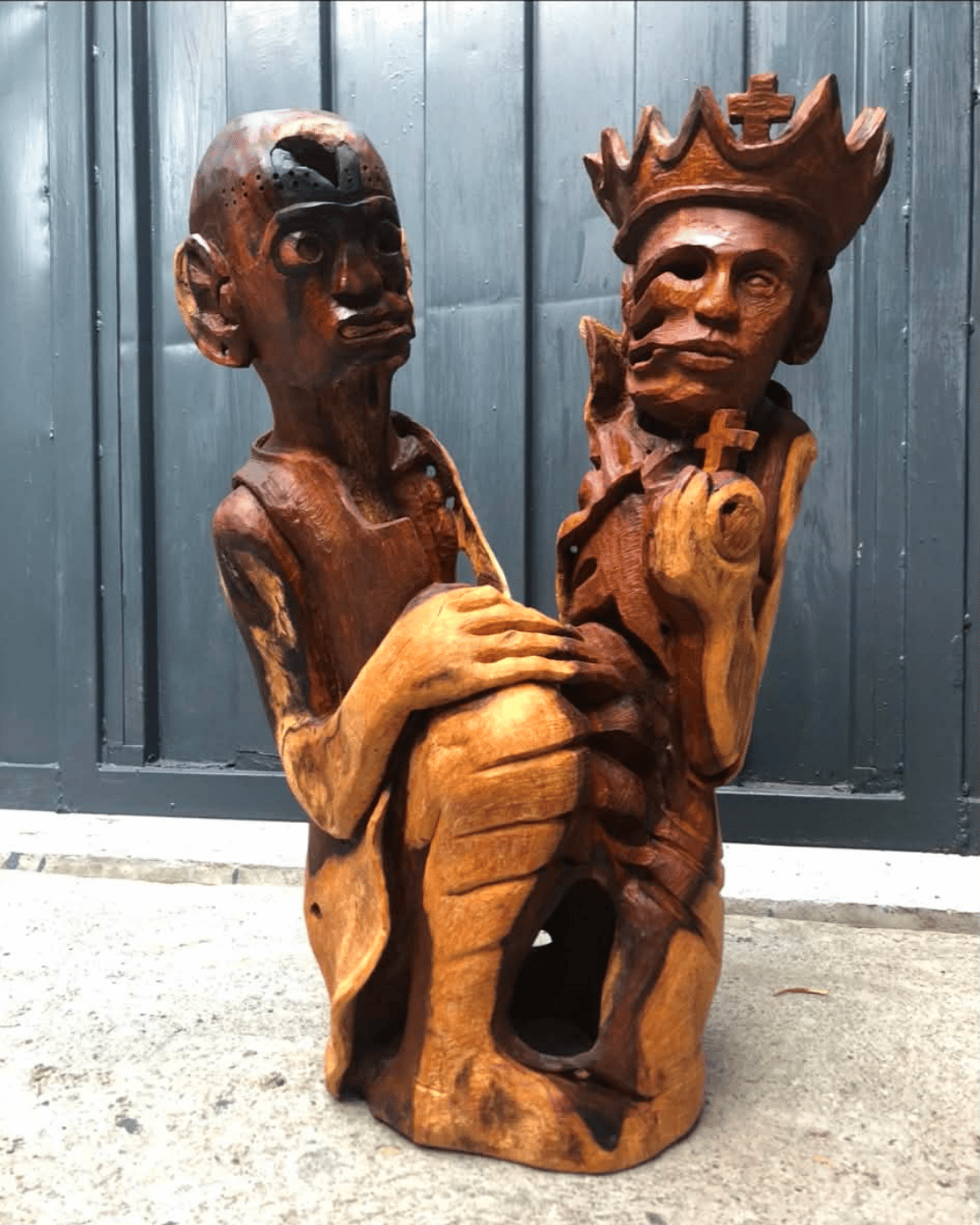
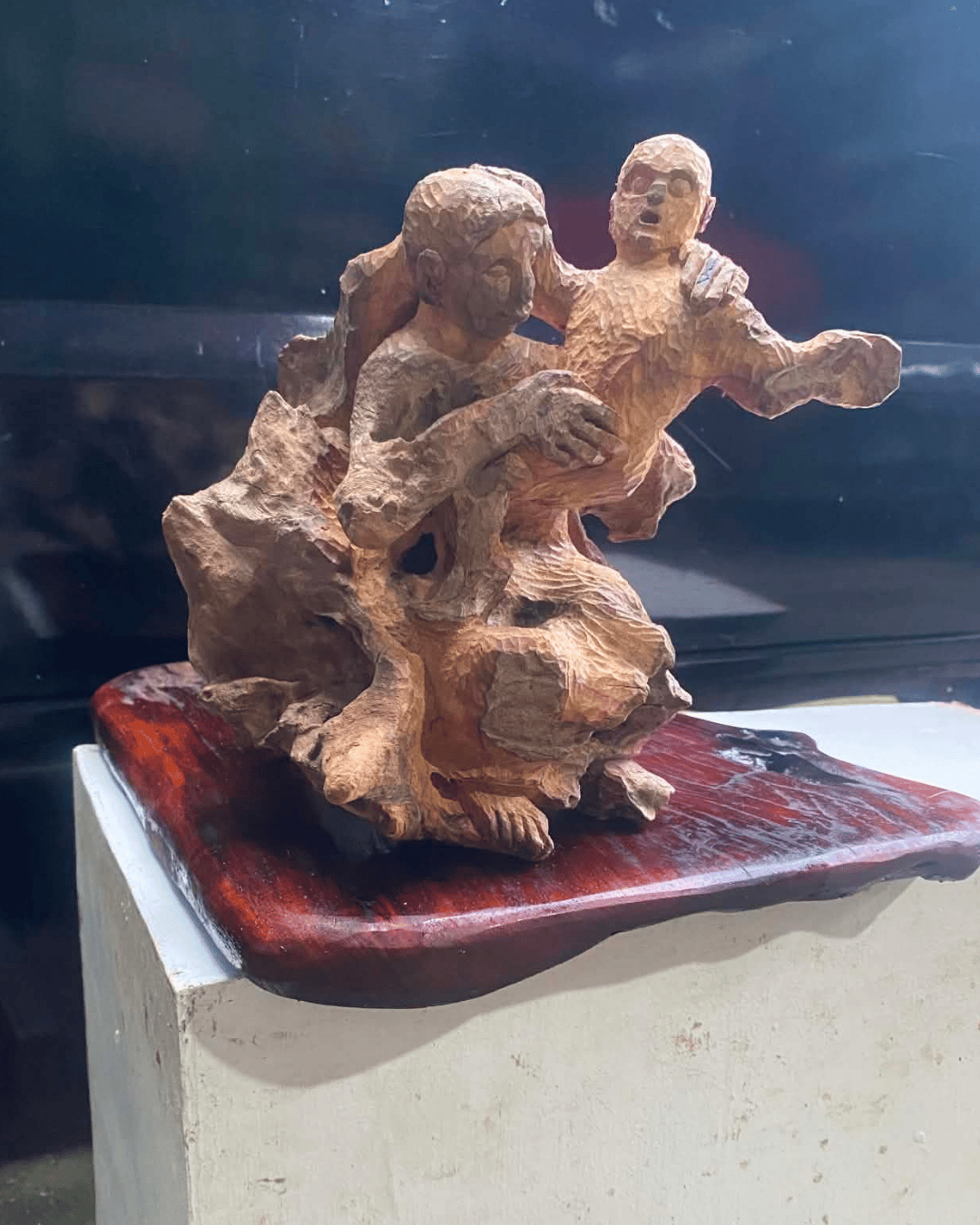
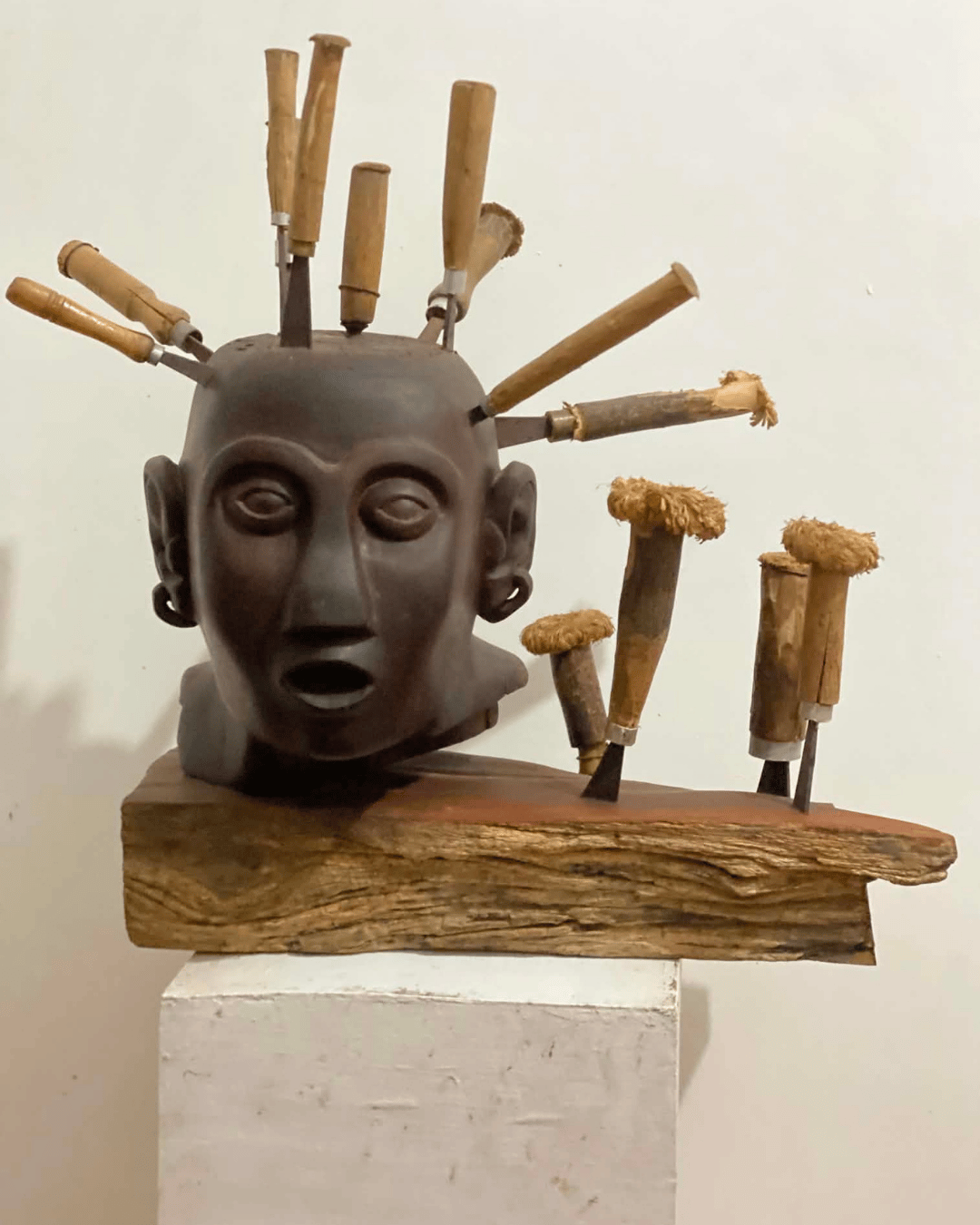
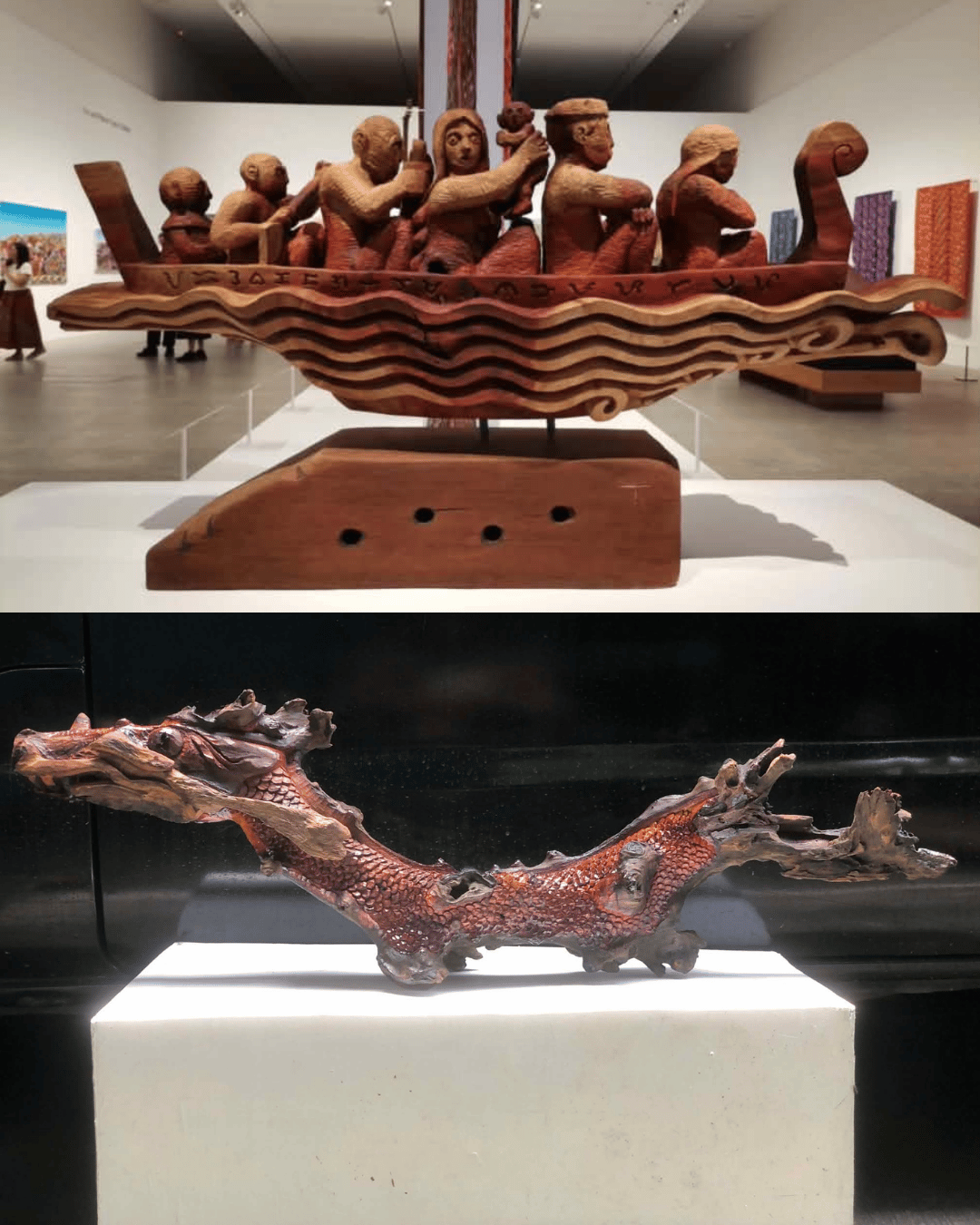
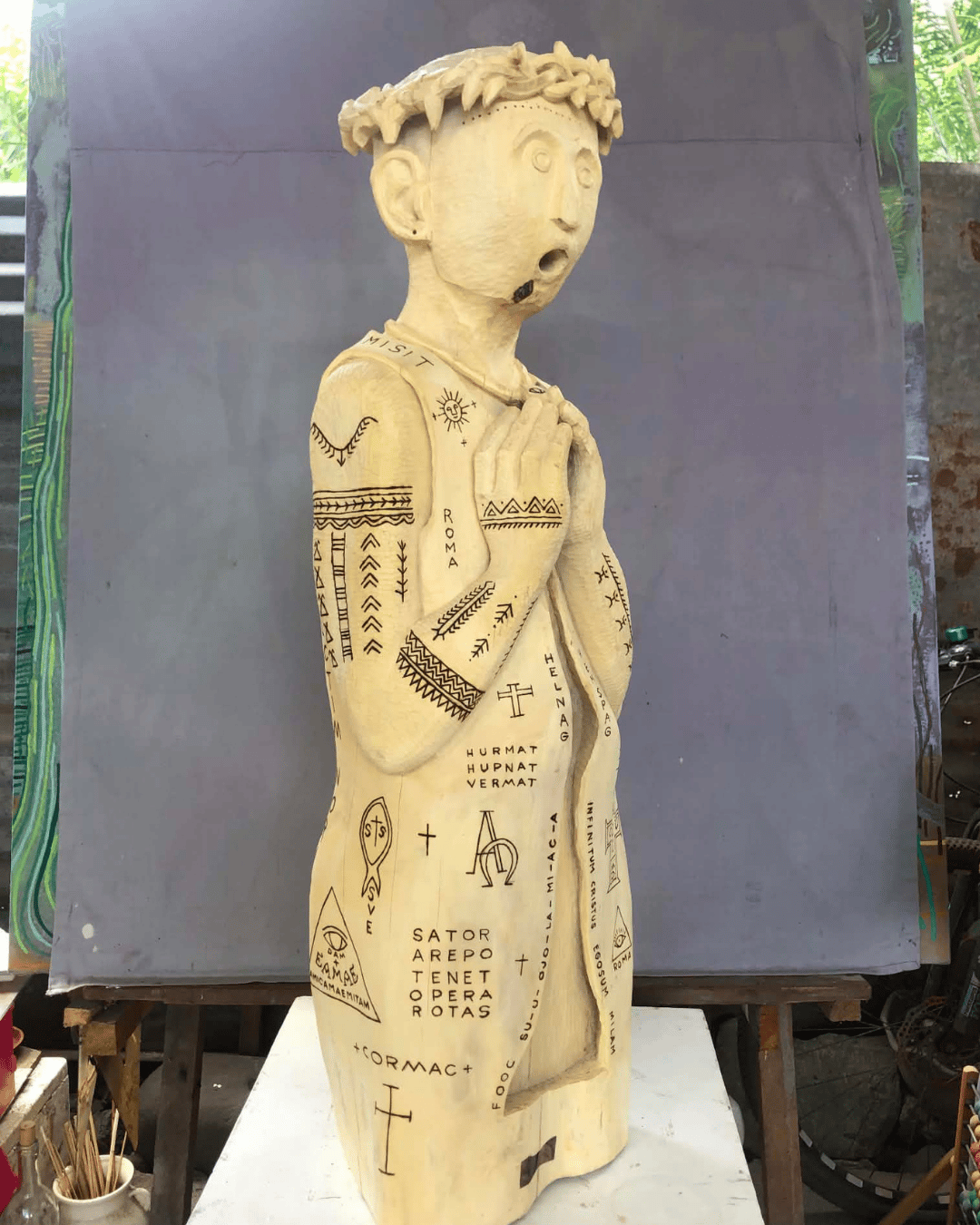
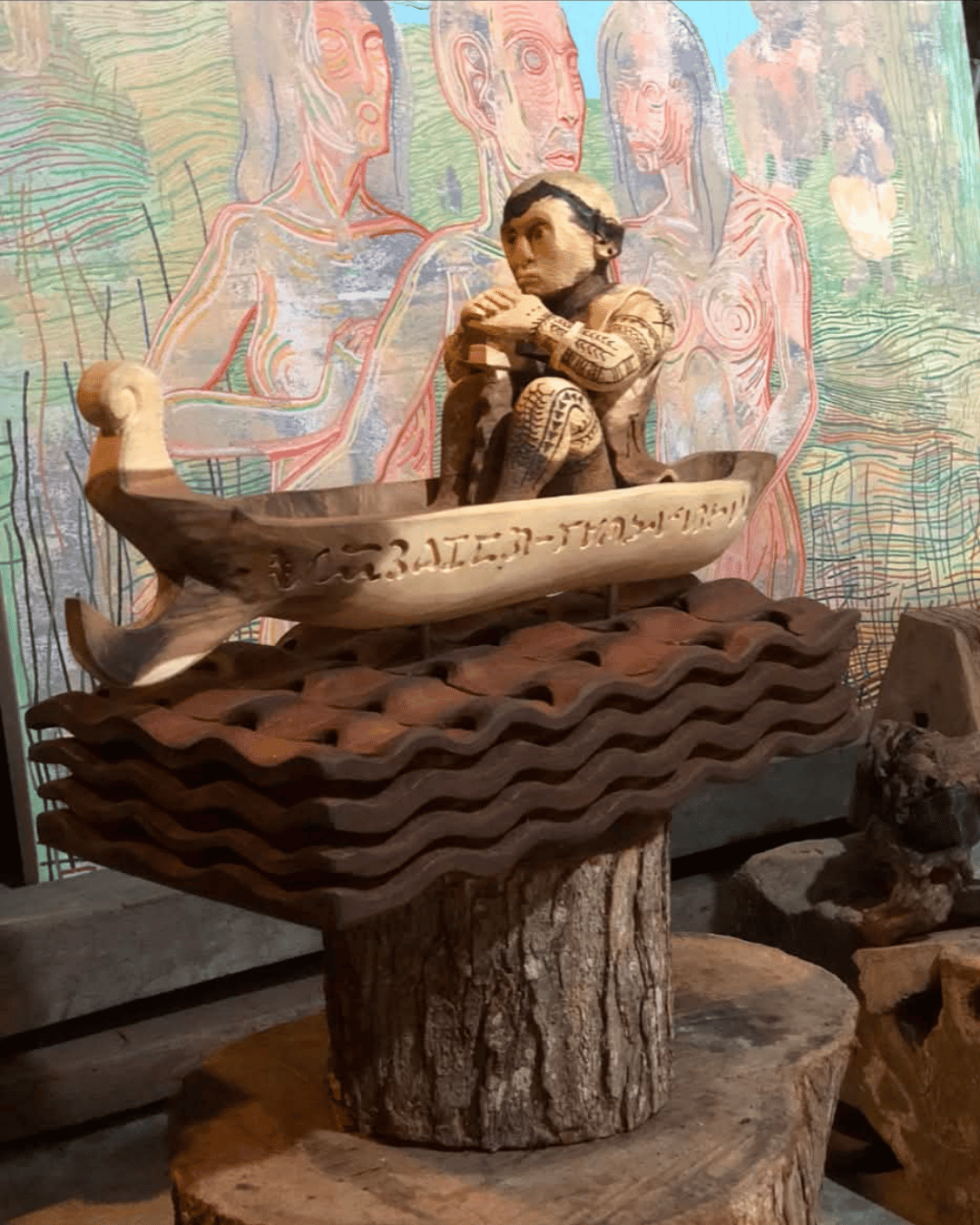
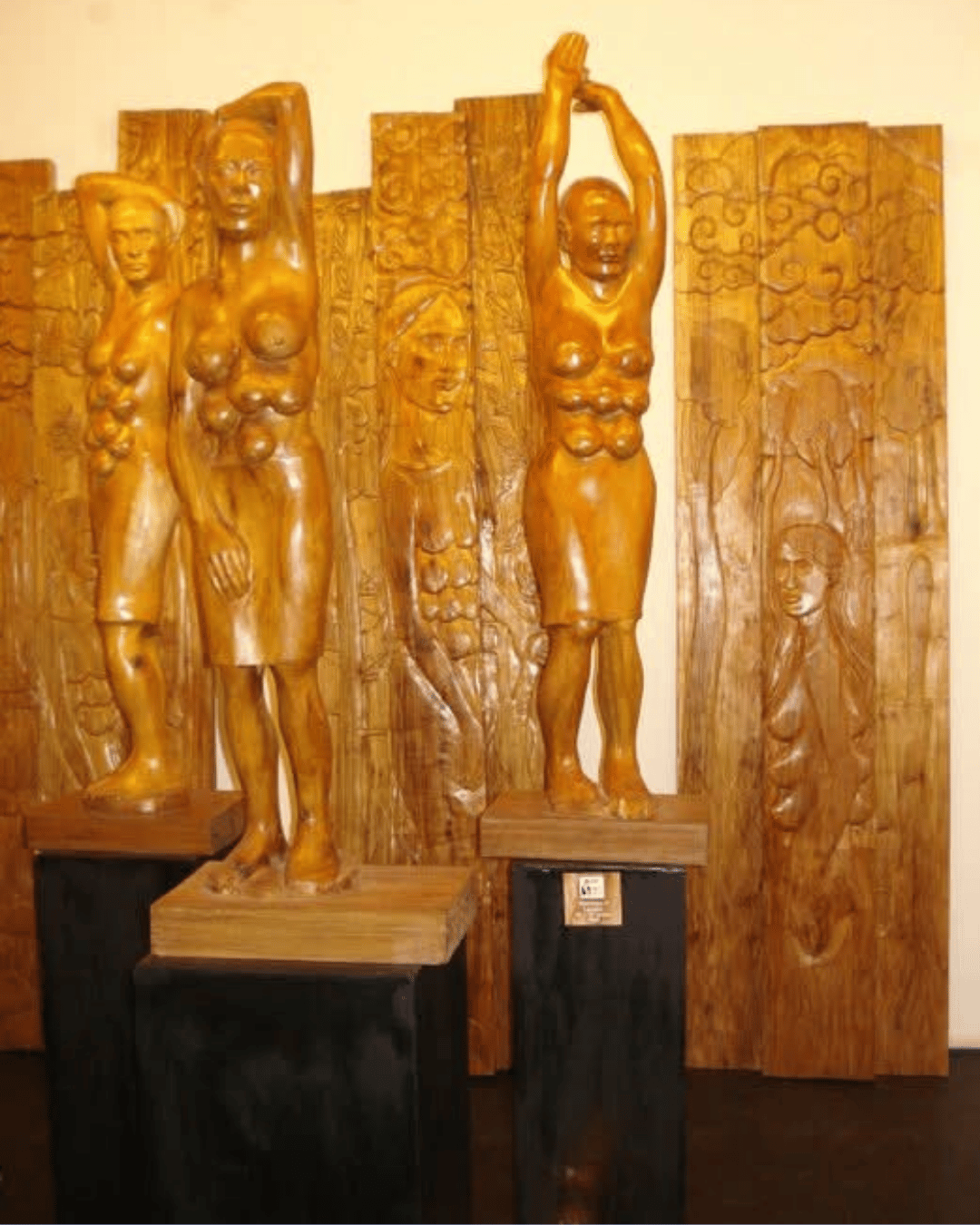
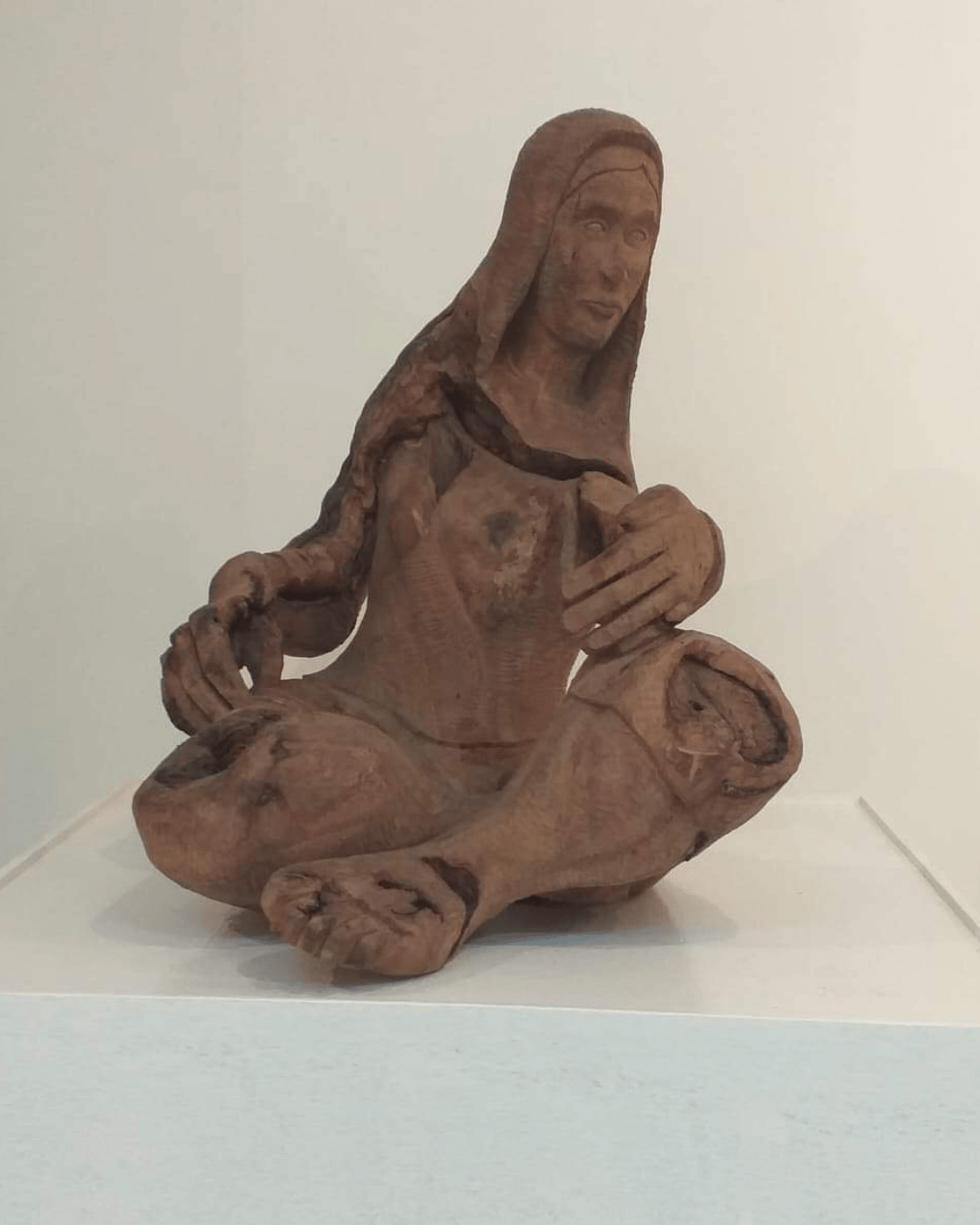
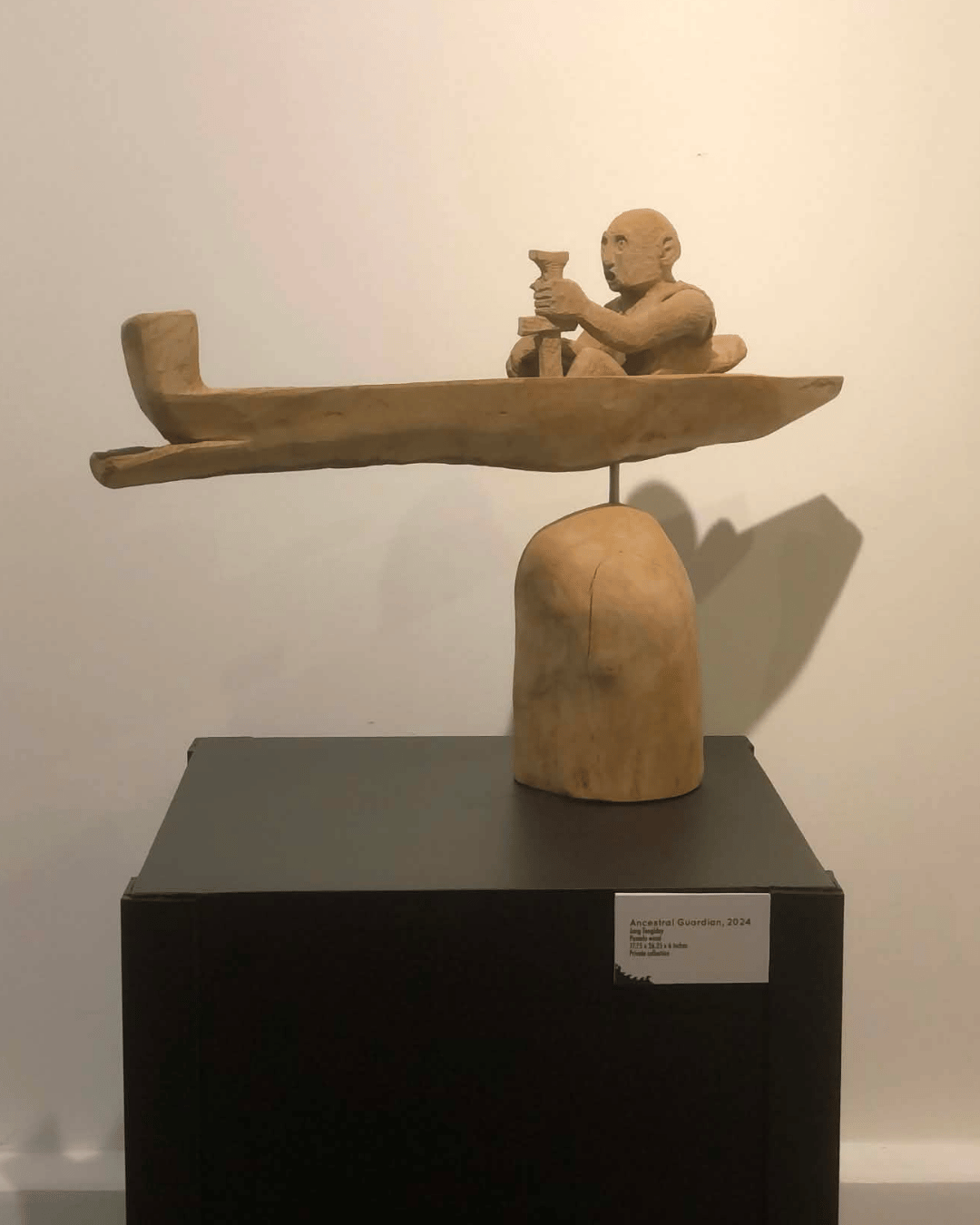
Many still dismiss wood carving as mere craft instead of fine art. Tangiday has never been bothered by that distinction.
“I don’t mind if people think sculpture is just craft. As long as I’m satisfied with my work, that’s enough. Whether the piece sells or not, I’m happy simply because I was able to create it and share it.”
His artistic identity was also shaped by geography.
Growing up in Davao during the late 1980s, Tangiday studied art with limited access to Western references. The school library contained only a handful of art books, while American art videos from USIS were rare treasures.
“Maybe because we weren’t fully immersed in the trends coming from Manila or abroad, we developed differently,” he reflects. “Of course there are outside influences today, but Mindanao helped shape my artistic journey.”
That distance became one of his greatest strengths.
Instead of following fashionable movements, Tangiday turned to the stories surrounding him—stories passed down by indigenous communities and ancestors whose beliefs survived despite centuries of colonization.
For him, Philippine mythology is not simply about ancient gods or forgotten rituals. It is an entire worldview.
“Our ancestors left us something colorful, mysterious, beautiful—from life until death.”
That philosophy has carried him from local competitions to museum collections overseas.
A graduate of the Ford Academy of the Arts, Tangiday spent 12 years teaching at his alma mater while steadily building a reputation as one of Mindanao’s foremost sculptors. He won the PLDT Cover Design Competition in Mindanao four times during the 1990s and later became a finalist in the Metrobank Art and Design Excellence competition for sculpture in 2012 and 2015.
Still, accolades never became the destination.
“It’s heartwarming that people appreciate and collect my work. Recognition helps in my journey as an artist. But don’t let it get into your head. Just keep creating meaningful artworks—not pieces that are merely decorative.”
Meaning, however, comes with responsibility.
Wood sculpture demands enormous physical labor, especially during the blocking stage. But Tangiday believes the greater challenge is intellectual.
“If you don’t understand what you’re creating, the emotional weight becomes difficult. And if you don’t research the culture behind it, your sculpture becomes bara-bara—it has no substance.”
Ultimately, what he hopes viewers carry home isn’t admiration for his carving skills.
Instead, he leaves them with a challenge.
“Know the heritage that our ancestors left us.”
Because before foreign powers reshaped the islands, Filipinos already possessed vibrant cultures, diverse communities, distinct traditions, and their own ways of understanding the world.
“Bago pa tayo masakop ng banyaga, napakakulay na ng ating kultura. Iba’t ibang komunidad, kanya-kanyang kaugalian at pananaw. Malaya.”
His sculptures are not trying to recreate the past.
They are asking whether Filipinos are finally ready to remember it.