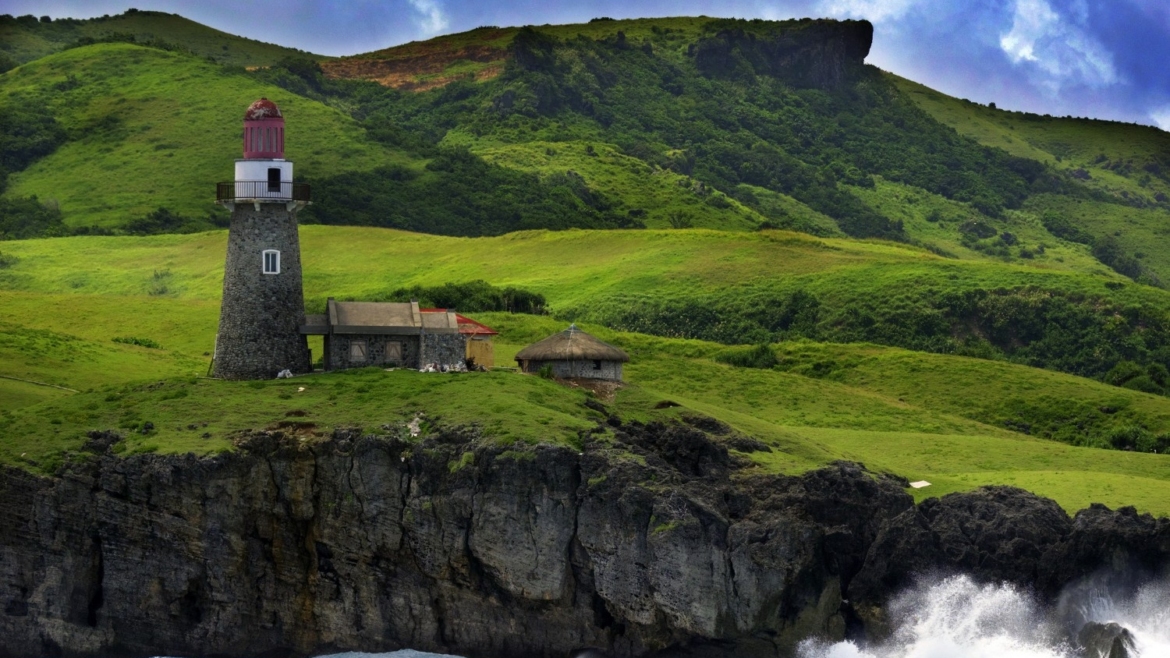
The islands have a distinct history as an Indigenous Ivatan society.
An 18th-century artwork is the latest piece of evidence dismantling China’s claim over Batanes, reinforcing what Philippine government agencies have already declared: the assertion has no basis in history.
At a June 30 symposium at Jinan University, Chinese scholars claimed that Batanes is a “natural geographical extension” of Taiwan.
Defense Sec. Gilberto Teodoro Jr. has dismissed the claim as “baseless” and “ludicrous,” while the Department of Foreign Affairs said Philippine sovereignty over Batanes is “settled” and “not open to debate.” The National Historical Commission of the Philippines also “strongly condemned and refuted” the claims, issuing a point-by-point rebuttal.
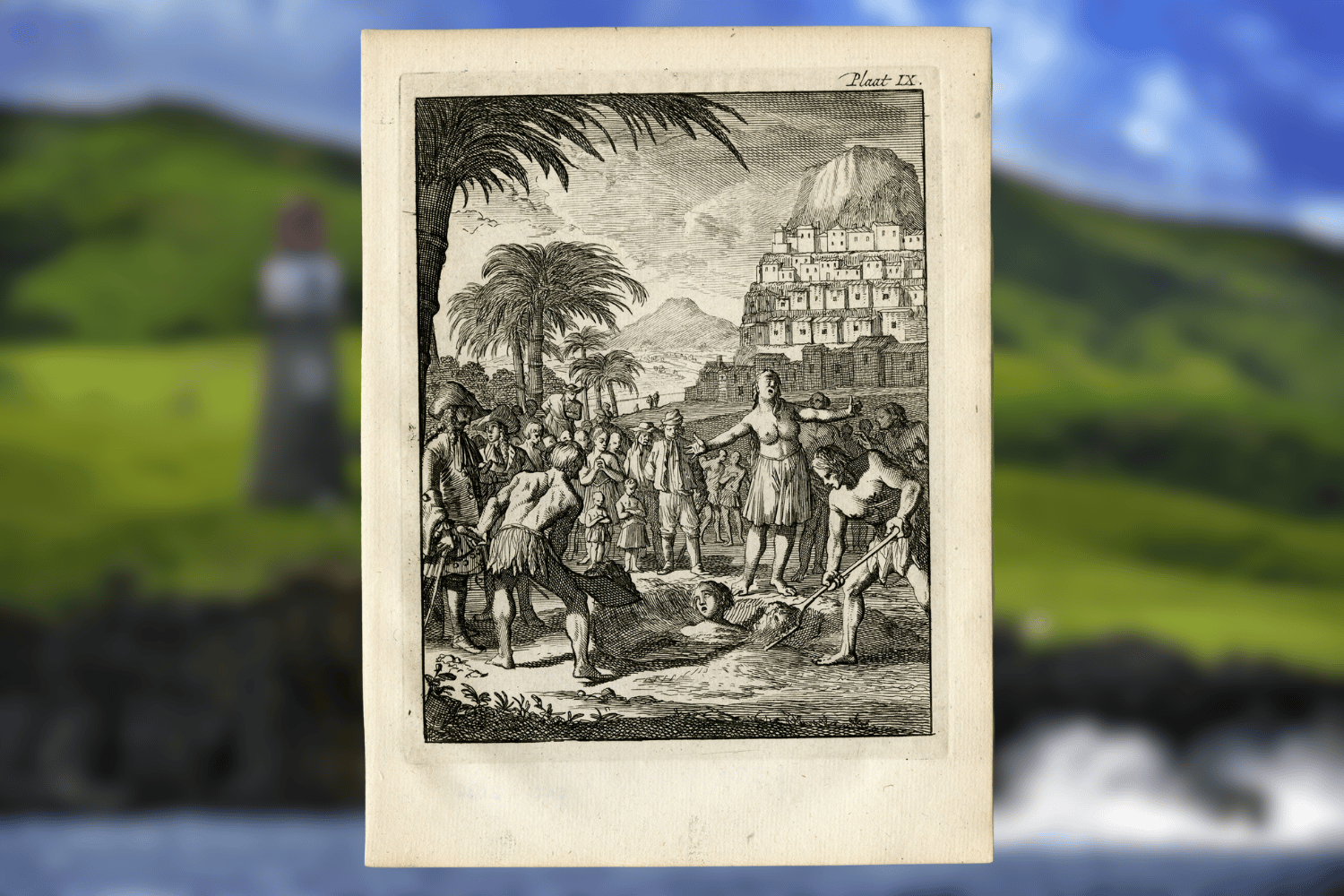
Now, a Filipino art historian is making the same case through the visual archive.
In a July 11 blog post, Geronimo Cristobal, a PhD candidate in history of art at Cornell University, pointed to a print attributed to Dutch engraver Caspar Luyken, published in the 1771 Dutch edition of English explorer William Dampier’s travel account “Nieuwe Reistogt rondom de Wereld.” Cristobal noted that the print was “likely an older plate or design reused in that later edition,” as Luyken died in 1708.
“The claim is so flimsy that even a small eighteenth-century print helps expose the problem,” Cristobal said.
The print depicts the “Basjee” or “Bashee” Islands—an early European name for present-day Batanes—and a punishment scene: a man buried in the sand, a crowd of onlookers, a woman lamenting at the center, and a settlement rising behind them. European visitors appear at the left, which Cristobal said frames the scene “as a spectacle of local life viewed through the eyes of a foreigner.”
Cristobal pointed out that Basjee or Bashee “clearly refers not to China, but to the Ivatan island world north of Luzon, distinct from Taiwan.”
“What makes Luyken’s image so striking is its representation of Batanes as an Ivatan polity governed by its own customary laws and systems of punitive justice,” he said.
Citing Dampier’s original 1687 account, which separately listed Mindanao, “other Philippine and East India islands,” China, Formosa, Luconia, Celebes, and surrounding seas, Cristobal said it distinguished “these places rather than collapsing them into a single regional space.”
At the time, Cristobal said Batanes “was not yet formally part of the Spanish Philippines… and it was not Chinese either.”
“It was Ivatan first and always: an Indigenous maritime society in the Luzon Strait, connected to nearby islands linguistically and by established sea routes,” he said.
Spain formally annexed Batanes in 1783 under Governor-General José Basco y Vargas, naming it Provincia de la Concepción. In the next 243 years, Cristobal noted that no Chinese claim to Batanes has been raised or recognized.
On July 4, 1946, the United States passed sovereignty to the Philippines—three years before the People’s Republic of China was established, on Oct. 1, 1949.
“No comparable print or visual record supports a Chinese claim,” Cristobal said. “As the print shows, Batanes was never a blank extension of Taiwan or China. It was an Indigenous island world later incorporated into the Philippines through Spanish colonial administration.”
READ: