Apart from the tragic, coercive, or purely lust-driven journeys of other characters in “Spring Awakening,” there is a BL (boys’ love) element in the story—the queer narrative focuses on Hänschen Rilow and Ernst Röbel.
Anything that is forbidden is intriguing. It is something people would like to have a piece of, and that’s what the coming-of-age rock musical, “Spring Awakening,” is all about.
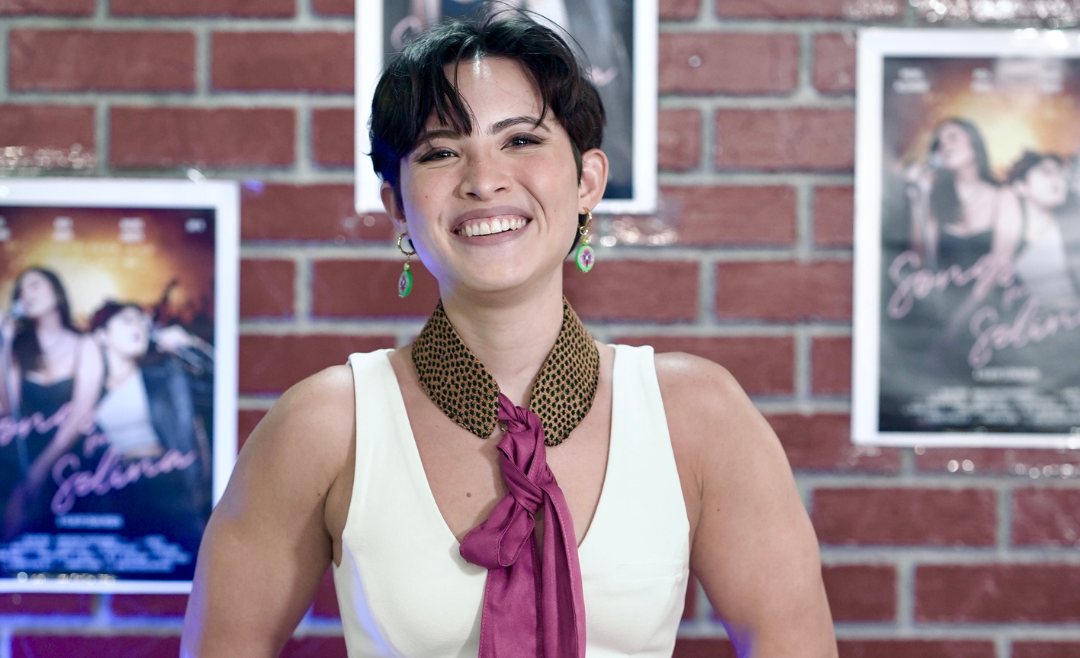
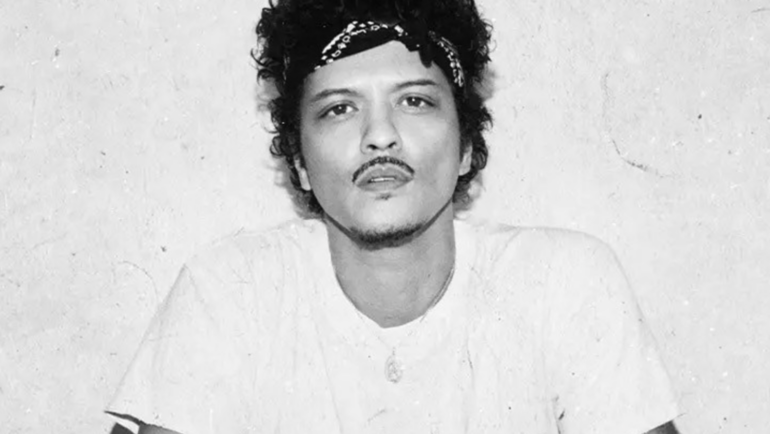
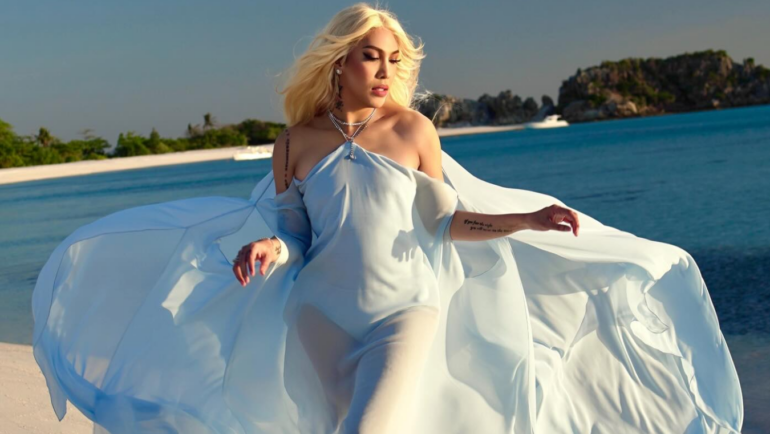
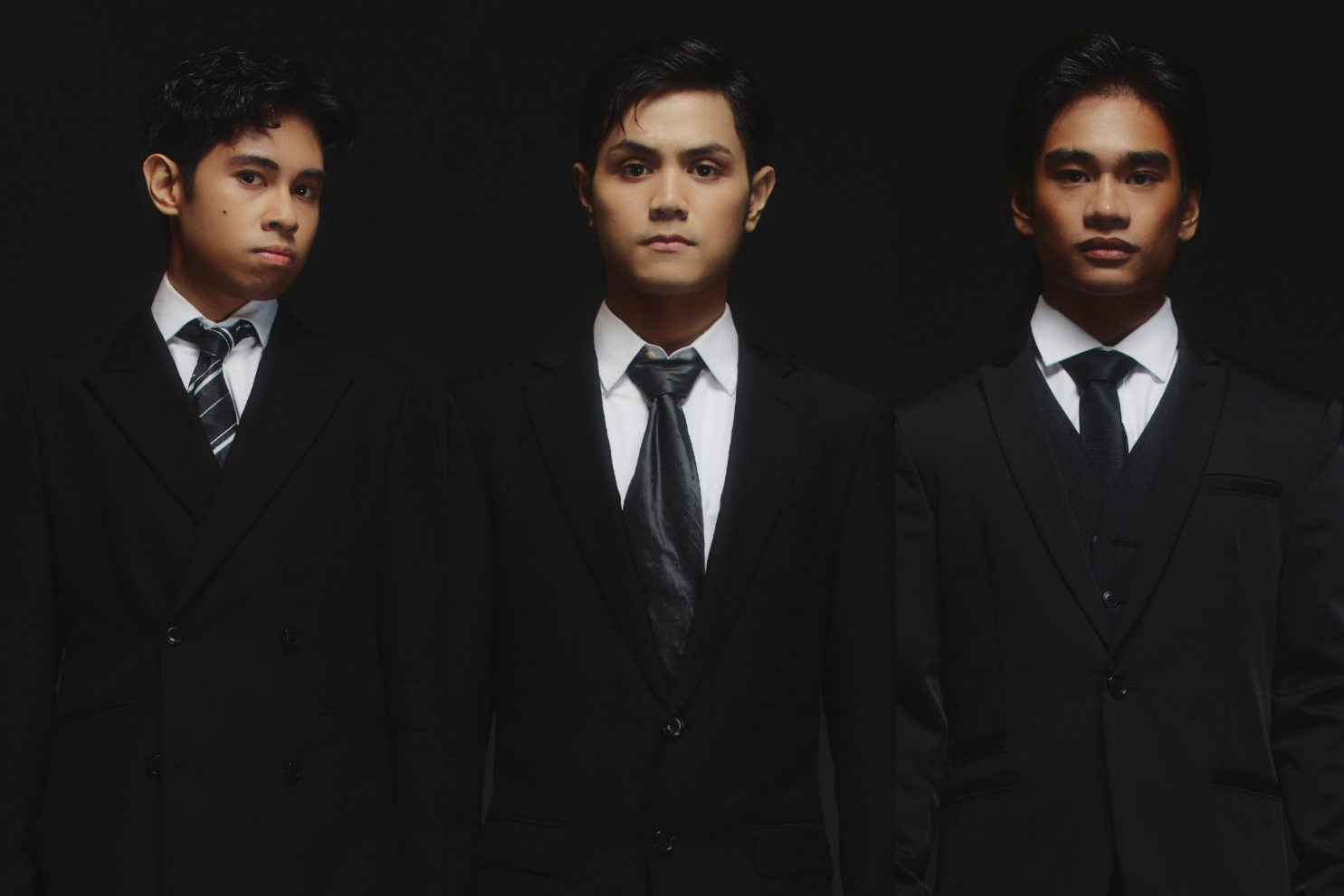
Angelo Martinez and Gabo Tiongson portray Hänschen, while Elian Dominguez is Ernst.
How do they perceive their characters?
Elian shares: “Ernst has the most innocence and naivety among the boys and is even a bit on the slower end, shall we say.
“[For my interpretation] I also put a lot of religious guilt in him. He likes being led, which is what attracts him to Hänschen.
“He’s not much like me, Elian, which makes him interesting to portray.”
Ernst is a secondary character. He’s attracted to boys and secretly in love with Hänschen. However, at school, he’s constantly stressed due to his poor academic performance, which is just as bad as Moritz’s.
Angelo and Gabo describe the role they share onstage.
Like Ernst, Hänschen is also a secondary character. He has keen insights into both sexuality and the world, and his ideal future is one full of pleasure and happiness—being a bystander who “skims the cream” rather than making a fuss.
“Every monologue and interaction written for Hänschen is intentional and weighted,” Angelo shares. “My job was to study Hänschen’s place in this world, but his awareness comes through when comparing him with his classmates—the five other boys.”
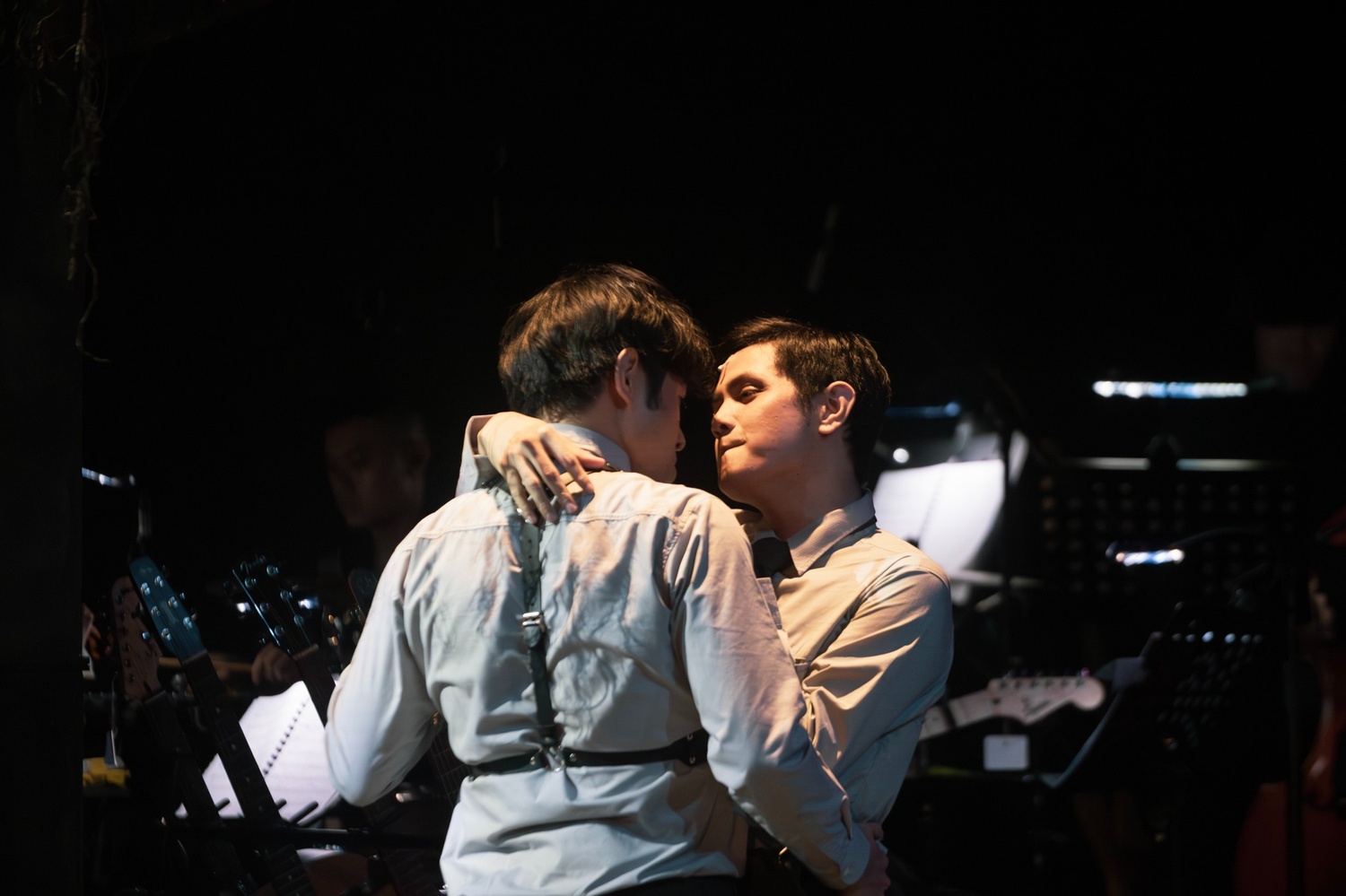
“His insight into sexuality is so clear and confident compared to Moritz, Ernst, and Otto, and that was really important to distinguish him as someone more aligned with Melchior,” adds Angelo.
Gabo points out: “I think Hänschen is a planner. He thinks five steps ahead. Planning a future 30 years down the line with a boy he’s been crushing on really shows his softer side. And ideally, I think we all share the sentiment of being able to love whoever we want and to express it however we please.”
How did they prepare for the role?
Gabo, full of excitement, shares: “I was super happy to be given the chance. Being able to represent a non-conforming relationship as someone even more than non-conforming is such a wonderful thing. I sort of just took the different sides of my sexuality and played with them.”
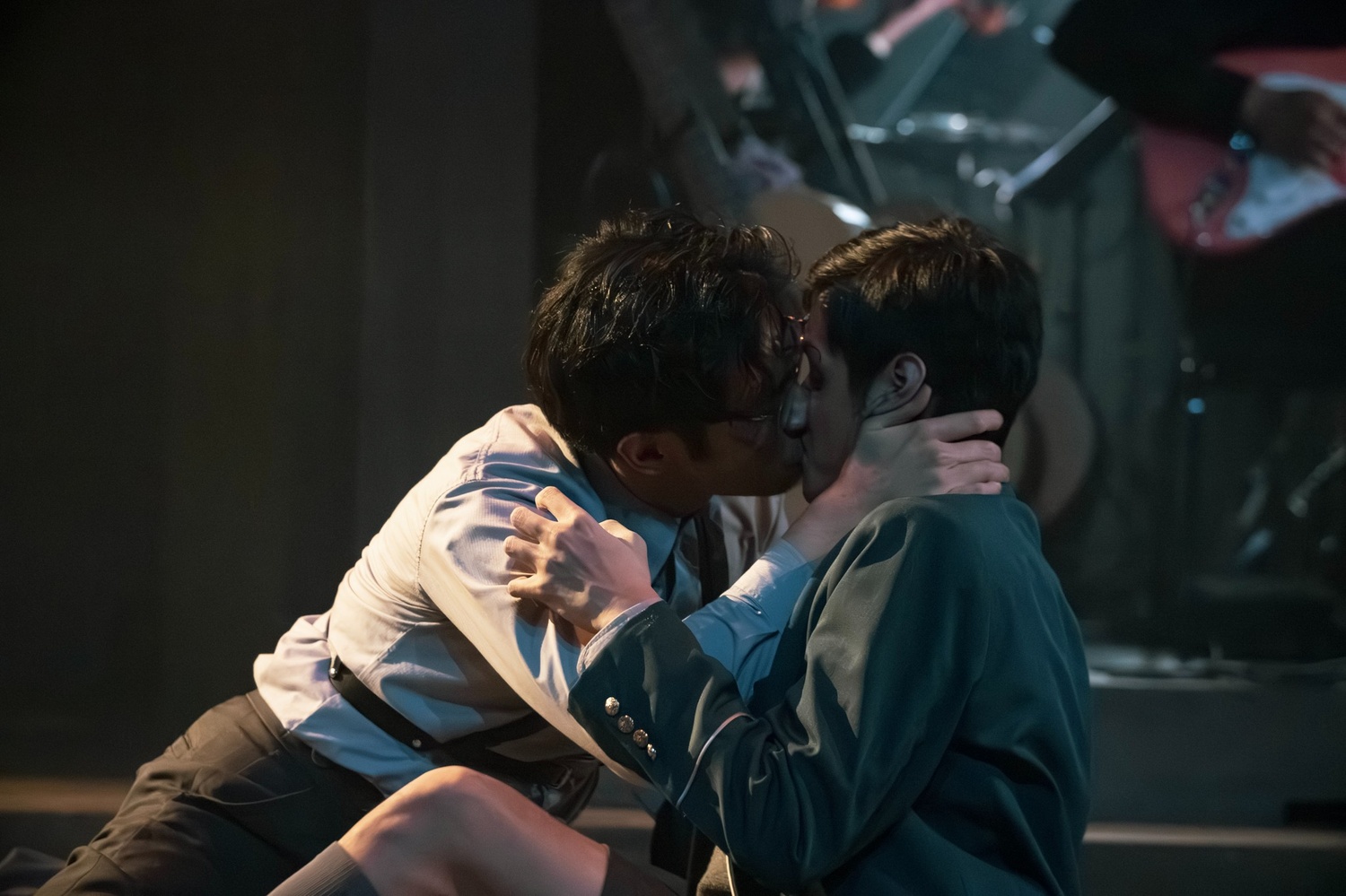
Angelo adds: “FYI, I did not read for Hänschen during the audition process. But I was aware of how hilarious he was. When I was offered the role and did research on his track, my response was: ‘I have to do WHAT [masturbates] on stage?’”
Elian reveals: “I truly saw myself in this role, so when I got the email, I was grateful that the stars aligned. I just let the character flow out of me. I think part of this is because nearly all aspects of the character come from roles I’ve played in the past: my queerness in ‘Zsazsa,’ my naivety in ‘Spelling Bee,’ my youthfulness in ‘Jepoy,’ and my meekness in ‘Bar Boys.’ Perhaps that’s why I felt so strongly yet organically about the character.”
If they met their characters…
Their characters were created in 19th-century Germany, exploring adolescent sexuality, repression, and mental health of the time.
“I would tell him to be nicer to his friends,” Angelo says. “I wish Hänschen would realize that his considerable intellect doesn’t make him a better person than everyone else, and I would approach him intending to tell him to lower his ego.”
“I would hate Hänschen. We wouldn’t like each other. I’d tell him to stop being such a creep,” Gabo said.
Elian says: “I think the beauty of this staging’s handling of Ernst and Hänschen is its earnestness. [Spoiler alert] To almost all the other characters in the show, the queer couple is the one with a happy ending. It just goes to show that queer people and queer love do have a place in the world and perhaps don’t need to be hidden. I think it’s never been more okay to be an Ernst Robel than it is today.”
The love between Hänschen Rilow and Ernst Röbel—both in the original 1891 play and the 2006 musical—presents a sincere, heartfelt affection. Their duet parallels the love story of Melchior and Wendla, showing how such feelings are often suppressed by society. Even today, these pressures exist, but there’s more tolerance. Their connection is depicted as genuinely romantic.
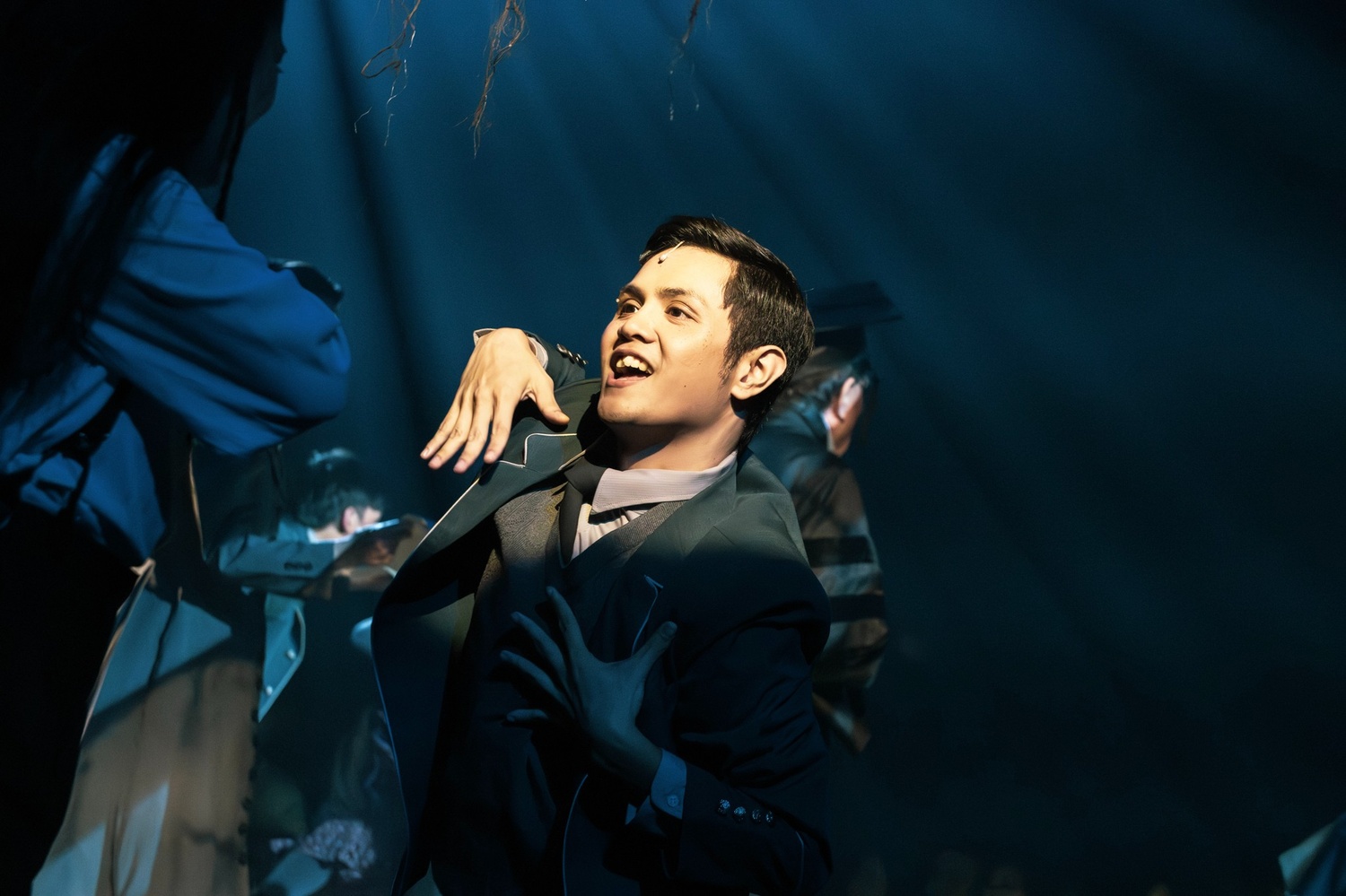
Elian is a theater artist and eco-warrior with a Bachelor’s in environmental science from Ateneo de Manila University. He made his professional debut in “The 25th Annual Putnam County Spelling Bee” (2024) as Leaf Coneybear.
Angelo, based in Singapore, was the first Filipino to play Evan Hansen in the Southeast Asian premiere of “Dear Evan Hansen.” “Spring Awakening” marks his homecoming debut in the Philippines.
At 20, Gabo is already accomplished. He played Young Simba in the international tour of “The Lion King” (2018) in Manila and Singapore, earning an Aliw Award nomination for Best Child Performer.
“Spring Awakening” runs until March 22 at Rockwell’s Black Box Theater, The Proscenium. Presented by Rockwell and The Sandbox Collective, it is directed by Andrei Nikolai Pamintuan, with music by Duncan Sheik and book and lyrics by Steven Sater. It’s based on the 1891 German play by Frank Wedekind.
Every monologue and interaction written for Hänschen is intentional and weighted. My job was to study Hänschen’s place in this world, but his awareness comes through when comparing him with his classmates—the five other boys.
Angelo Martinez