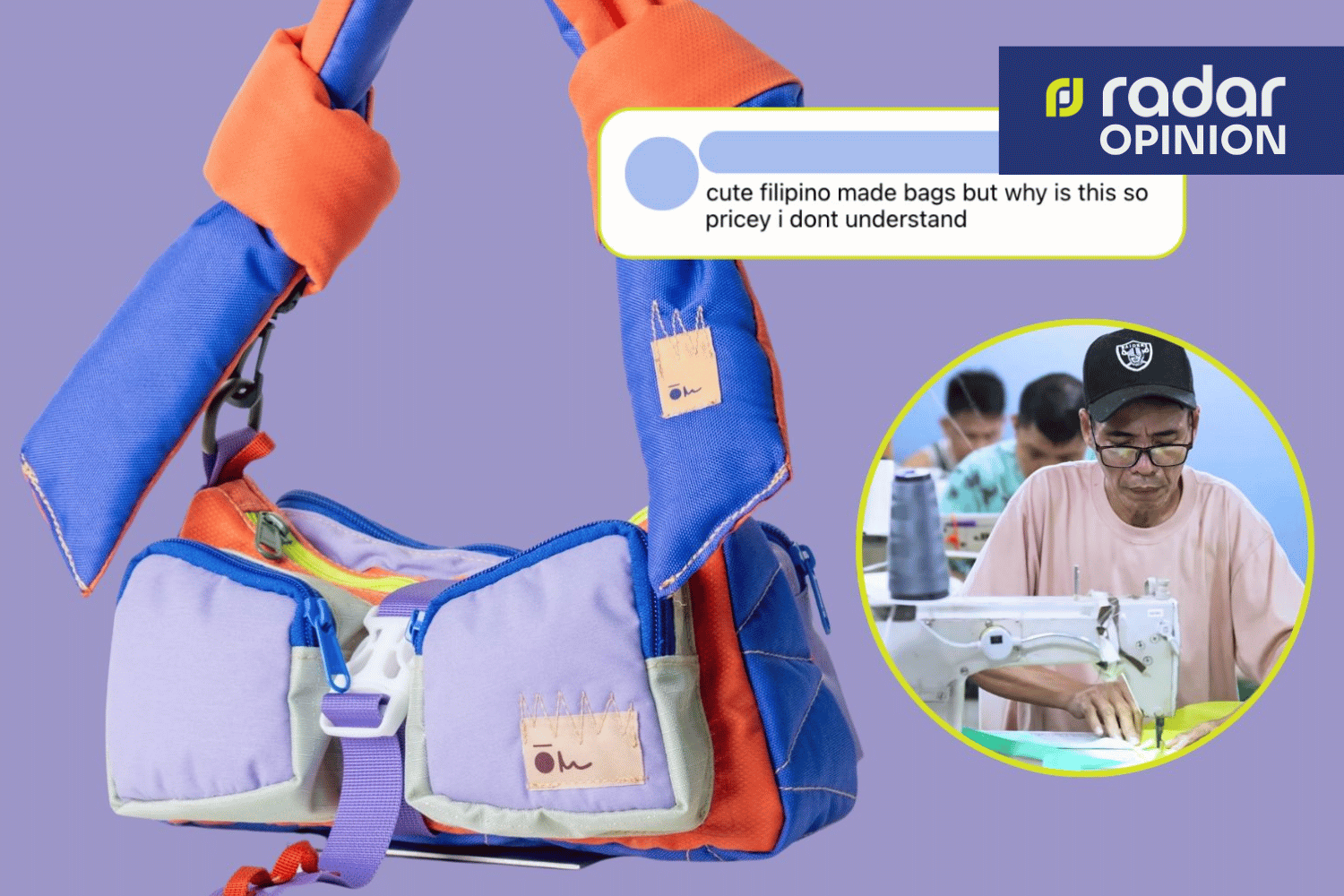

Carry Om’s products are made of upcycled materials handcrafted by seniors.
In another episode of Filipino kuripot discourse, Threads users balked at a local bag brand pricing its pieces at over ₱10,000—never mind that they’re upcycled, handmade, and artisanal.
A viral April 12 post showed a screenshot from Carry Om’s website: its “Malini” line is priced at ₱12,950. “Why is this so pricey? I don’t understand,” the user said.
Cue the expected knee-jerk reactions: “not worth it,” “for influencers,” “pretentious,” and even “fugly.” Others suggested cheaper and “better” alternatives, as if price alone defines value.
Defenders, for their part, played the “Hindi kayo ang target market” card. Not entirely wrong, but it’s not exactly enlightening either. It’s simplistic and doesn’t elevate the discourse.
A better question: What are you actually paying for?
The lore of the fabric
Launched in December 2024 by Dhanvan Saulo and Viktoria Salazar, Carry Om is built on legacy and necessity. For the uninitiated, Dhanvan is the son of Yadu Saulo, founder of Khumbmela Bags, once a mainstay from the ’70s to the ’90s.
In an interview with Karen Davila for the Department of Trade and Industry’s “Asenso Pilipino” program, Viktoria—a trained industrial designer and creative makeup artist—said the brand was born out of circumstance. During her cancer treatment, she made bags for her friends as a gesture of thanks for organizing a charity run. But they insisted on buying the bags. That’s the turning point: such an artistic outlet could help fund her treatment.
She and Dhanvan didn’t have to look for materials. When Yadu’s business folded in the 2000s amid an influx of cheaper imports, “a lot” of fabrics were left sitting in the family warehouse for years.
Chic upcycling
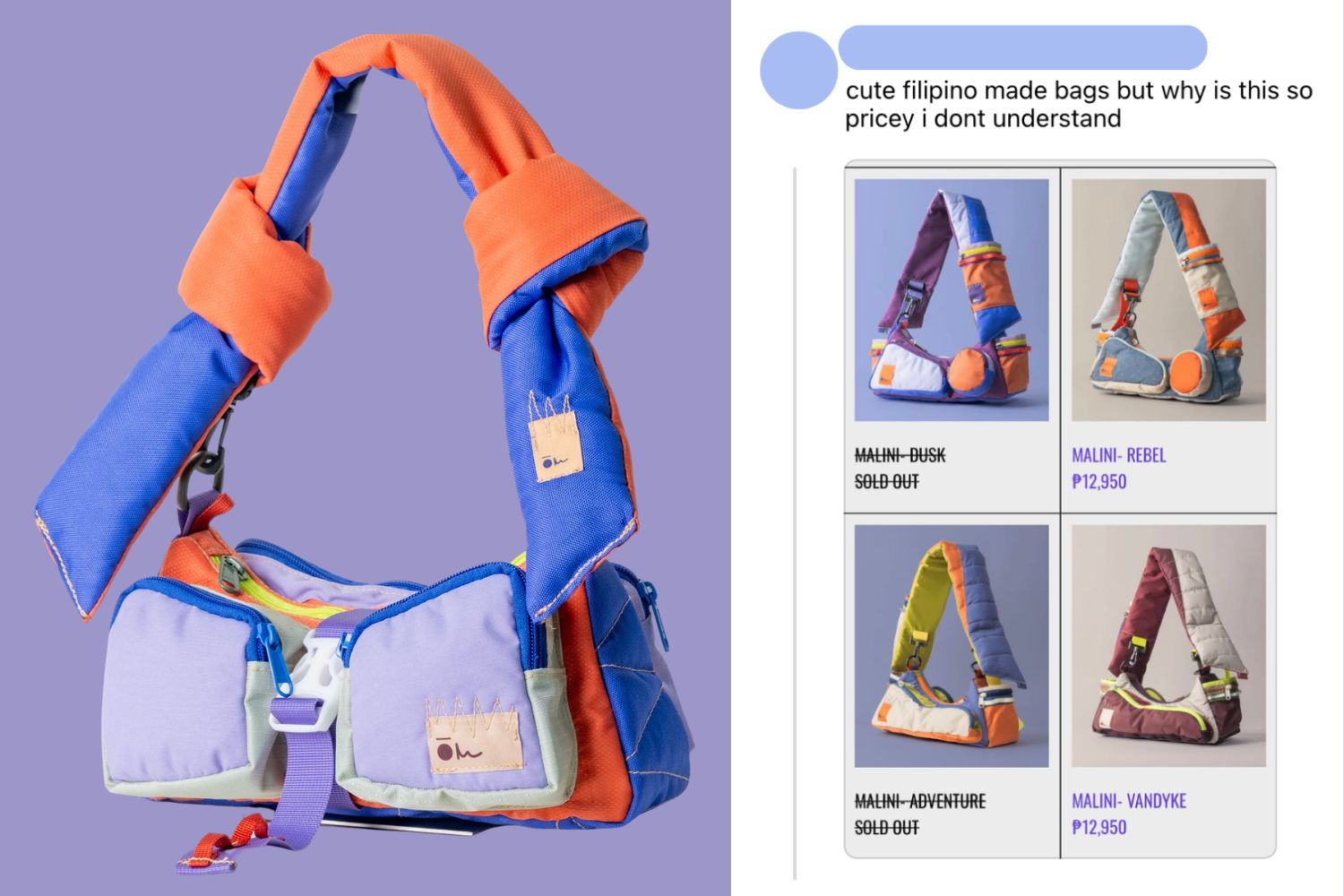
Carry Om repurposes Khumbmela’s tira—along with discarded textiles from large manufacturers—into patchwork bags. Designs aren’t mass-produced, as they’re dictated by what’s available, making each piece inherently unique.
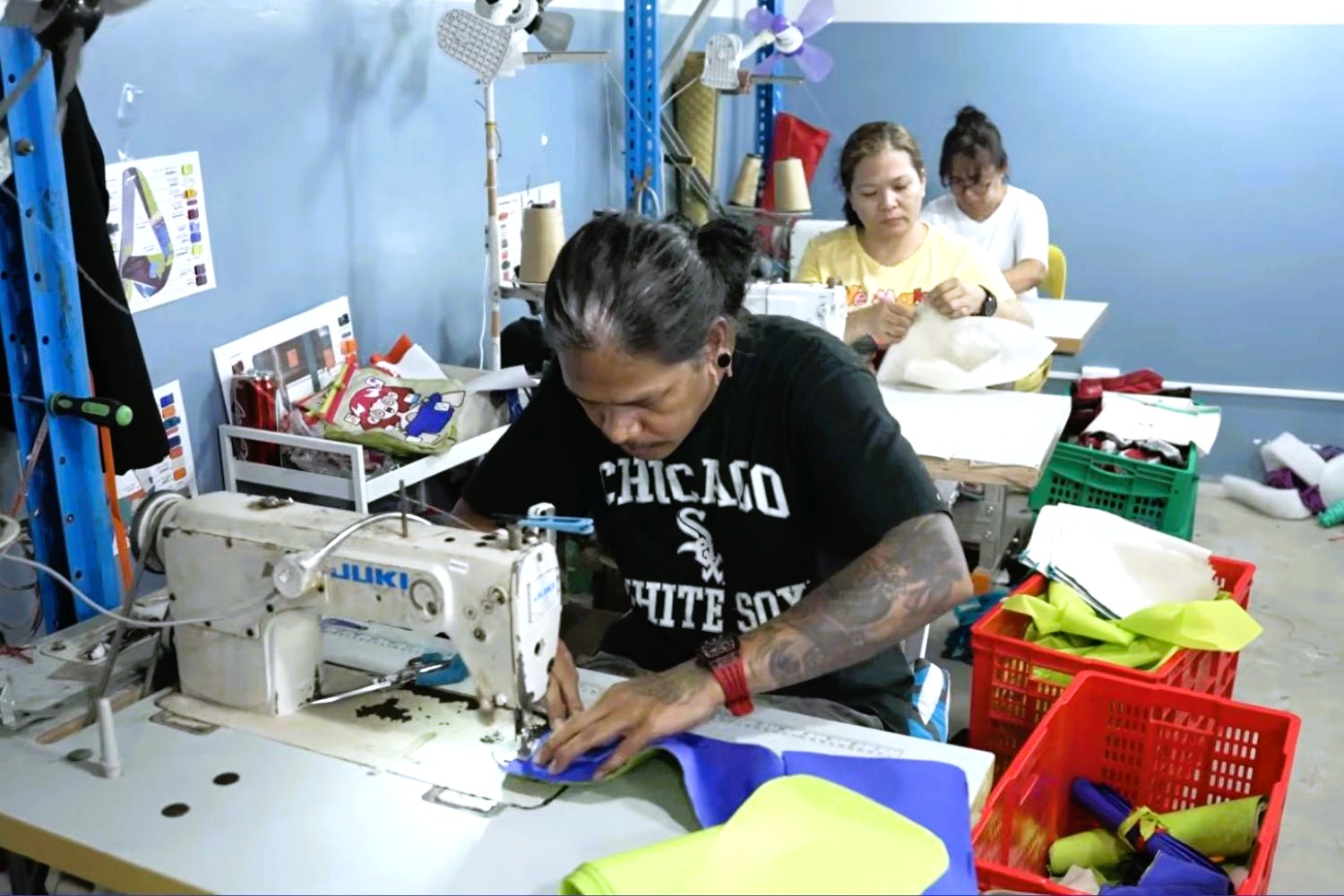
The work is also deeply human. The brand employs Yadu’s former workers—now mostly seniors—who handcraft each bag without automation. It’s a small, highly skilled team paid above standard rates, with output growing from 200 bags a month to around 800 to 1,000.
Simply put, it’s not a fast fashion piece that’s easily available on your favorite e-commerce platform. It’s a labor of love observing the highest standards—not to mention the brand’s utterly meaningful “lore.”
Given all that, the ₱12,950 isn’t the problem. It’s the never-changing reflex to treat Filipino-made as inherently less.
It can be attributed to colonial mentality, where foreign brands are always seen as superior. It’s also a manifestation of what Nick Joaquin described as a heritage of smallness; Filipinos prefer “tingi” when buying, and such a small-scale mindset seeps through their way of life: governance, labor, and ambition.
For many Filipinos, what’s Filipino must be cheap—and they insist on that. Isn’t that fugly?
From the remnants of a ’70s textile icon to a lifeline for cancer treatment, Carry Om is more than just a brand—it’s a labor of love. As netizens clash over its premium price tag, we look at the reality of slow fashion: upcycled heritage fabrics, zero automation, and a highly skilled team of seniors paid for their worth.