The ceiling is collapsing—and now, so is the civility.
At the University of the Philippines Diliman College of Fine Arts (CFA), a student’s quiet, pointed artwork has detonated into a full-blown public clash—one that now exposes not just failing infrastructure but also a system under strain and a leadership on the defensive.
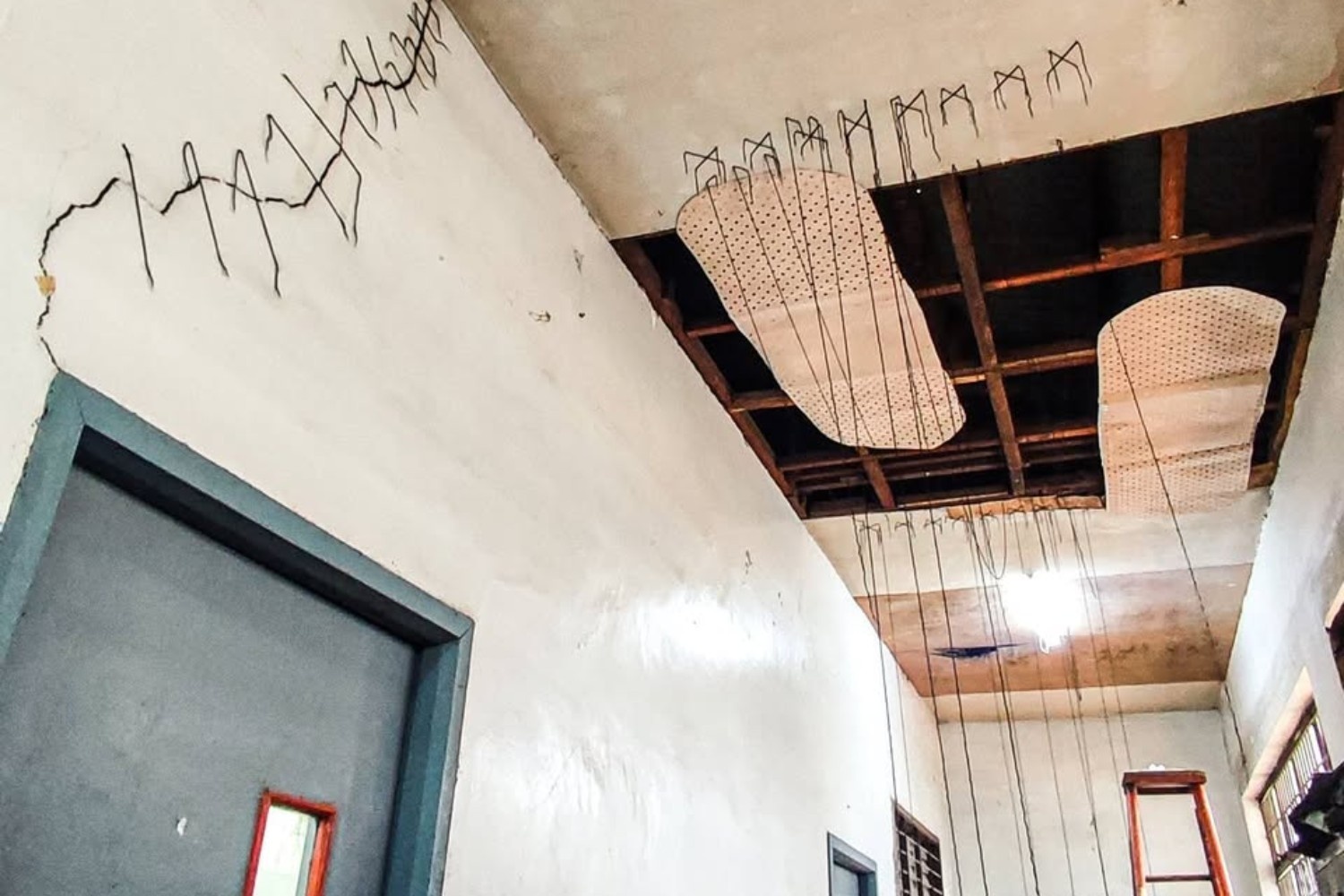
It began with student artist Adrian Ramos and his installation “Scars From Scarce.” Using the building’s own decay—exposed beams, broken ceilings, and hanging wires—Ramos turned the campus into both canvas and critique.
The artwork: Critique via infrastructure
“Hindi maikakailang nalilimitahan ang mga estudyante… dahil sa kakulangan ng silid-aralan… at sirang mga imprastruktura,” he wrote.
His post was urgent, but not accusatory. He even acknowledged efforts from within the institution. The real target was structural: chronic underfunding, stopgap fixes, and a system that leaves students to create in unsafe, deteriorating spaces.
“Hindi sasapat ang ‘band-aid solution’… Pondohan ang mga state universities and colleges.”
But the restraint didn’t last long.
Lawyer and columnist Joseph Gonzales picked up the story—and sharpened it into a scathing attack.
The escalation: Gonzales vs. the dean
“I wonder how callous and thick-skinned those responsible are… that they can party… and yet they let their charges wallow in neglect and disrepair. Shame on you UP.”
In his column, the imagery escalated: administrators “clinking wine glasses,” “wining, dining, and speechifying,” while students worked under rotting ceilings. The critique reframed neglect as not just systemic but personal.
That’s when the dean struck back.
Abdulmari de Leon Imao Jr., dean of UP Diliman CFA, responded with a lengthy post that began with acknowledgment but quickly pivoted to defense.
He agreed the facilities are in poor condition. But instead of offering concrete timelines or solutions, he leaned heavily on process—“formal requests,” “ongoing assessments,” and “architectural and engineering planning”—arguing that delays are simply how public institutions function.
In effect, the problem was reframed: not neglect, but bureaucracy.
And then, the response turned personal.
He accused Gonzales of pushing a “judgmental and myopic” narrative, dismissed his criticisms as “shenanigans,” “entitled rants,” and “crass posts,” and suggested the issue was less about the crumbling facilities and more about unfair attacks on the administration.
“No one disrespects me and my CFA family. Not in my house,” he wrote.
Even the now-viral jab about “clinking wine glasses” was flipped into justification. Imao insisted he would continue attending events, parties, and art gatherings—not as indulgence, but as necessary networking to raise funds and sustain the college.
The deeper tension
The message was clear: the system is slow, the work is ongoing, and the criticism is misplaced.
But for many, that defense raises a deeper tension.
Because while the administration points to process, and critics point to accountability, students are still navigating classrooms where ceilings crack, infrastructure fails, and safety feels uncertain.
Somewhere between systemic limitations and personal rebuttals, the focus has shifted—from fixing what’s broken to fighting over who’s to blame.
And in that shift, the original voice—the student’s—cuts through with the least noise, but the most clarity.
“Ito ay hindi lang para magreklamo, kundi para magmalasakit.”
The artwork exposed the cracks.
The backlash exposed something else: how quickly a call for help can turn into a battle over narratives—while the system that created the problem remains exactly as it is.