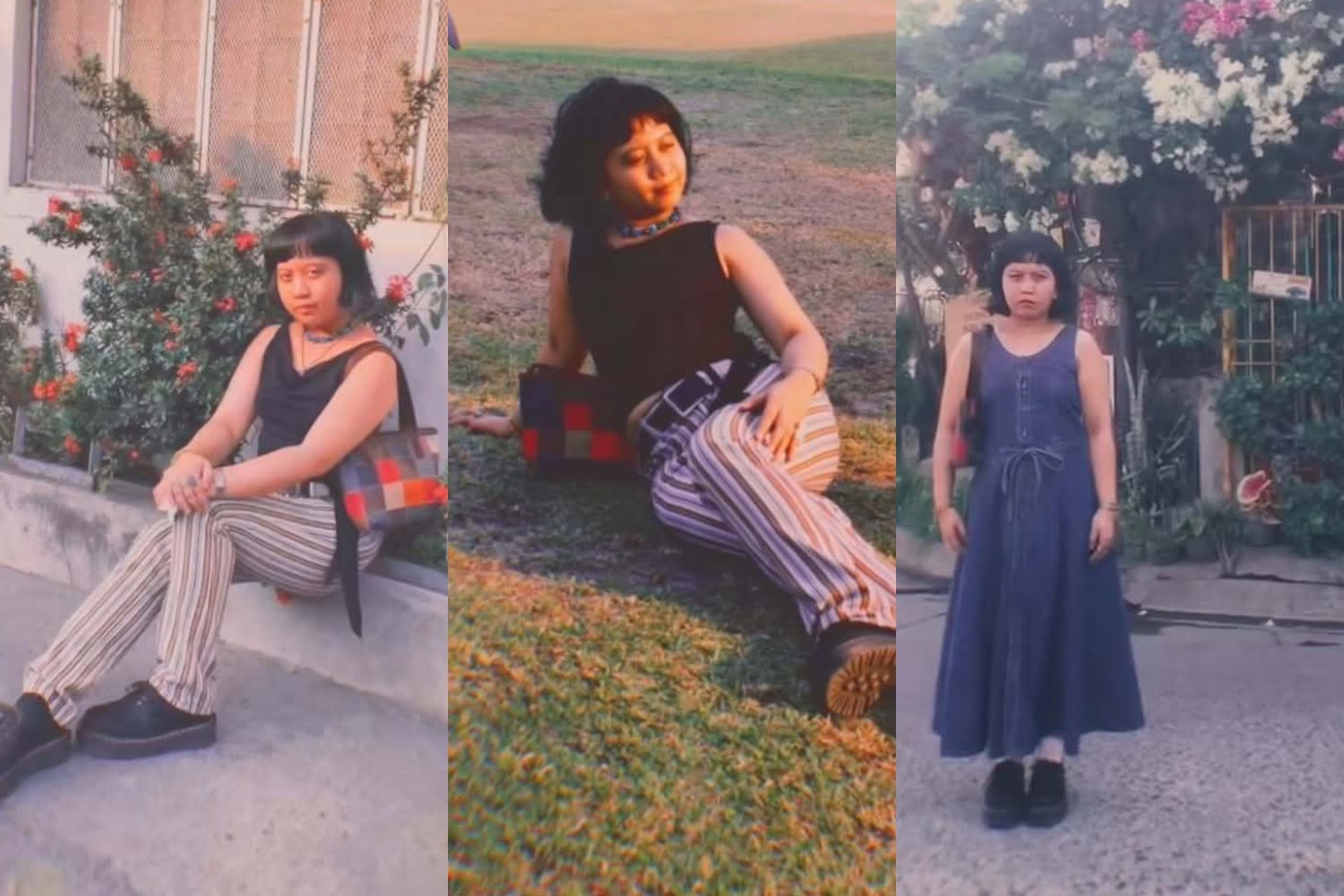
Before the digital age, the "Kodak stare" was influenced by the cost of 35mm film development in the Philippines, where a standard roll of 36 exposures required careful posing to avoid wasting a shot. Photo by Maria Charmaine Glorioso / Facebook
These structured, no-smile portraits against neighborhood backdrops have transformed from awkward family memories into a celebrated visual language of Pinoy identity.
Call it a “Kodak stare,” “Tita-core pose,” or even “Car pose,” these 1980s to 90s Pinoy Mom Aesthetic has resurfaced as the definitive visual language of our collective nostalgia.
In the era of limited shot film rolls, every frame was a public performance. Unlike today’s “candid” or “effortless” social media tropes, the vintage Pinoy aesthetic was built on deliberate stillness. The signature “no-smile” trend back then wasn’t just a mood–it was the domestic grit of the 90s that sets against the raw backdrop of a residential gate or a neighbor’s mango tree.
The public reaction has been a massive “core memory” unlock. Netizens are currently flooding the comments to “peer-review” the content adding their own family-album archetypes–from the “kunyari may kausap sa phone” pose to the classic bougainvillea poses. It became a digital reunion that proves these weren’t just “awkward” photos, they were the blueprints of a shared upbringing.
Filipino netizens are revisiting the “Kodak stare” and “Tita-core” poses that defined classic household photography.
Kate Nuesca is a dedicated writer who blends a deep interest in K-pop and music culture with a focus on nostalgic aesthetics. With a background in archiving and a versatile writing style, she crafts compelling, organized content designed to resonate within the fast-paced entertainment landscape.