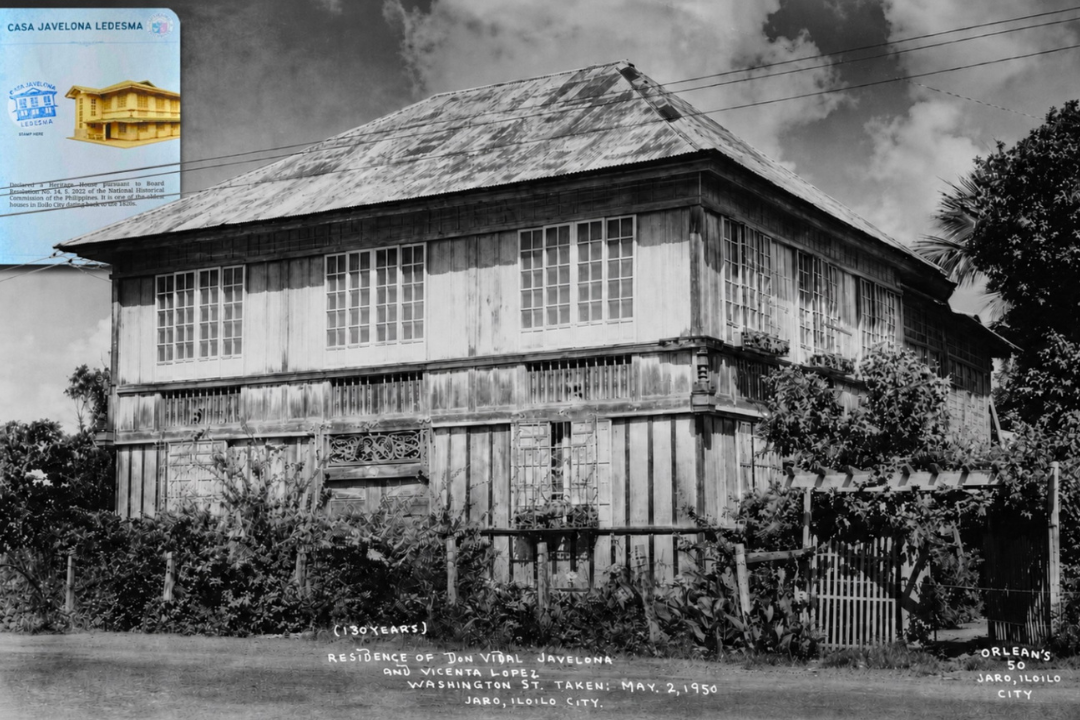
And yet, more than 200 years later, the house remains there.
Its hardwood upper floor, massive windows, capiz-lined interiors, and stone foundation continue to tell stories from a version of the Philippines many people now only encounter in history books.
According to Luján post, the old residence is more than simply an ancestral home. It is a witness.
It witnessed the Spanish colonial era through Don Vidal Javelona, who served as capitan municipal of Jaro. It witnessed the growth of Iloilo during a period when the city became one of the wealthiest in the country because of the sugar industry. It witnessed generations of the Javelona and Ledesma families, along with countless gatherings, religious celebrations, and social events that once animated old Jaro society.
Luján also noted that, according to local accounts, the house once became a venue for community festivities and important occasions — the kind of place where entire neighborhoods gathered before malls, hotels, and modern event venues replaced communal spaces.
Today, the structure survives as one of the few remaining examples of the bahay na bato tradition that defined upper-class Filipino homes during the 19th century.
The National Historical Commission of the Philippines officially declared it a Heritage House in 2022, recognizing its architectural and cultural importance. The house reflects arquitectura mestiza, combining Filipino, Spanish, and local influences into a distinctly Filipino form of domestic architecture. Its stone lower floor and hardwood upper level remain enduring symbols of how Filipino craftsmen once built homes meant to last generations.
And perhaps that is what makes old houses like this emotionally powerful.
They remind us that history is not abstract.
History is physical.
It exists in narra floors worn smooth by footsteps. In wooden staircases polished by decades of hands gripping railings. In ventanillas where sunlight once entered before electricity existed. In dining rooms where families survived wars, occupations, births, deaths, and changing governments.
Without these houses, entire chapters of Filipino life disappear.
Across the Philippines, ancestral homes continue to vanish quietly. Some are demolished because maintaining them has become too expensive. Others are abandoned until neglect finally destroys them. Many are replaced by commercial buildings, parking lots, or modern structures with little regard for historical continuity.
And with every demolished heritage house, the country loses more than architecture.
It loses memory.
Old houses preserve something modern buildings often cannot: a sense of continuity between generations. They allow Filipinos to physically encounter the lives of those who came before them. They remind younger generations that Philippine history did not only happen inside textbooks or museums, but inside actual homes where people laughed, prayed, argued, celebrated, and built communities.
That is why preserving ancestral homes matters.
Not because they are old.
But because they carry pieces of who we are.
In a country where so much history is constantly erased by redevelopment, neglect, disasters, and short-term thinking, every surviving bahay na bato feels almost miraculous.
And somewhere along Washington Street in Jaro, Iloilo, a house built around 1820 continues to stand quietly against time — reminding Filipinos that heritage is not simply about preserving structures, but preserving identity itself.
More than 200 years later, the house remains there. Its hardwood upper floor, massive windows, capiz-lined interiors, and stone foundation continue to tell stories from a version of the Philippines many people now only encounter in history books.
READ: