Integra R.E. flags supply loopholes and permitting roadblocks, emphasizing the need for industry standardization to lock in true energy security.
Rising electricity prices, recurring red and yellow alerts, and concerns over energy security are pushing solar power out of the “alternative energy” category and into something closer to a household survival strategy.
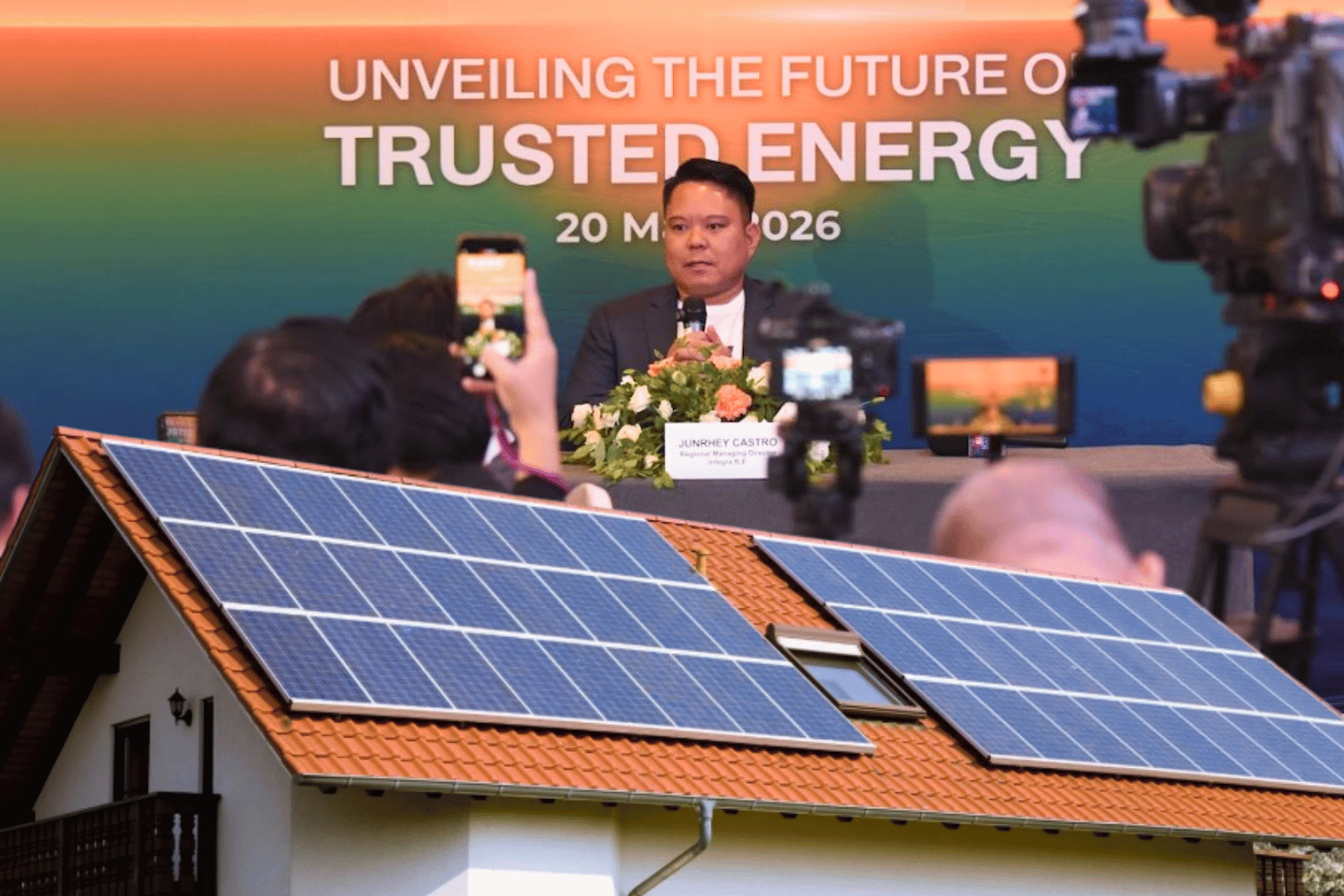
Solar firm Integra R.E., a business-to-business renewable energy company that has recently unveiled an updated brand identity, said the country continues to face a structural energy supply gap, with thin reserve margins and aging infrastructure contributing to some of the highest electricity prices in Southeast Asia.
The structural deficit driving demand
While utility-scale renewable energy projects remain the backbone of the transition, the company said demand is increasingly shifting to rooftop solar as households and businesses try to secure greater control over their electricity supply. The need to avoid disruption and keep daily life running during outages drives the decision more than savings do.
Lower battery costs and improving solar technology are making distributed systems more viable, particularly for work-from-home setups and areas prone to brownouts. Systems that were once considered expensive or experimental are now being reframed as long-term protection against price volatility and grid instability.
But non-technical barriers still hold back adoption. Integra R.E. pointed to permitting delays and policy fragmentation as key constraints, noting that markets like Thailand and Ireland have moved faster by offering clearer incentives and more streamlined approval systems for rooftop solar deployment.
Breaking the non-technical roadblocks
The firm also flagged risks around inconsistent product quality and untrained installers, which could undermine confidence as more contractors enter the space. It said the industry response needs to focus on standardizing supply chains, expanding installer training, and improving access to financing to support wider adoption.
Even so, Integra R.E. said rising electricity prices and ongoing supply uncertainty are pushing rooftop solar to be treated less as an upgrade and more as a form of energy security for households and businesses.