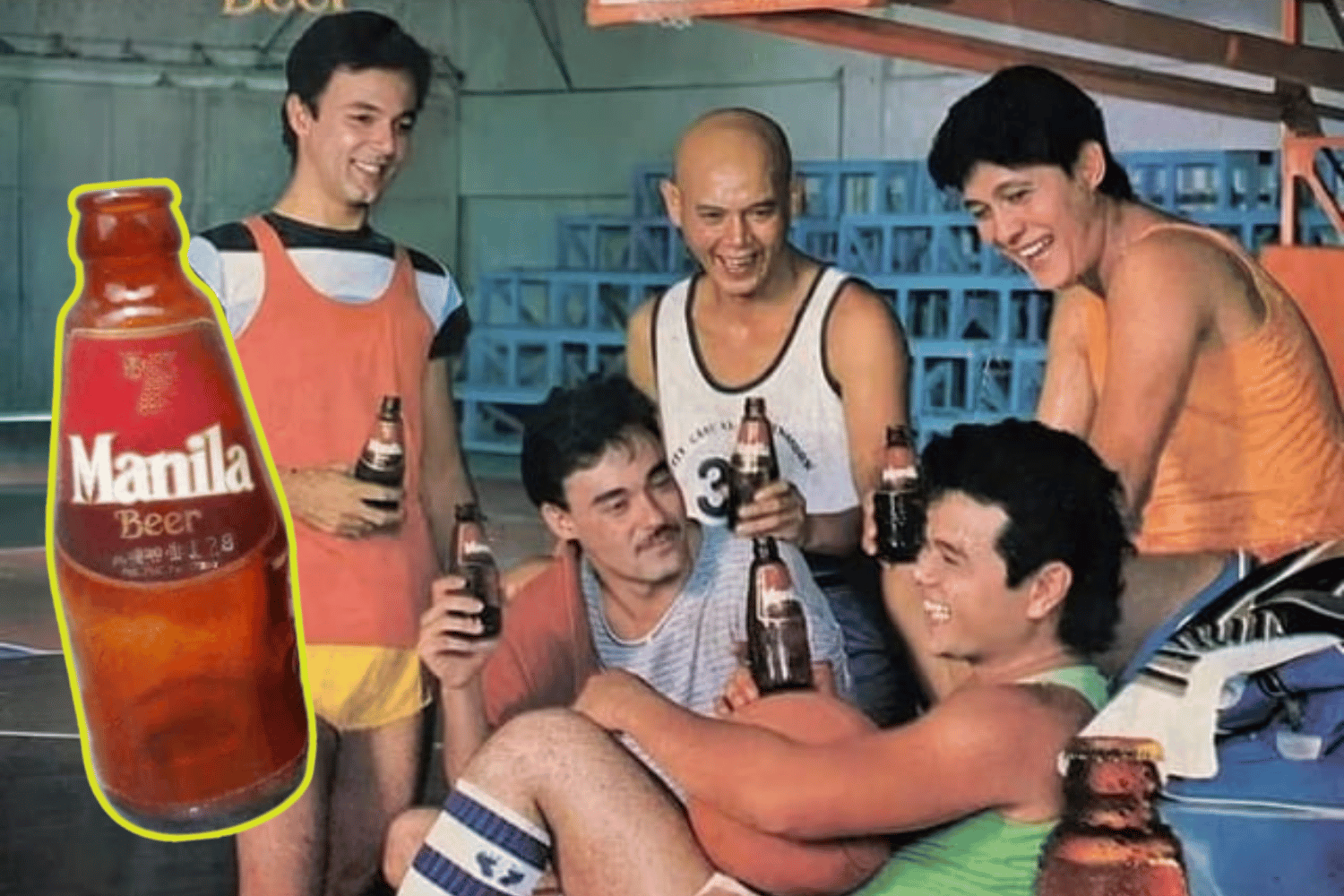
Launched in 1980, Manila Beer then directly challenged San Miguel Beer’s market dominance.
The ice-cold bottle sweats on a plastic table beside a plate of sisig while a smoky beerhouse hums with laughter, cigarette haze, and basketball talk from a television hanging in the corner. Somewhere in the background, the Manila Beer Brewmasters are battling in the PBA, and for a moment, the brand feels unstoppable — proudly Filipino, aggressively marketed, and seemingly everywhere.
Today, younger Filipinos scroll through old advertisements and ask the same question with genuine curiosity: whatever happened to Manila Beer?
The once-ambitious beer brand of Asia Brewery has long disappeared from supermarket shelves, sari-sari stores, and inuman sessions. What remains are faded memories, nostalgic Facebook posts, and stories from older drinkers who insist it was “masarap naman.”
Manila Beer was launched in the 1980s as Asia Brewery’s direct challenge to the dominance of San Miguel Pale Pilsen. At the time, beer in the Philippines was already more than just alcohol. It was culture. It was basketball, karaoke, overtime sessions, family reunions, and barkada bonding rolled into one bottle.
Trying to compete against San Miguel was like trying to replace an entire Filipino ritual.
Still, Manila Beer fought hard for visibility.
The company heavily promoted the brand through the Manila Beer Brewmasters, its PBA franchise that played from 1984 to 1986. The team featured legends like Atoy Co, Abet Guidaben, and Ramon Fernandez, quickly becoming one of the league’s most talked-about squads despite never winning a championship.
For basketball fans of the era, Manila Beer became inseparable from the PBA’s colorful and chaotic golden years.
But even strong recall and star power were not enough.
By the late 1980s, Manila Beer quietly disappeared from the market as San Miguel maintained its overwhelming grip on the beer industry. Decades later, Asia Brewery attempted to revive the brand with a modern relaunch aimed at younger urban drinkers. The new Manila Beer featured an all-malt formula, sleeker bottles, and aggressive marketing meant to tap both nostalgia and contemporary tastes.
The comeback never fully connected.
By then, Filipino drinking habits had already evolved. San Miguel remained deeply entrenched, Red Horse dominated the strong beer market, and newer alcohol brands were competing for younger consumers. Manila Beer struggled to reclaim an audience that had already moved on.
Eventually, the brand vanished again — this time seemingly for good.
Its disappearance reveals something deeper about Filipino consumer culture. Products here do not survive on flavor alone. They survive through habit, emotional attachment, and generations of familiarity.
San Miguel became a tradition passed from fathers to sons, from fiestas to funerals, from beerhouses to family gatherings.
And Manila Beer, despite all its ambition and nostalgia, simply could not outdrink a legacy already embedded into Filipino life.