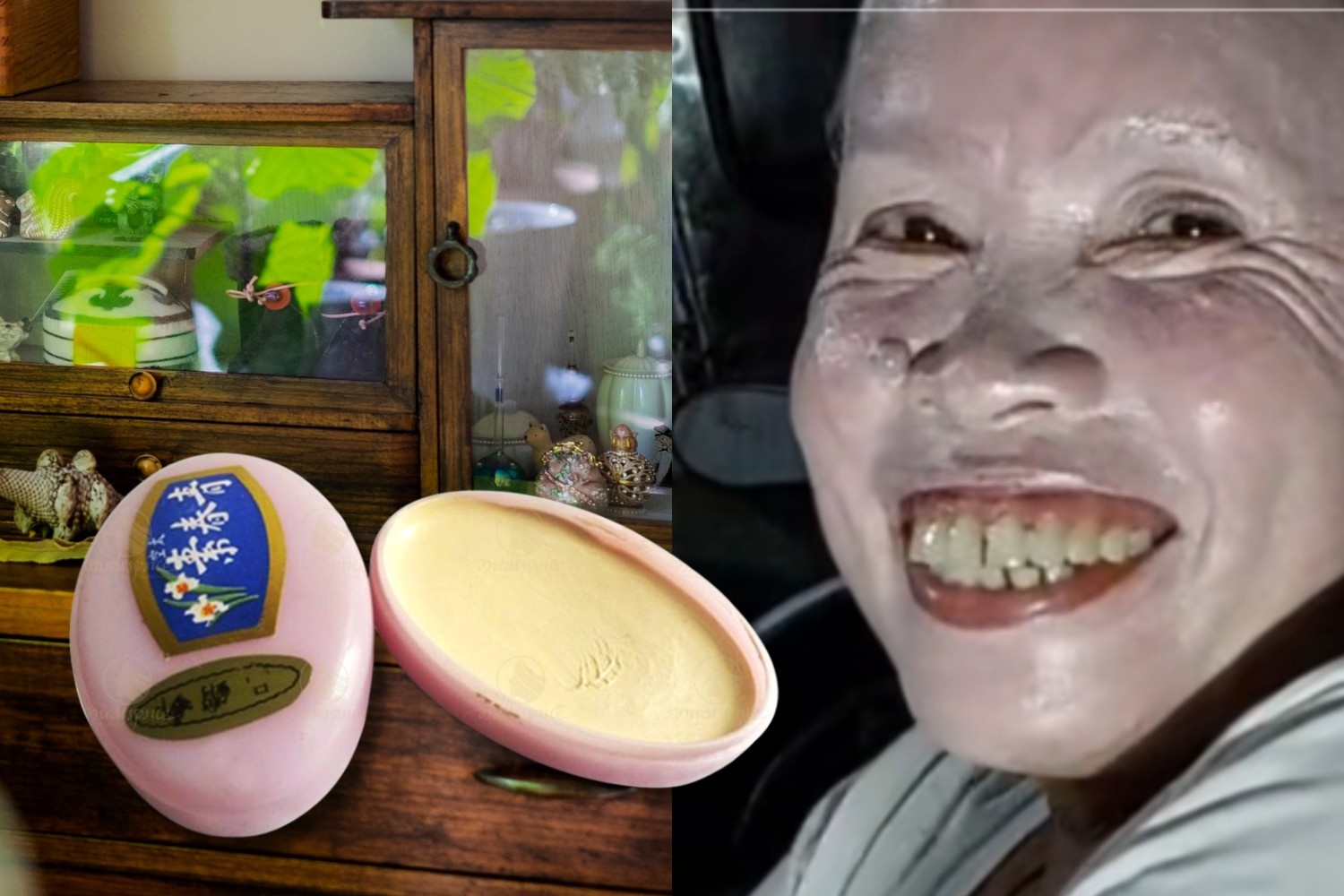
While many remember it for the signature chalky finish, the product remains a significant cultural touchstone for its role in democratizing skincare
Long before “glass skin,” 10-step routines, and GRWM videos took over your feed, Filipino beauty came in one tiny oval jar—and it did everything. No serum, no toner, no SPF layering. Just Chin Chun Su. Slather it on, and you were instantly matte, bright, and… very visibly committed. If Gen Z had seen it in its prime, they’d probably call it the original “full coverage in one swipe.”
There was a time when beauty in the Philippines came in that same pink or orange container—and almost every vanity, dresser, or baul had one. Chin Chun Su, or “Chinsansu” as many fondly called it, wasn’t just a skincare product. It was a ritual.
In the 1980s and early ’90s, before Korean skincare routines and serums took over, Chin Chun Su was the go-to for generations of Filipinas chasing clear, fair skin. Affordable, accessible, and almost mythical in its promises, it claimed to smoothen texture, fade dark spots, and fight pimples—all in one thick, fragrant cream.
The pink jar legacy
But what truly made it unforgettable was its finish.
Unlike today’s barely-there moisturizers, Chin Chun Su sat boldly on the skin. It left behind a distinct white, almost chalky, oily layer that doubled as foundation. For many, it was their first introduction to makeup—no separate base, powder, or concealer needed. That signature pale cast became a beauty standard of its own, signaling effort, care, and the aspiration for brighter skin.
Teenagers dabbed it on before school. Mothers applied it religiously before bed. Some even layered it multiple times a day, believing consistency would unlock its full promise. Its formulation—often infused with beta-carotene, pearl powder, and sulfur—gave it both its therapeutic reputation and its unmistakable scent.
Of course, like many products of its time, it wasn’t without drawbacks. Some users recall tingling, redness, or sensitivity. Yet that rarely stopped its loyal following. In an era with limited options, Chin Chun Su represented hope in a jar—a simple solution to complex skin insecurities.
Today, it lives on as both a cult favorite and a nostalgic relic. Mention it, and you’ll hear stories: of oily T-zones, of school mornings, of mothers passing down beauty secrets. In a world now obsessed with glass skin and multi-step routines, Chin Chun Su reminds us of a time when beauty was simpler, thicker—and unmistakably white.