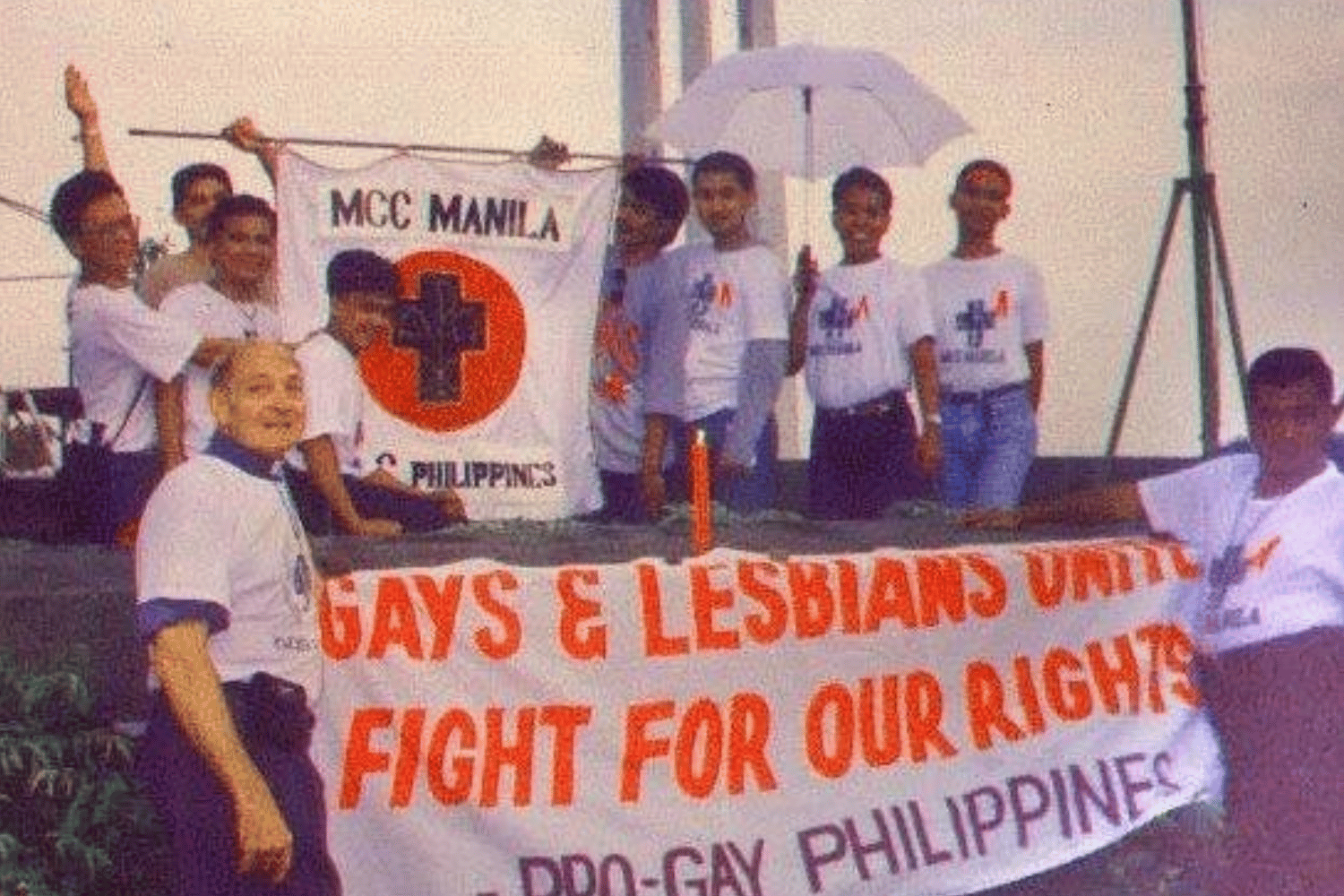
It all began during the gay rights movement in 1900s.
June is Pride Month, a time to celebrate, honor, and champion the LGBTQIA+ community. It’s marked by rainbow hues, mothering outfits, spellbinding music, and other razzle-dazzle that makes everything feel so bonggacious.
But beyond the spectacle, Pride Month has deeply political roots—and has always been an act of resistance.
Gay and lesbian organizations
According to History.com, Pride Month traces back to the 1900s gay rights movement, when individuals in North America and Europe formed groups like the Society for Human Rights.
After World War II, organizations like the Mattachine Society and the Daughters of Bilitis published gay- and lesbian-positive newsletters—demanding recognition and protesting discrimination.
‘Sip-In’ protest
In 1966, three Mattachine Society members staged a “Sip-In” protest at Julius, a bar in New York City.
They demanded drinks after announcing they were gay. At the time, local laws prohibited bars from serving alcohol to gays and lesbians, labeling them “disorderly.” Bars risked losing their liquor licenses and were frequent target of police raids.
The protest exposed the law’s discrimination. Backed by the American Civil Liberty Union, the men challenged the State Liquor Authority. Local media covered the incident, with the New York Times famously using the headline, “3 Deviates Invite Exclusion by Bars.”
While the State Liquor Authority denied the claim, the Commission on Human Rights later ruled that homosexuals had the right to be served in bars and weren’t “disorderly.”
Stonewall riots
But gay oppression persisted. On June 28, 1969, the New York Police Department raided the Stonewall Inn, a bar for drag queens and homeless youths—and forcibly removed patrons and employees.
But patrons and neighborhood residents, long fed up with police harassment and social discrimination, fought back, sparking riots involving hundreds. The protests continued for five more days, drawing thousands.
Alternative newspaper Village Voice covered the unrest, pushing it to national consciousness. By July 2, it had reached global headlines—spotlighting a movement long ignored.
First Gay Pride Parade
In 1970, on Stonewall anniversary, thousands marched in Manhattan’s “Christopher Street Liberation March.” Their official chant for “Say it loud, gay is proud”—a precursor to Gay Pride Parade.
That same day, communities in Los Angeles and San Francisco held similar demonstrations. A day before, Chicago launched a week-long celebration under the slogan “Gay Power.”
Pride Month
On June 11, 1999, President Bill Clinton proclaimed June as Gay and Lesbian Pride Month.
The observance paused under George W. Bush’s term from 2001 to 2009.
In 2009, Barack Obama reinstated it—even renaming it Lesbian, Gay, Bisexual, and Transgender Pride Month. In 2016, he also designated the Stonewall National Monument.
Today, Pride Month is observed worldwide, including in Canada, Brazil, Australia, the Netherlands, Germany, Taiwan, the United Kingdom, Spain, Mexico, and the Philippines.
Filipino Pride March
The first Filipino Pride March—and the first one in Asia at that—was held on June 26, 1994, organized by the Progressive Organization of Gays and the Metropolitan Community Church in Quezon City. About 50 individuals gathered ahead of Stonewall’s 25th anniversary.
A second march followed on June 22, 1996, celebrating both gays and lesbians (“Solidarity ’96”) and raising awareness about AIDS.
But even before these marches, there had already been efforts for inclusivity. In 1975, columnist and politician Justo Justo founded the Home for the Golden Gays, a retirement home. One of its most prominent residents was Walterina Markova.
In the ’80s, the Women’s Movement began addressing issues faced by Filipino lesbians, leading to the formation of The Lesbian Collective—the nation’s first lesbian organization—in 1992.
Precolonial era gender-crossing
Even before the modern LGBTQIA+ movement abroad, precolonial Philippines already practiced “gender-crossing” (different from cross-dressing) and transvestism.
In his 2004 essay “Male Homosexuality in the Philippines: a short history,” J. Neil Garcia notes that some men dressed up in women’s apparel, crossing male and female gender lines. They were called bayoguin, bayok, agi-ngin, asog, bido and binabae, among others.
While the Spanish saw them as “astonishing, even threatening,” Garcia says they were “respected leaders and figures of authority”: babaylan or catalonan. They served as religious functionaries and shamans, intermediaries between the visible and invisible worlds to whom even the datu deferred. They placated angry spirits, foretold the future, healed infirmities, and even reconciled warring couples and tribes.
As gender-crossers, they “not only assumed the outward appearance and demeanor of women, but were granted social and symbolic recognition as ‘somewhat women.'” They were “comparable to women in every way, except that they could not bear children.”
Even after centuries of Spanish rule, Garcia notes that cross dressing, effeminacy and gender transitive behavior “never really disappeared in Philippine society.”
READ:
OPINION: Having one gay friend doesn’t make you an ally
Matahari
June 1, 2026
Kween Con 2026 spotlights Filipino drag excellence this Pride Month
Rafael Asonza
May 24, 2026

Why do so many gay couples look alike?
radar Lifestyle
May 22, 2026