The rise of the “boyfriend twin” trend in the Philippine queer scene.
You notice it almost immediately at a crowded birthday party in Poblacion, a Pride march in Quezon City, or even while scrolling through Instagram couples posing in Elyu or Siargao.
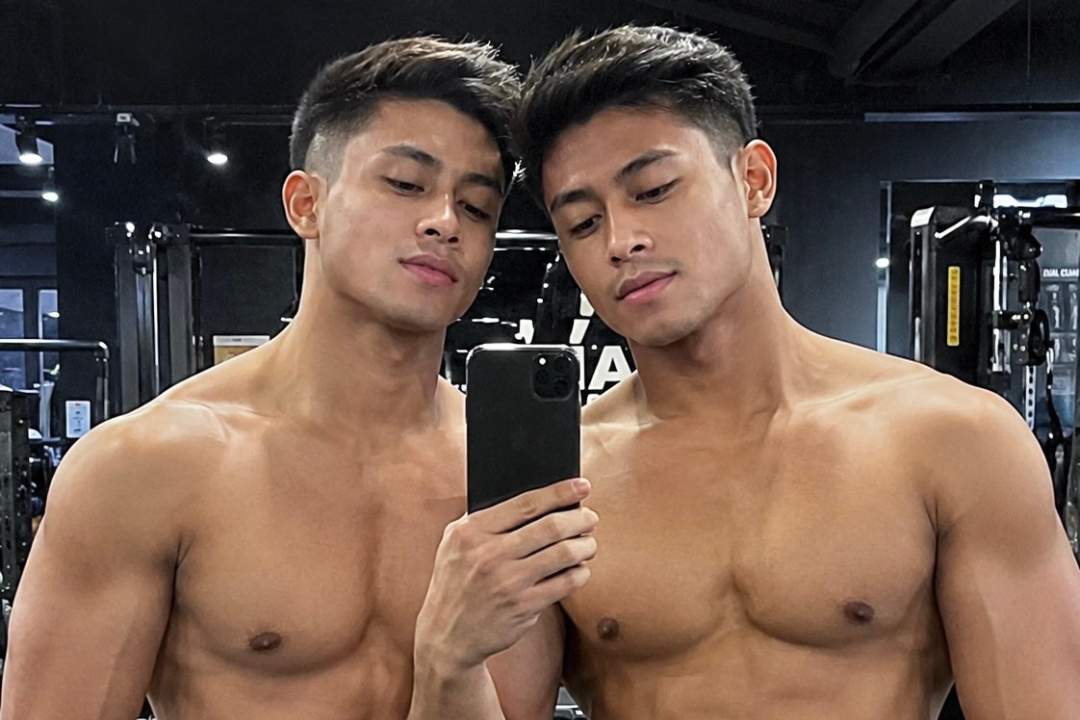
The matching mustaches. The same haircut faded perfectly on the sides. Similar eyeglasses. Identical gym-built shoulders. Both wearing oversized linen polos, silver earrings, short shorts, and Sambas. Sometimes they even look like brothers separated at birth.
Among Filipino gay men, the phenomenon is so common that many jokingly call it “jowang kamukha mo.”
In global pop culture, psychologists call it the “Boyfriend Twin” or “Doppelgänger” effect — the tendency of gay men to fall in love with partners who physically resemble themselves. And once you start noticing it in Philippine gay culture, it becomes impossible to unsee.
Spend enough time in queer spaces around Metro Manila and patterns begin to emerge. Twinks dating fellow twinks with the same K-pop inspired hairstyle and skincare glow. Bearded “bear” couples with identical tattoos, thick frames, and matching love for craft beer and fitted black shirts. Chinito gym gays with suspiciously similar jawlines and protein-heavy lifestyles. Creative industry couples dressed like they walked out of the same mood board on Pinterest.
Even their environments mirror one another: the same cafés in Makati, the same indoor cycling studios in BGC, the same beach photos in La Union, the same playlists, same fonts, same aesthetics.
To outsiders, it can look amusingly narcissistic. But psychologists say the attraction actually comes from something deeply human.
One explanation is “implicit egotism,” the idea that people naturally gravitate toward what feels familiar — including facial features and physical traits similar to their own. Seeing your own features reflected in another person subconsciously creates feelings of comfort, safety, and trust.
There is also the reality of “assortative mating,” a sociological phenomenon where people across all orientations tend to pair with those who share similar backgrounds, attractiveness levels, lifestyles, and social environments.
But in gay relationships, the effect can appear even more visually striking because there is no traditional male-female contrast softening the similarities.
In the Philippines, the effect is intensified by how concentrated queer communities can become. Entire aesthetics emerge from shared spaces and shared aspirations. The same Belo treatments. The same barbers. The same TikTok trends. The same gym routines. The same obsession with being “clean,” toned, and camera-ready.
Dating apps amplify this even further. Open Grindr or Tinder in Metro Manila and certain archetypes repeat endlessly: moreno fit guy looking for another moreno fit guy; artsy moreno with tattoos seeking “same vibes”; discreet corporate chinito preferring “same lifestyle.”
Over time, attraction starts becoming partly aspirational. Some gay men are not only attracted to partners who resemble them — they are attracted to the version of themselves they wish to perfect.
And yet, behind the jokes about “magkapatid ba kayo?” lies something quietly touching.
For generations, many gay Filipinos grew up feeling different, alienated, or misunderstood. Finding someone who mirrors your humor, insecurities, body language, aesthetics, and worldview can feel less like vanity and more like recognition.
A familiar face becomes emotional safety.
Perhaps that is why so many queer couples slowly start resembling each other even more over time. They share clothes. Share routines. Share tastes. Share lives. Their identities blur together not because they are obsessed with themselves, but because intimacy naturally creates reflection.
Love, after all, changes people.
Sometimes so much that eventually, the person beside you starts looking a little like home.
In global pop culture, psychologists call it the “Boyfriend Twin” or “Doppelgänger” effect — the tendency of gay men to fall in love with partners who physically resemble themselves. And once you start noticing it in Philippine gay culture, it becomes impossible to unsee.
READ:

5 Pinoy dating reality shows that brought the kilig on-screen
Trixia Policarpio
November 6, 2025

Define the relationship: A Gen-Z glossary to love and dating
Rei Marquez
November 5, 2025

IRL dating makes a comeback for Filipino Gen-Zs
Trixia Policarpio
November 6, 2025