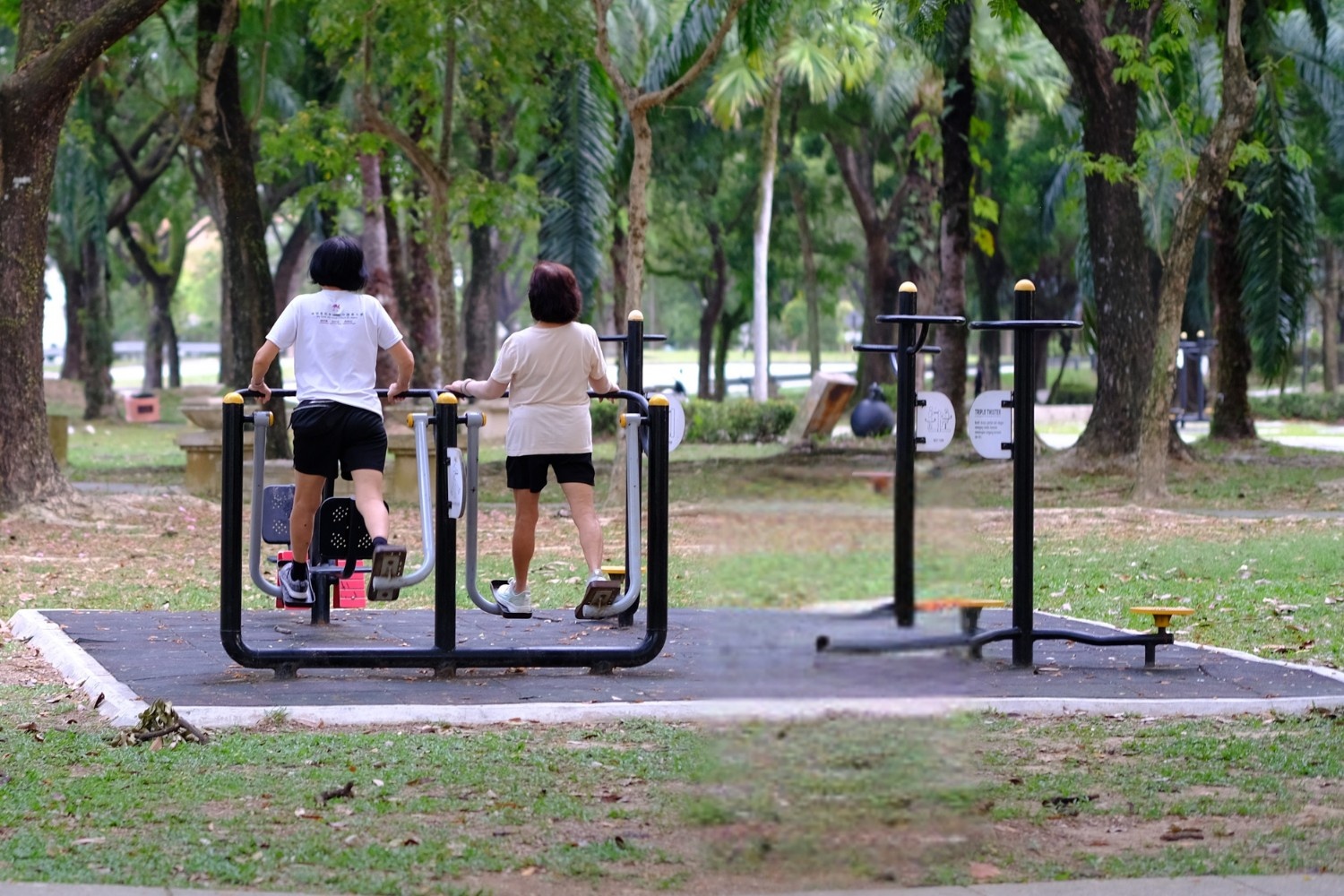
Green spaces reportedly reduce sensory overload.
It’s Sunday morning.
Instead of driving to the nearest mall, imagine taking your children to a community park a few blocks from home. They run across an open field, climb playground equipment, ride bicycles, and make new friends. You sit beneath a tree, feeling a cool breeze and enjoying a rare moment of quiet away from traffic, concrete, and screens.
For many families in Metro Manila, that scene feels almost foreign.
The region is filled with shopping centers, office towers, and residential developments, yet large, accessible green community parks remain limited. While parks are often treated as optional amenities, a growing body of scientific evidence suggests they are as important to public health as roads, schools, and hospitals.
In a city where stress, congestion, pollution, and rising temperatures have become part of daily life, green spaces may be one of the simplest investments with the biggest returns.
A natural antidote to depression
One of the most compelling studies on urban green spaces was published in JAMA Network Open in 2018.
Researchers found that transforming neglected urban lots into green community spaces led to a remarkable 41.5% reduction in feelings of depression among nearby residents.
The finding highlights something many people instinctively know but science is now confirming: nature has a powerful effect on mental health.
Unlike crowded commercial spaces that often encourage spending, parks offer a free environment where people can relax, reflect, and temporarily disconnect from everyday pressures.
Lower anxiety and stress levels
Mental health benefits go beyond depression.
A landmark epidemiological study published in the Journal of Epidemiology & Community Health found that residents living in neighborhoods with little green space experienced significantly higher rates of anxiety disorders and clinical depression than those surrounded by more vegetation.
Experts believe green spaces help lower stress by reducing sensory overload. Trees soften urban noise, greenery creates a calming visual environment, and natural settings encourage slower, more mindful activities.
In a metropolis where long commutes and heavy traffic are daily realities, access to a nearby park can serve as an important emotional release valve.
Better memory, focus, and productivity
Green spaces don’t just help people feel better—they can also help them think better.
Research grounded in Attention Restoration Theory found that people who walked through parks and natural environments showed around a 20% improvement in working memory and attention compared to those who walked along busy city streets.
For students juggling schoolwork, professionals facing demanding schedules, and even seniors seeking to stay mentally sharp, parks provide something increasingly difficult to find in modern cities: an environment that allows the brain to recover from constant stimulation.
Sometimes, a walk under a canopy of trees may be more beneficial than another hour spent staring at a screen.
Healthier hearts and bodies
The benefits of parks are not limited to mental wellness.
A comprehensive review published in the International Journal of Environmental Research and Public Health found strong links between urban green spaces and lower cardiovascular stress markers, including reduced heart rate and blood pressure.
Parks naturally encourage physical activity. Walking paths, jogging routes, exercise stations, and open fields make it easier for residents to move without needing expensive memberships or specialized equipment.
This is particularly important in Metro Manila, where sedentary lifestyles have become increasingly common due to long work hours and traffic congestion.
A nearby park gives people an accessible reason to get up, move, and take better care of their health.
Cooler and cleaner neighborhoods
Beyond personal health, parks help improve the urban environment itself.
Trees provide shade and help combat the urban heat island effect, a phenomenon where cities become significantly hotter than surrounding rural areas due to concrete and asphalt.
As Metro Manila experiences increasingly intense heat, green spaces can help lower local temperatures and make neighborhoods more comfortable.
Vegetation also improves air quality by filtering pollutants and producing oxygen. Parks absorb rainwater, helping reduce flooding during heavy downpours, while providing habitats for birds, butterflies, and other urban wildlife.
In short, parks help cities breathe.
Stronger communities
Perhaps the most overlooked benefit of community parks is their ability to bring people together.
Unlike malls, which are centered around consumption, parks are shared public spaces where people can gather regardless of income.
Children make friends. Seniors exercise together. Families picnic. Neighbors interact. Communities hold events, markets, and celebrations.
These simple interactions help build social connections, trust, and a stronger sense of belonging.
In an era when loneliness and social isolation are becoming growing concerns worldwide, parks offer a space where communities can reconnect.
More than just open space
For decades, urban development has often prioritized buildings, roads, and commercial centers. Yet research increasingly shows that green spaces are not luxuries reserved for affluent neighborhoods.
They are essential public infrastructure.
The next time conversations arise about city development, Metro Manila residents may want to ask not how many more malls can be built, but how many more parks can be created.
Because a community park is more than just open space.
It is a place where children can play safely, where families can spend time together, where neighbors can connect, and where people can find a moment of peace in one of the world’s busiest urban regions.
And in a city that rarely slows down, that may be one of the most valuable public investments of all.
READ:
Five ways to bring back the Metro Manila’s lost green
radar Lifestyle
May 31, 2026
Can 100 seedlings really replace one decades-old tree?
radar Lifestyle
May 23, 2026
OPINION: Trading mature trees for seedlings is an ecological sham that leaves Manila burning
Walter C. Villa
May 26, 2026