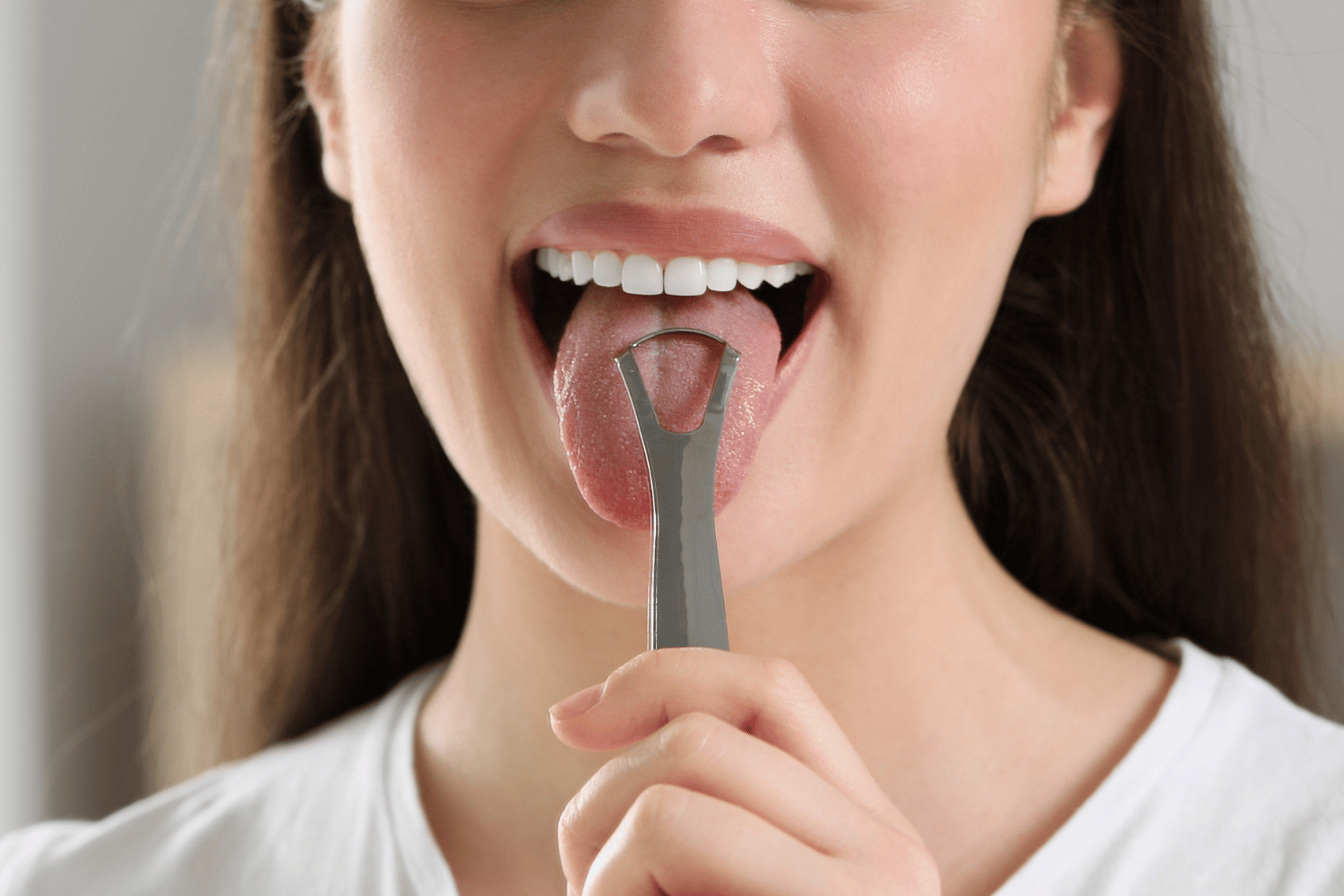
Health experts consider tongue scraping as the third step of good oral hygiene.
You finish a hearty seafood dinner, brush your teeth thoroughly, rinse with mouthwash, and head out feeling fresh. Then, halfway through a conversation, you catch a faint whiff of grilled fish every time you speak. You brush again. Still there. Frustrated, you grab a tongue scraper, run it across your tongue a few times—and suddenly the fishy smell disappears.
It feels almost like magic. But it isn’t.
The truth is that while most of us obsess over brushing our teeth, we often ignore the largest breeding ground for bacteria inside our mouths: the tongue.
This is precisely why dentists recommend cleaning the tongue as part of a complete oral hygiene routine. Brushing twice a day and flossing are considered the foundation of good oral health, but many dental professionals advise adding tongue scraping because a significant amount of odor-causing bacteria lives on the tongue—not on the teeth.
Your teeth account for only a small portion of your oral cavity. Your tongue, on the other hand, is covered with thousands of tiny grooves and papillae that resemble the fibers of a thick carpet. These microscopic crevices trap food particles, dead cells, and millions of bacteria throughout the day. Left undisturbed, they produce volatile sulfur compounds—the chemicals responsible for most cases of bad breath.
Brushing your teeth alone cannot reach these hiding places. Toothbrush bristles are designed to polish hard, smooth enamel, not to lift debris from the tongue’s uneven surface. In fact, dentists say brushing your tongue with a toothbrush often simply pushes residue around rather than effectively removing it.
That’s where tongue scraping comes in.
Using a specially designed scraper physically lifts and removes the layer of bacteria and debris coating the tongue. Studies have shown that tongue scraping can reduce odor-causing sulfur compounds by as much as 75 percent—significantly more effective than using a toothbrush alone.
The benefits don’t stop at fresher breath.
Once that film is removed, your taste buds become more exposed, allowing you to better appreciate sweet, salty, sour, and bitter flavors. Many people also notice that their tongue returns to a healthy pink color instead of looking white or yellowish.
Reducing the bacterial buildup on the tongue may also help lower the number of harmful microbes that contribute to plaque, cavities, and gum disease, making tongue scraping an important complement to brushing and flossing.
Fortunately, it takes less than a minute. Place the scraper at the back of your tongue, gently pull it forward with light pressure, rinse the scraper after every pass, and repeat three or four times. Wash the tool thoroughly when you’re done.
Tongue scraping isn’t a replacement for brushing or flossing. Instead, dentists consider it the often-overlooked third step of good oral hygiene. Brush your teeth. Floss between them. Then clean the surface that harbors much of the bacteria in your mouth.
Sometimes, the reason your breath still smells isn’t what’s stuck between your teeth.
It’s what’s been sitting on your tongue all along.
READ: