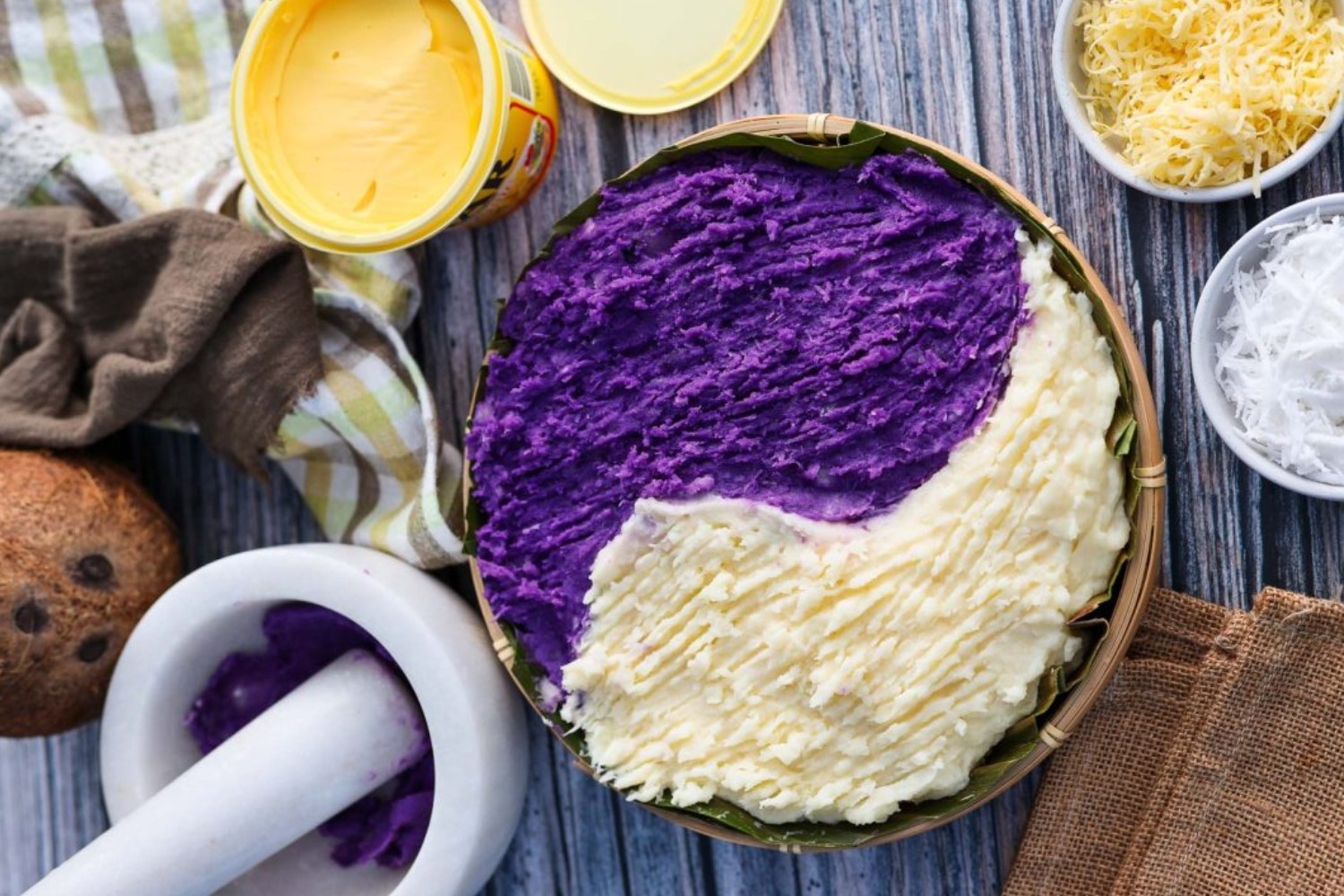
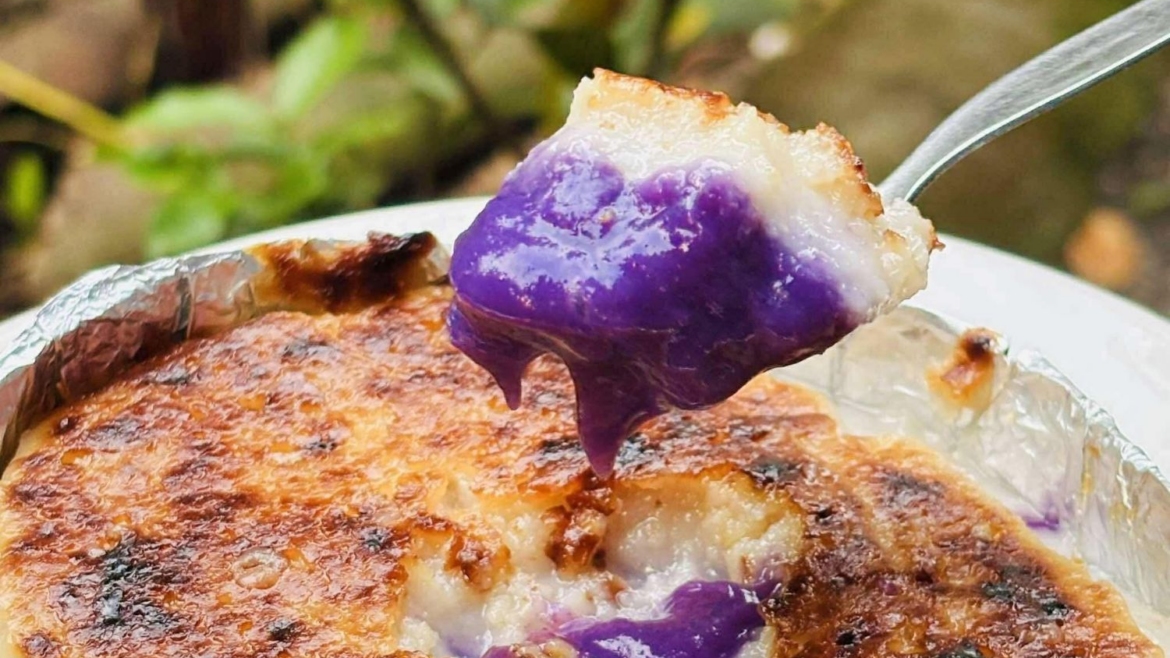
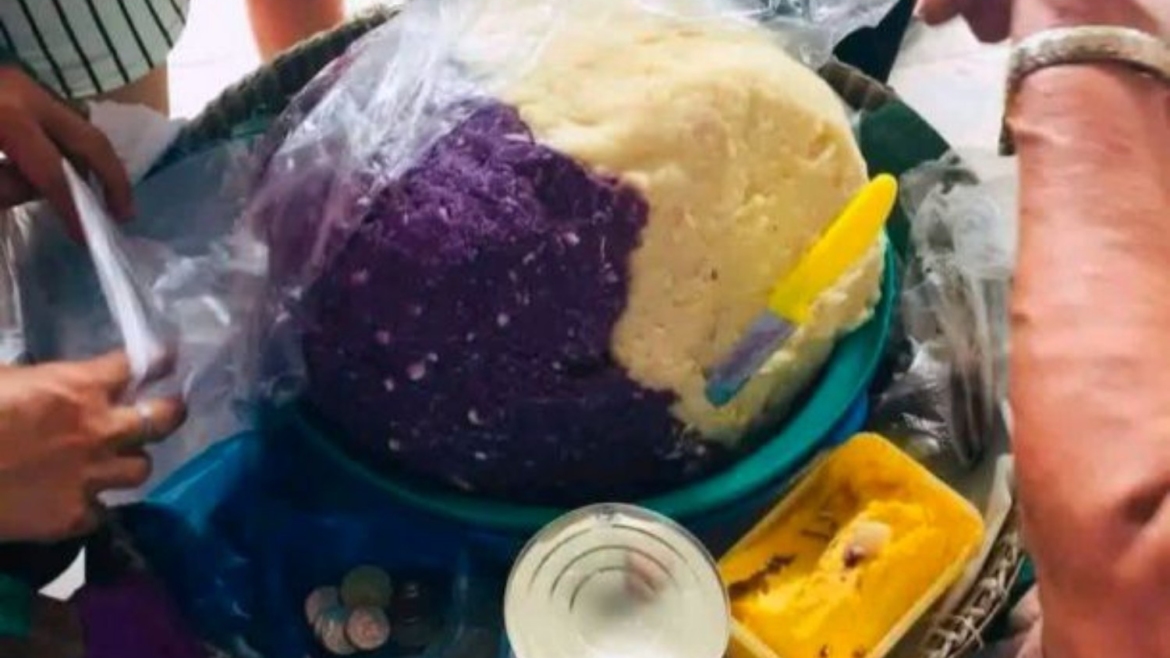
Nilupak can be done in various preparations.
How do you make nilupak?
The answer depends on where in the Philippines you ask.
In some towns, the answer is cassava. In others, it is saba banana, sweet potato, or taro. In parts of Samar, it can even start with freshly harvested rice. Yet despite the different ingredients, they all become the same thing: nilupak.
That adaptability is what makes this humble kakanin one of the best examples of Filipino resourcefulness.
Making something out of what is available
The name nilupak comes from the Tagalog word lupak, which means “to pound” or “to mash.” Traditionally, boiled root crops are placed in a wooden mortar and pounded until smooth before being mixed with coconut, sugar, butter, or milk.
The technique is simple, but the idea behind it is remarkable. Filipinos learned to work with whatever ingredient was abundant in their communities and transform it into something delicious.
Instead of relying on a single recipe, nilupak evolved according to local harvests and regional tastes.
Every region adds its own touch
The classic version uses cassava, producing a rich and chewy delicacy often topped with grated coconut, peanuts, or cheese.
But many communities took the concept further. Some add young coconut flesh to provide extra texture and sweetness. Others incorporate local ingredients that reflect the agricultural abundance of their area.
In Samar, for example, a unique version begins with newly harvested rice. The grains are lightly roasted until fragrant, pounded, then mixed with hot water, sugar, and strips of fresh buko. The result is a nilupak that tastes entirely different from the cassava version yet follows the same principle of transforming simple ingredients into something comforting and memorable.
It is a reminder that Filipino food traditions are not fixed recipes but living practices shaped by necessity, environment, and imagination.
A community effort
Traditionally, making nilupak was also a communal activity. Family members gathered around the lusong and alho, taking turns pounding the mixture while others prepared the ingredients.
The process required patience and cooperation, turning food preparation into a social event.
Even today, many Filipinos associate nilupak not only with its taste but with memories of family gatherings, fiestas, and afternoons spent helping in the kitchen.
The taste of resourcefulness
Long before culinary innovation became fashionable, Filipinos were already practicing it in their own homes.
Nilupak shows how communities can create something special from ingredients that are inexpensive, abundant, or often overlooked. It reflects a culture that values practicality without sacrificing flavor, comfort, or tradition.
And perhaps that is the enduring appeal of nilupak. It is not defined by cassava, rice, banana, or any single ingredient. It is defined by the Filipino ability to make the most of what is available.
After all, nilupak can be almost anything.
READ: