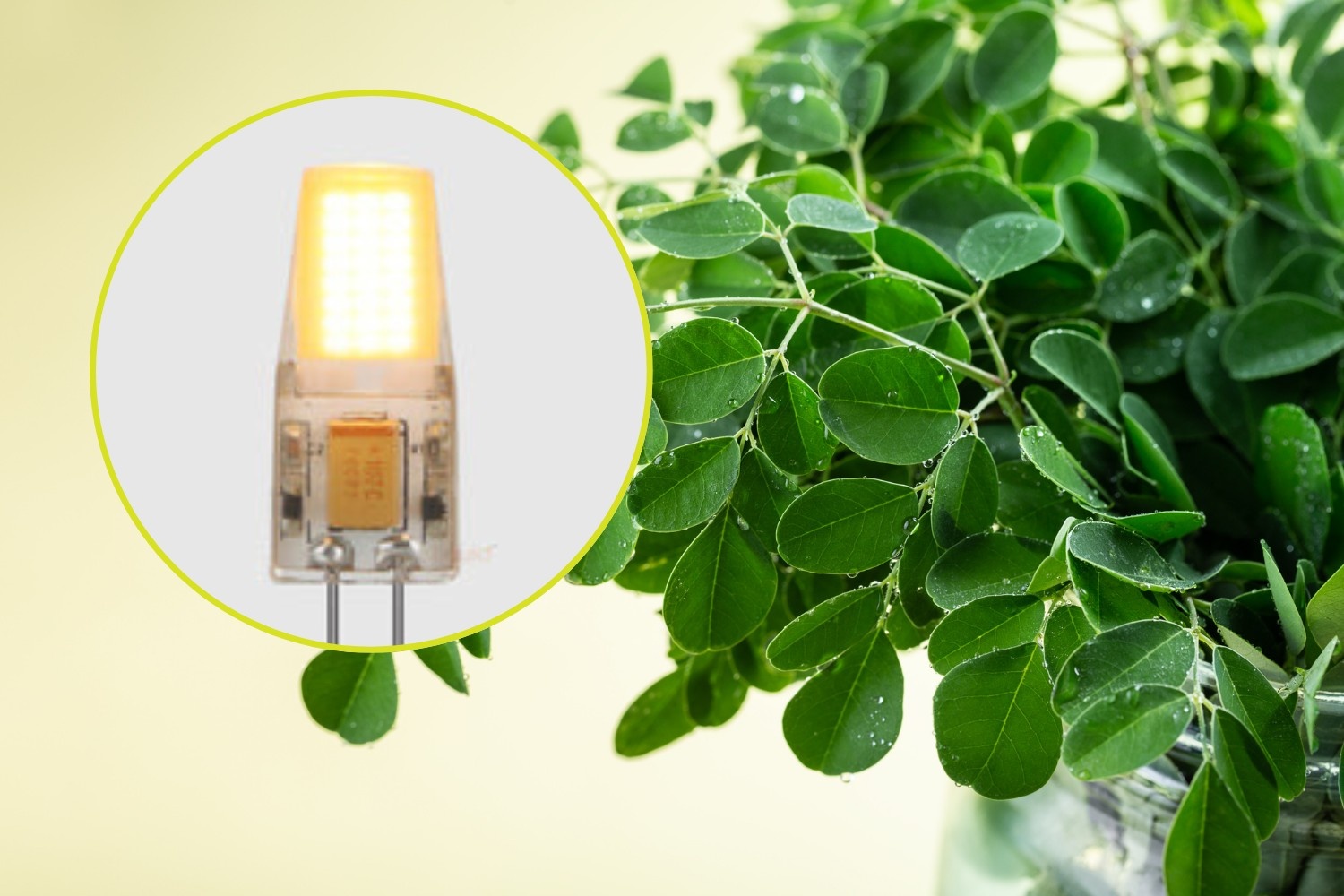
Malunggay just might be the new battery.
If you’re Filipino, chances are you’ve been told at least once that malunggay can solve almost anything.
Need more nutrients? Eat malunggay. Recovering from illness? Drink malunggay soup. Breastfeeding? Someone will inevitably recommend malunggay capsules.
Now, scientists are asking a new question: can malunggay generate electricity too?
Surprisingly, the answer is yes.
Researchers have successfully used the humble malunggay plant—known scientifically as Moringa oleifera—as a component in experimental bio-batteries capable of producing electricity. In laboratory tests, malunggay extracts mixed with salt and paired with metal electrodes generated enough power to light a small LED bulb for several hours.
Before anyone rushes out to replace their AA batteries with backyard leaves, however, scientists stress that the technology remains firmly in the research stage.
From soup ingredient to battery
The secret lies in chemistry.
Malunggay leaf extracts are naturally acidic. When copper and zinc or iron strips are placed inside a malunggay paste, chemical reactions occur that release electrons. Those moving electrons create an electrical current.
Adding ordinary table salt improves the process even further. Salt breaks down into charged particles that help electricity move more efficiently through the mixture.
In several studies, a single malunggay bio-battery cell produced between 1.06 and 1.64 volts—roughly comparable to the voltage of a standard household battery. When multiple cells were connected together, researchers were able to continuously power a small LED light for up to seven hours.
For a plant best known as a backyard vegetable, that’s an impressive feat.
The catch
Unfortunately, voltage is only half the story.
While malunggay batteries can generate electricity, the amount of current they produce remains extremely small. That’s enough for tiny devices like LEDs but nowhere near enough to run a smartphone, electric fan, laptop, or refrigerator.
There are other challenges too.
Because the battery relies on organic plant material, the paste eventually dries out, ferments, or grows mold. The acidic mixture also corrodes metal electrodes over time, reducing performance and lifespan.
In short, your neighborhood talipapa won’t be replacing lithium-ion factories anytime soon.
A glimpse of a greener future
Still, scientists see promise in the research.
Around the world, researchers are exploring ways to turn plant materials into sustainable energy technologies. Some have converted malunggay leaves into carbon-based materials for supercapacitors, while others are studying malunggay-derived membranes as components for next-generation batteries.
The goal isn’t necessarily to power entire cities with malunggay. Instead, the research could contribute to safer, cheaper, and more environmentally friendly energy storage systems.
And perhaps that’s what makes the story fascinating.
For generations, Filipinos have looked at malunggay and seen food. Scientists looked at the same leaves and saw something else entirely: a tiny spark of electricity.
The humble plant growing beside countless Filipino homes may never replace the batteries in your remote control. But it reminds us that some of the most surprising innovations can begin with something we’ve been overlooking all along.
READ:
The beautiful flowers in your garden could be the secret ingredients in your next meal
radar Lifestyle
June 14, 2026

For decades, this humble bakery has quietly fed generations of Manileños
radar Lifestyle
May 18, 2026

Give your usual ginisang monggo a delicious upgrade this Friday
radar Lifestyle
June 5, 2026