The “Walking Encyclopedia” shaped Filipino curiosity, yet blurred the line between science and pseudoscience in ways still debated today.
There was a time when it felt impossible to escape Ernie Baron.
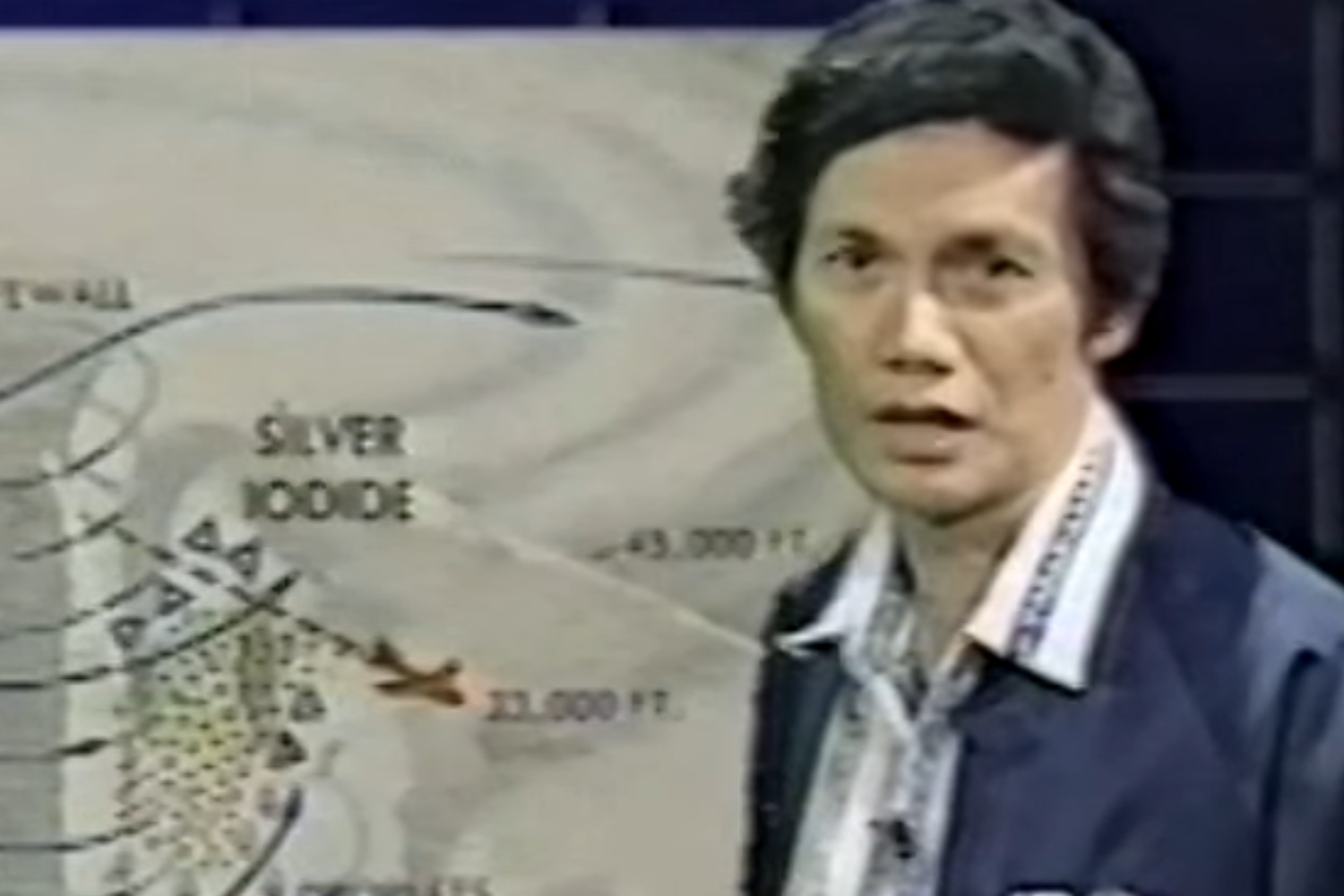
In the morning, he was on the radio. In the evening, he was on television. Between weather reports, trivia segments, and his long-running educational program “Knowledge Power,” Baron became one of the most recognizable voices and faces in the country. Long before Google existed and before Filipinos could instantly fact-check claims online, millions turned to him as a trusted source of information.
To an entire generation, he was the “Walking Encyclopedia of the Philippines.”
And yet, decades after his death, Ernie Baron’s legacy remains one of the most fascinating contradictions in Philippine media history.
He inspired countless Filipinos to become curious about science, technology, weather, history, and the natural world. But he also helped popularize and profit from ideas that today would be classified as pseudoscience.
For many Filipinos who grew up in the 1980s and 1990s, Baron was their first science communicator.
His weather forecasts on TV Patrol did more than announce incoming storms. He explained earthquakes, typhoons, volcanic activity, and other natural phenomena in language ordinary viewers could understand.
His signature line—“Kung walang knowledge, walang power!”—became one of the most memorable catchphrases in Philippine broadcasting.
At a time when science programming was scarce, “Knowledge Power” made learning feel exciting. Baron mixed practical information, survival tips, scientific explanations, and fascinating trivia into a format that entertained as much as it educated.
Many journalists, teachers, engineers, and science enthusiasts today can trace part of their curiosity back to those broadcasts.
But Baron’s version of knowledge was never limited to mainstream science.
Alongside discussions of meteorology and technology, he frequently ventured into alternative medicine, paranormal phenomena, energy healing, and unconventional health claims. He became one of the most visible advocates of the herbal “pito-pito” drink, a concoction made from seven roots and seven leaves that was marketed as a cure-all for various ailments.
He also promoted products based on the idea that invisible energies could improve health and well-being.
Among the most controversial was a metal pyramid device marketed as an energy enhancer. Users were encouraged to place water inside it to supposedly “energize” the liquid or position the device on their heads to promote healing and wellness.
To many Filipinos at the time, these claims sounded credible because they came from Ernie Baron himself—a man whose authority had been built through decades of educational broadcasting.
That is the irony at the center of his legacy. Baron genuinely helped cultivate scientific curiosity among ordinary Filipinos. He encouraged people to ask questions, seek knowledge, and understand the world around them. Yet some of the products and beliefs he endorsed often relied on anecdotes, mystical energy concepts, or health claims that lacked rigorous scientific evidence.
In hindsight, his career reflected a uniquely Filipino period in media history—a time when science, folklore, alternative medicine, invention, and personal belief often existed side by side with little distinction between them.
To be fair, Baron was hardly alone. The late 20th century saw a global boom in pyramid energy devices, miracle health products, magnetic therapies, and alternative healing systems. Similar ideas flourished not only in the Philippines but across Asia, Europe, and North America.
What made Baron different was the enormous trust he commanded.
His credibility as an educator gave weight to everything he discussed, whether it was a weather system approaching Luzon or a herbal remedy promising better health.
Twenty years after his passing, Filipinos still remember him fondly. His contributions to science communication remain undeniable. He made learning accessible and exciting for millions who might otherwise have ignored it.
But perhaps the most important lesson from Ernie Baron’s life is one he may not have intended to teach. Curiosity is valuable. Knowledge is power. But true scientific thinking also requires skepticism—even toward the people we trust most. Including the man who taught us to love knowledge in the first place.
READ:
Viral Jovito Salonga news clip reminds Filipinos what Senate excellence used to look like
radar Lifestyle
June 6, 2026

Malunggay leaves can generate electricity, laboratory tests show
radar Lifestyle
June 19, 2026
The greatest story ever filmed: 75 years of Lenten media
Jose Victor Z. Torres
April 1, 2026