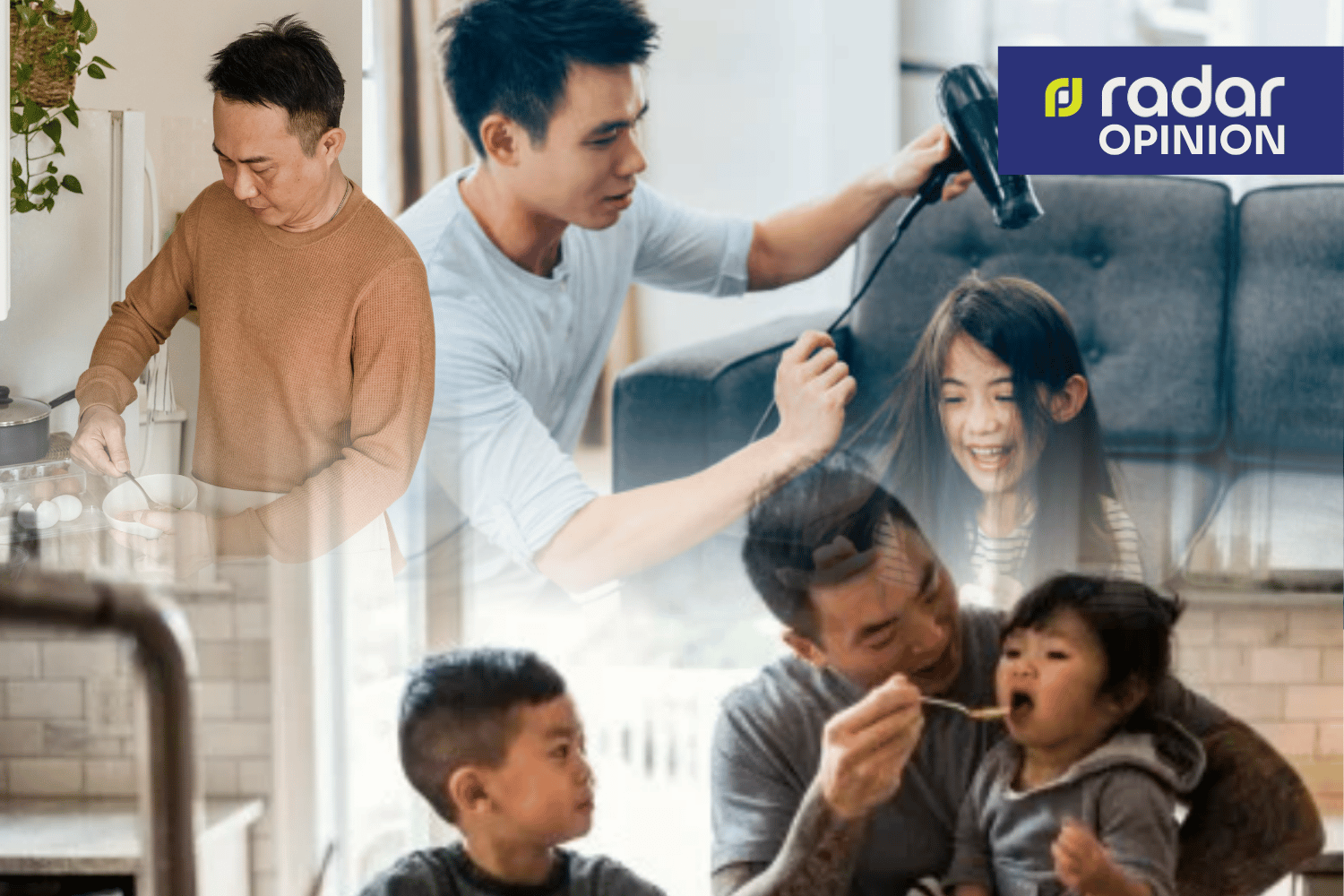
Being a father is measured by how you show up.
It usually starts with a practical decision. The wife gets a higher-paying job abroad. Or lands a stable remote role that simply earns more. Sometimes it’s the rising cost of childcare. In many Filipino homes today, the numbers don’t lie—and more often than not, they point to dad staying home.
If that’s you, you’re not alone.
Across the Philippines, more fathers are stepping into full-time caregiving—packing baon, doing school runs, figuring out ulam on a budget, and learning the rhythm of their kids’ days. It may not be the version of fatherhood many grew up seeing, but it works. And for a lot of families, it works better.
Let’s be honest, though: it’s not always easy to own.
We’ve all heard the comments. Yung “buti ka pa, nasa bahay lang.” The side glances. The jokes about being “under.” It hits because many Filipino men were raised to believe that being the provider is what defines them. So when that role shifts, it can feel like something is being taken away.
But here’s the truth more dads are starting to realize: taking care of your family full-time isn’t a step down. It’s stepping up—just in a different way.
Being there for your child’s firsts. Knowing their moods, their fears, their tiny wins. Carrying the mental load of a household. That’s work. Real work. And it takes a different kind of strength—the kind that isn’t always loud, but lasts.
Still, there are tough days.
The routine can get repetitive. The isolation can creep in, especially when you don’t see many dads in the same setup. And if you’re working from home on top of everything, the lines between “work” and “family” can blur fast. On top of that, there’s the quiet pressure to keep proving—to relatives, to friends, even to yourself—that this setup makes sense.
That’s why finding your people matters.
Communities like Dad Tribe PH, Dadbud PH, and Pinoy Homebased Dads (PHD) exist for a reason. They’re spaces where you don’t have to explain yourself—where other dads get it. If you’re just starting out, groups like 1st Time Dads PH can help you settle into the role without feeling lost.
There’s also support that many don’t realize is available. Under the Expanded Solo Parents Welfare Act, dads who end up as primary caregivers—whether because their partner is abroad or due to separation—can access benefits like leave, subsidies, and discounts. The Telecommuting Act also makes flexible work setups more possible, helping you stay present while still earning.
But beyond policies and support groups, there’s a mindset shift that needs to happen—and it starts at home.
You’re not “just” staying at home. You’re running a household. You’re raising a human being. You’re holding things together in a way that doesn’t always get applause—but absolutely deserves respect.
And if anyone still questions that?
You don’t have to prove anything.
Because in the end, pagiging tatay isn’t measured by where you work—but by how you show up.
READ: