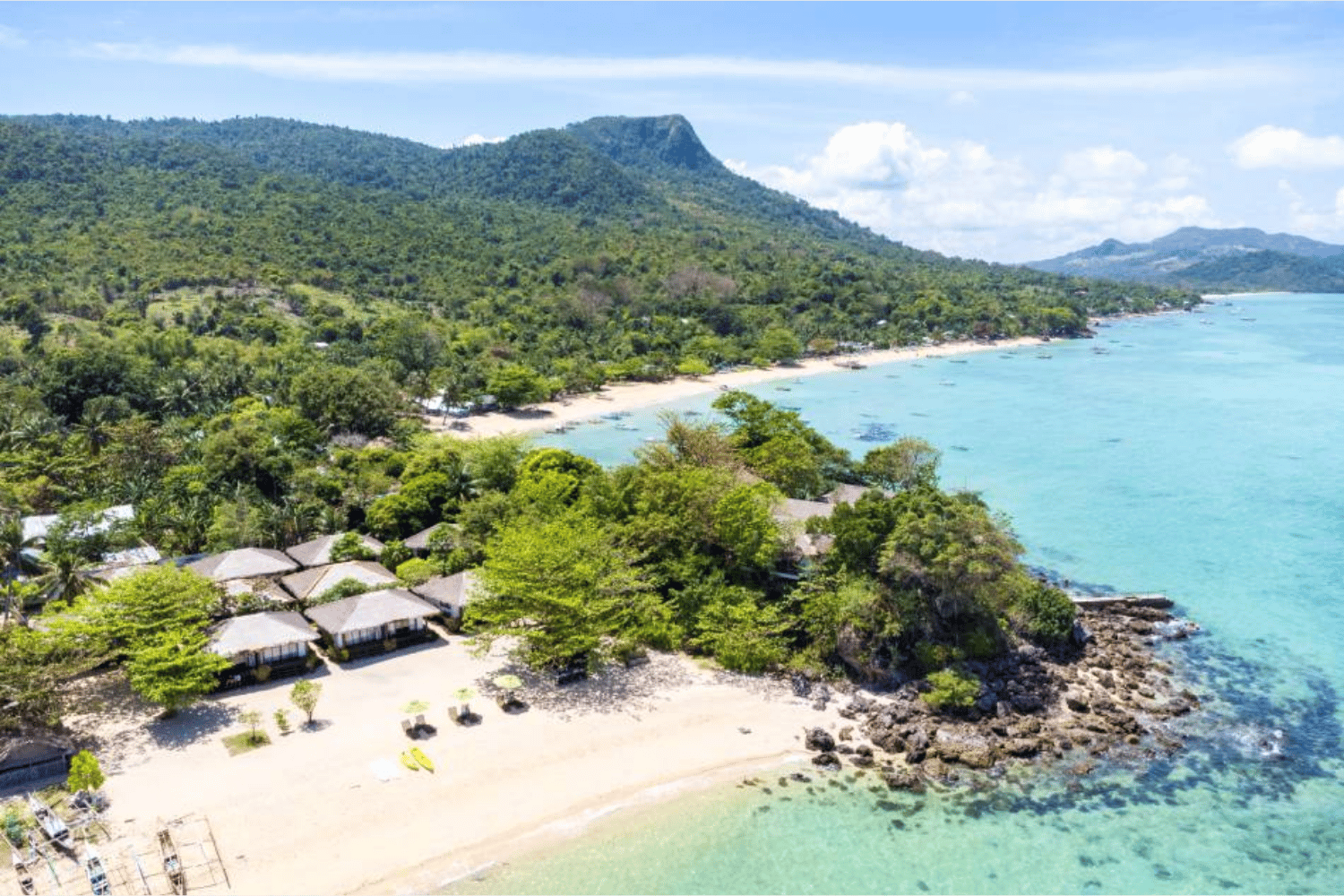
The shutdown is rooted from a dispute between the developers and the Federation of Sicogon Island Farmers and Fisherfolk Association members.
The ambitious tourism estate on Sicogon Island in Carles, Iloilo has come to a standstill after all of its major facilities were permanently closed amid an ongoing land dispute with local agrarian reform beneficiaries.
The Sicogon Island Tourism Estate Corporation (SITEC) announced the permanent closure of its facilities, including the luxury Huni Hotel, the 50 villas of Balay Kogon, and the island’s airport, which were all developed as part of the 1,100-hectare eco-tourism estate.
The airport had already ceased operations in late 2025, while the 52-room Huni Hotel and Balay Kogon officially stopped accepting guests on June 15.
SITEC is a joint venture established in 2010 between Ayala Land, Inc. and Sicogon Development Corporation (SIDECO) to transform the island into a premier eco-tourism destination.
The shutdown stems from a long-running dispute between the developers and members of the Federation of Sicogon Island Farmers and Fisherfolk Association (FESIFFA), who entered into a Compromise and Framework Agreement with SITEC in 2014. Under the agreement, local residents agreed to support the tourism project in exchange for employment opportunities, typhoon-resilient housing, and livelihood facilities.
However, more than 700 families later claimed that several commitments were not fulfilled. They alleged that outside workers were hired instead of island residents, promised livelihood programs failed to materialize, and housing projects delivered were below expectations.
The conflict escalated on May 20 after FESIFFA filed a petition before the Department of Agrarian Reform (DAR) seeking the revocation of land conversion orders covering portions of the estate. The group argued that only a small portion of the promised 30-hectare relocation site had been developed despite a five-year compliance period.
Following the legal challenge, SITEC began winding down operations, culminating in the permanent closure of its tourism facilities.
In an apparent effort to resolve the dispute, SITEC signed a Deed of Donation on June 17 transferring 63 hectares of land to local beneficiaries. The donation includes 30 hectares intended for residential housing and 33 hectares for agricultural use. The company also released the remaining ₱29 million housing fund directly to the community to finance the completion of housing projects under the supervision of local government officials.
Despite these developments, local groups continue to urge the DAR to return the contested commercial areas to agricultural classification under the Comprehensive Agrarian Reform Program (CARP), leaving the future of one of Western Visayas’ most ambitious tourism developments uncertain.
READ: