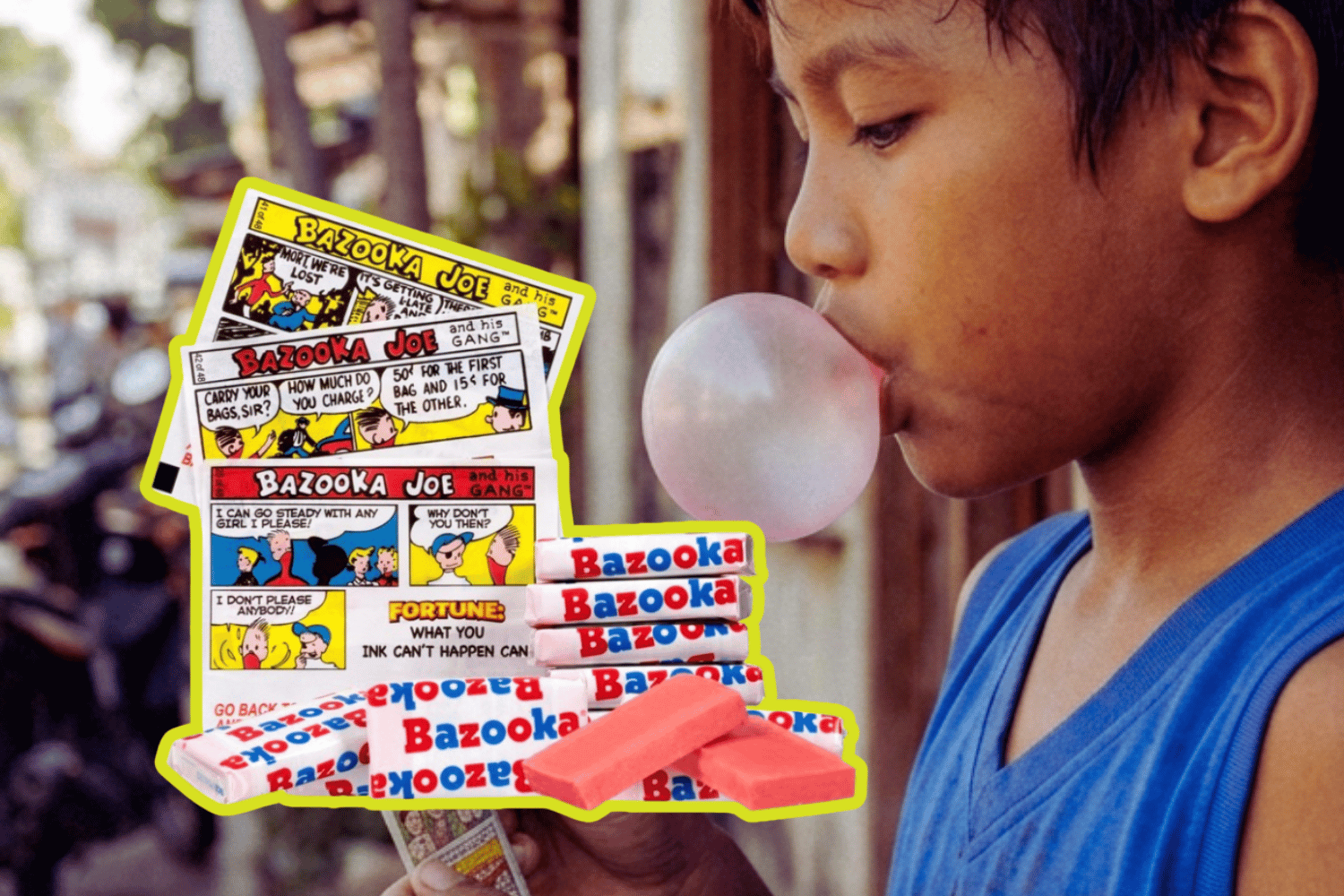
You didn’t buy Bazooka gum just to chew it. You bought it to see what was hiding inside the wrapper.
Before smartphones, before YouTube, and long before kids could scroll endlessly for entertainment, a tiny strip of paper tucked inside a piece of bubble gum was enough to spark excitement. It featured the adventures of a boy in a blue cap with a black eyepatch named Bazooka Joe—a mascot who became as famous as the gum itself.
Introduced in 1953 by the Topps Chewing Gum Company, Bazooka Joe transformed an ordinary one-cent piece of bubble gum into an experience. Each wrapper contained a miniature comic strip filled with goofy jokes, fortunes, and points that children could collect and exchange for mail-order prizes. Harmonicas, toy gadgets, pocket knives, and novelty items suddenly felt attainable—all because kids kept buying gum.
It was one of the earliest loyalty programs disguised as fun.
For Baby Boomers and Generation X, Bazooka Joe became a childhood ritual. You traded duplicate comics with classmates, laughed at corny punchlines, and eagerly searched for the next installment. The gum itself was sweet, but the comic kept customers coming back.
As decades passed, however, childhood changed.
Video games, cable television, the internet, and eventually smartphones replaced the simple thrill of reading a tiny comic strip. Topps tried to modernize Joe in the 1980s and 1990s, dressing him in contemporary clothes and simplifying the comics to appeal to younger audiences. But even those updates couldn’t compete with digital entertainment.
In 2012, the company made a controversial decision: the iconic comics were removed from the wrappers and replaced with puzzles and digital codes. For many longtime fans, it marked the end of an era.
Ironically, what technology couldn’t preserve, nostalgia did.
As millennials and Gen Xers began reminiscing online about childhood snacks, Bazooka Joe returned to the spotlight. Fans shared photos of old wrappers, remembered saving prize points, and recalled how reading the comic was often more exciting than chewing the gum itself.
Recognizing that emotional connection, the brand restored the beloved comic strips in 2019 and has since launched nostalgia-driven campaigns featuring Joe alongside modern sports stars while retaining his classic look.
The comeback reflects a growing trend among heritage brands discovering that memories can be just as valuable as marketing. In an age where everything is digital and disposable, there’s renewed affection for tangible experiences—even something as small as unfolding a comic hidden inside a piece of gum.
Bazooka Joe isn’t just selling bubble gum anymore.
He’s selling a reminder of a time when the biggest surprise of the day fit inside a wax paper wrapper, and happiness cost just a few cents.
READ: