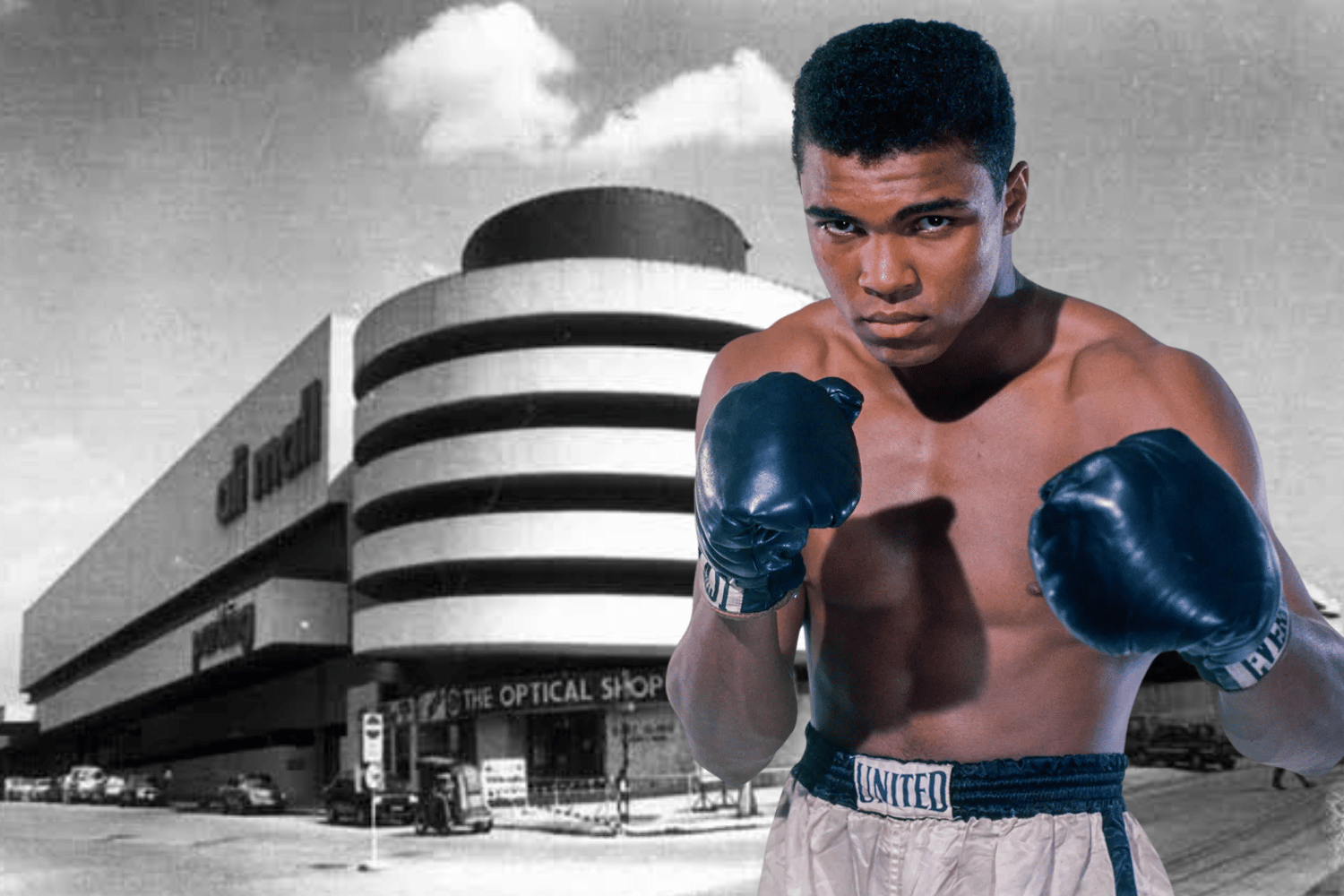
Ali Mall turns 50, celebrating the place where modern mall culture began.
Ali Mall is celebrating its 50th year—a milestone not just for one of the country’s oldest shopping centers, but for the place that forever changed how Filipinos spend their weekends.
When its doors opened on June 30, 1976, the Cubao landmark introduced an idea that now feels ordinary but was revolutionary at the time: an enclosed, fully air-conditioned destination where shopping, dining, entertainment, and leisure could all happen under one roof. In doing so, it gave birth to a distinctly Filipino pastime that generations would simply call “malling.”
Half a century later, virtually every major shopping mall in the country carries traces of Ali Mall’s DNA.
Born from a legendary fight
Ali Mall owes its existence to one of the greatest sporting events in history.
Following the epic “Thrilla in Manila” on Oct. 1, 1975, where boxing icon Muhammad Ali defeated Joe Frazier at the nearby Araneta Coliseum, Ali suggested building a shopping center beside the arena to commemorate the historic victory.
Jorge Araneta embraced the idea. Touched by the gesture, Ali allowed the use of his name without charging any royalty and even returned to the Philippines for the mall’s grand opening on June 30, 1976.
Half a century later, the mall remains one of the few places in the world named after “The Greatest.”
The birth of modern malling
What made Ali Mall revolutionary wasn’t simply its architecture. It changed Filipino behavior.
For the first time, shopping became an experience rather than an errand.
Its cool, enclosed interiors invited families to linger for hours instead of rushing home from the tropical heat. Friends met there not because they needed to buy something, but because it became a comfortable place to spend time together.
That simple shift would eventually evolve into what Filipinos now simply call “malling.”
The features every mall copied
Many things modern shoppers now take for granted first appeared inside Ali Mall.
In 1979, it introduced the country’s first dedicated in-mall food court through the Food Gallery, proving that dining could become a destination rather than an afterthought.
It pioneered integrated entertainment by housing movie theaters alongside Skate
Town, then the country’s largest indoor skating rink, making the mall an all-day family attraction.
Its innovative multi-level covered parking structure, connected directly to every shopping floor through a spiral driveway, also became a model for future developments.
These features eventually became standard in virtually every major shopping center built across the Philippines.
More than a shopping center
Like many enduring landmarks, Ali Mall evolved with the times.
Today, beyond its retail spaces, it has become a civic hub that houses one of Metro Manila’s busiest Department of Foreign Affairs satellite offices while preserving pockets of nostalgia through Ali X, where vintage finds, collectibles, antiques, and local art continue to thrive.
It remains a place where everyday errands coexist with memories.
The mall that started it all
For many Filipinos, their first mall wasn’t one of today’s sprawling mega-malls.
It was Ali Mall.
As it celebrates its golden anniversary, Ali Mall is more than a surviving shopping center. It is a living reminder of where modern Philippine mall culture began—a place that transformed shopping into an experience, weekends into family traditions, and a simple trip to the mall into a uniquely Filipino way of life.
READ: