Did you know that the first high-rise building in the Ayala District wasn’t an office tower but an apartment building?
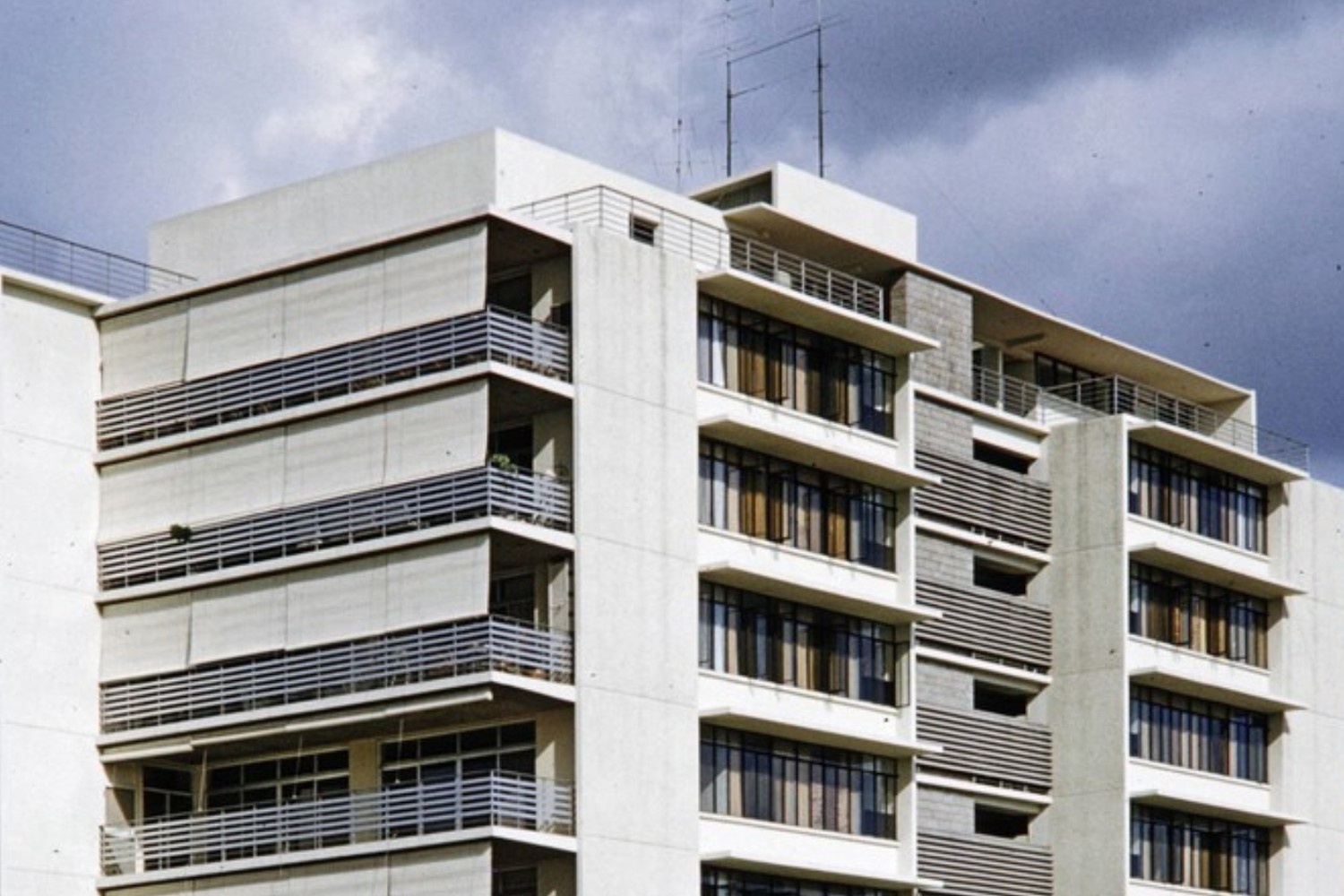
Completed in 1957, the Monterrey Apartments was the very first high-rise residential structure built in what would become the Makati Central Business District. Long before Ayala Avenue became synonymous with gleaming skyscrapers, multinational corporations, and luxury developments, the seven-story building stood as the boldest symbol of a new vision for urban living.
Commissioned by Ayala under the master plan of Col. Joseph McMicking, the Monterrey Apartments was designed to attract the pioneering residents, investors, and professionals who would help transform Makati from a former airfield into the country’s premier business district.
At the time, the idea of high-rise living in Makati was largely untested. Yet the project demonstrated that people were willing to live, work, and invest in what was then an emerging urban center.
The building was completed by D.M. Consunji, Inc. for just over ₱500,000—an amount that seems astonishingly small compared to the billions spent on today’s skyscrapers.
The Monterrey Apartments also marked an early milestone in Philippine architecture. It was designed by Leandro Locsin, who would later be named National Artist for Architecture. Inspired by Japanese modernism and the International Style, the building featured floating floor slabs, generous balconies, aluminum louvers, and an airy sense of transparency uncommon for its time. The structure was engineered by Alfredo Juinio, who would later become dean of the UP College of Engineering.
But the building’s greatest legacy lies in the confidence it gave developers and investors.
Its success helped prove that Makati could become a thriving urban district, paving the way for the residential towers, office buildings, shopping centers, and financial institutions that would later define the city.
The Monterrey Apartments stood for nearly four decades before being demolished during the real estate boom of the 1990s. In its place now stands Pacific Plaza, one of Makati’s most prestigious residential developments.
The original building may no longer exist, but its impact remains visible in every tower that lines Ayala Avenue today.
Before Makati became the country’s financial capital, there was the Monterrey Apartments—the building that showed how high the Ayala District could rise.
READ: