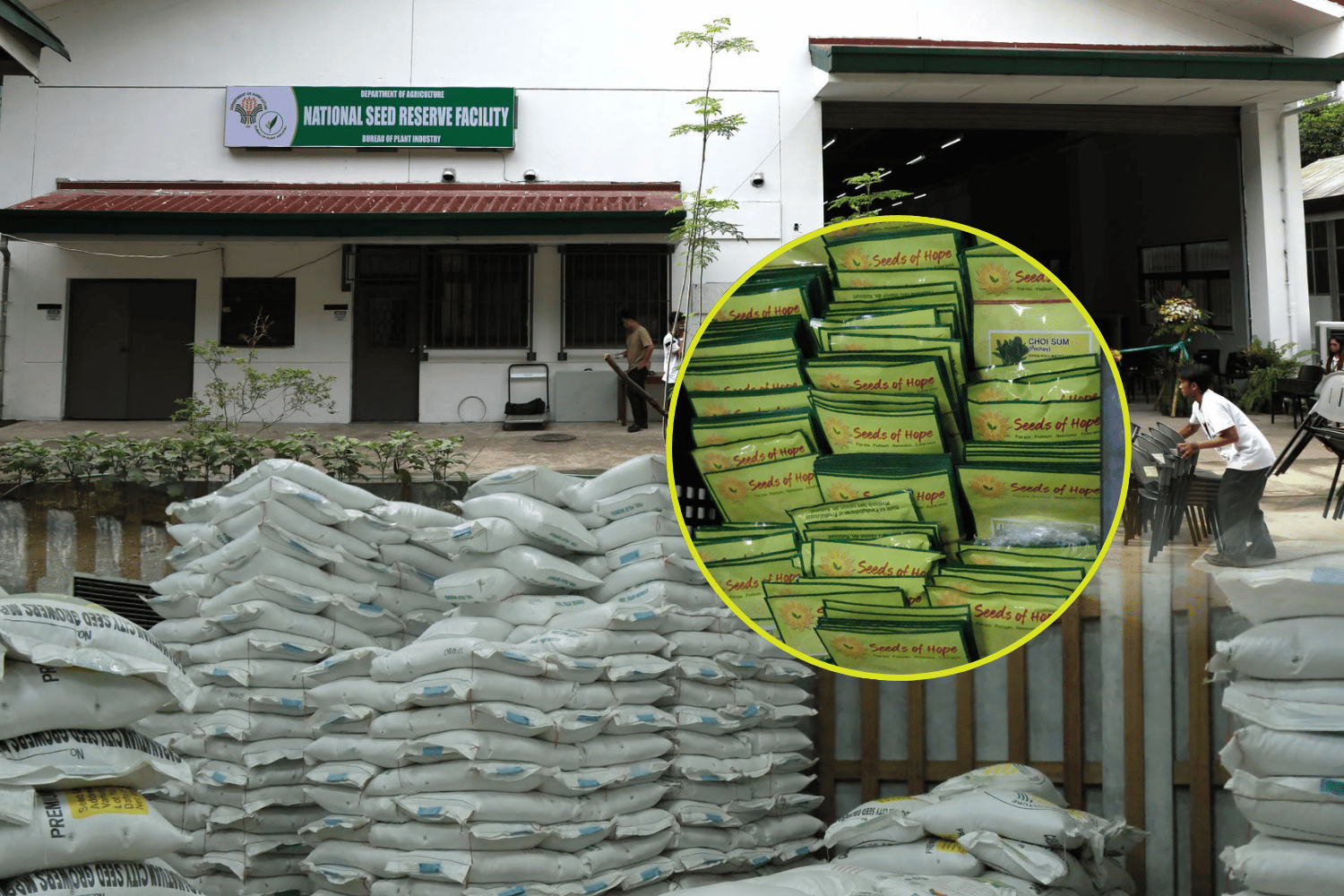
The initiative ensures that planting materials remain available even in calamities. Photographs by Bureau of Plant Industry / Facebook
The Quezon City hub is the first of several planned seed reserve facilities.
The Department of Agriculture is countering post-disaster food shortages by converting an old Quezon City warehouse into the National Seed Reserve Facility.
Located inside the Bureau of Plant Industry compound, the solar-powered facility is a centralized storage hub designed to preserve high-quality seeds for future planting—helping farmers recover more quickly after typhoons, droughts, and other calamities.
It will serve as the country’s long-term reserve of strategically important seeds, ensuring that planting materials remain available even when calamities disrupt agricultural production.
The facility will also store seeds for partner government agencies and institutions as part of a more coordinated system for protecting the country’s agricultural resources.
Quicker replanting is expected to reduce the risk of prolonged food shortages, which can drive up the prices of rice, vegetables, and other agricultural products.
The Quezon City hub is the first of several planned seed reserve facilities, with larger and more modern ones being built in Bicol and Iloilo. The DA is also looking to upgrade Bureau of Plant Industry centers in Baguio, Los Baños, Guimaras, La Granja, and Davao.
DA Sec. Francisco Tiu Laurel Jr. said the government has allocated ₱250 million for additional seed reserve facilities this year. A ₱300 million budget is being proposed for 2027 to expand the network of solar-powered storage hubs nationwide.
John Lloyd is a journalist by trade and a House Stark loyalist at heart. He writes all things business and tech—with bits of Spanish and chess on the side.