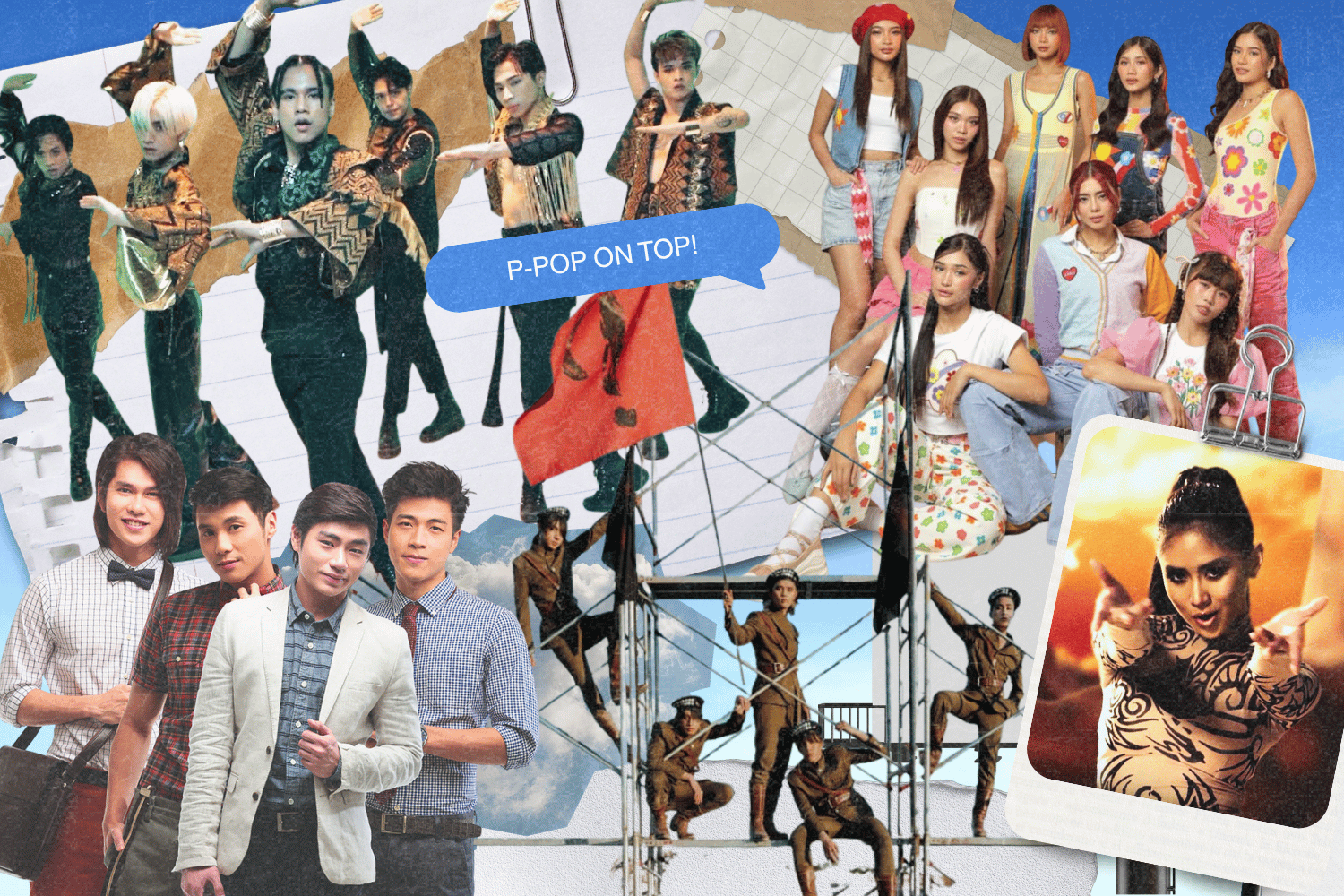
Ten defining P-pop songs that shaped the genre, from early breakthroughs to global hits driving Filipino pop today.
From SB19’s “Go Up” to BINI’s “Pantropiko,” these tracks shaped Filipino pop’s rise from niche scene to global force.
A hit song comes and goes. An influential one changes everything that comes after it.
Over the past decade, P-pop has transformed from a niche corner of Original Pilipino Music into one of the country’s fastest-growing music movements. Today’s sold-out concerts, fiercely loyal fandoms and international recognition didn’t happen overnight. They were built, step by step, by songs that challenged old perceptions, introduced new sounds and raised the standard for Filipino pop.
Here are 10 songs that helped shape the modern P-pop story—not simply because they topped charts, but because they left a lasting mark on the genre.
“Sa Isang Sulyap Mo” — 1:43 (2012)
Written by Myrus Apacible and Chris Cahilig | Arranged by Jonathan Ong
Before synchronized dance practices and streaming wars became part of P-pop culture, 1:43 proved that a homegrown boy band could build a following through original music. “Sa Isang Sulyap Mo” blended the timeless charm of the Filipino harana with contemporary pop production, creating a sound that resonated with young listeners and spread widely through early social media.
The song also showed that Filipino boy bands didn’t have to rely solely on television exposure. It became one of 1:43’s signature hits and helped establish an early blueprint for locally produced pop groups years before the current P-pop boom.
“Kilometro” — Sarah Geronimo (2014)
Written by Thyro Alfaro and Yumi Lacsamana | Produced by Thyro Alfaro
Sarah Geronimo changed the conversation with “Kilometro.” Instead of another soaring power ballad, she embraced sleek dance-pop and R&B, proving that Filipino pop could match international production standards while demanding equally polished choreography.
The song became a blueprint for performance-driven pop. Long before idol groups dominated the local scene, “Kilometro” demonstrated that singing, dancing and stage presence could exist as one complete package—a formula that many future P-pop acts would adopt.
“Tala” — Sarah Geronimo (2015)
Written by Nica del Rosario and Emmanuel Sambayan | Produced by Jumbo “Bojam” De Belen and Alisson Shore
Few Filipino songs have enjoyed a second life quite like “Tala.” Released in 2015, it exploded years later through dance challenges that spread from social media to schools, malls, parties and television, becoming a nationwide cultural phenomenon.
Recognized as one of the defining OPM songs of the decade, “Tala” proved that a Filipino pop song paired with memorable choreography could become a cultural event. It set the template for the dance-driven hits that continue to fuel today’s P-pop boom.
“Tilaluha” — SB19 (2018)
Written, composed and arranged by Lee Ju-hyeong
It wasn’t SB19’s biggest hit, but “Tilaluha” introduced something the local industry had rarely seen: a Filipino idol group built on the rigorous Korean trainee system.
The song showcased disciplined vocals, polished production and performance standards that signaled a new direction for local pop. It laid the foundation for what would eventually become the modern P-pop movement, proving that Filipino artists could thrive under the same demanding standards as their Asian counterparts.
“Go Up” — SB19 (2019)
Written by John Paulo Nase, Oh-won Lee and Glow | Arranged by Oh-won Lee
If one song convinced Filipinos to take P-pop seriously, it was “Go Up.” Its viral dance practice video shattered the long-held belief that Filipino idol groups couldn’t match the precision and discipline of their Asian counterparts.
More than a hit, “Go Up” became proof that the local industry could produce world-class performers. It sparked the rapid growth of organized fandoms, encouraged entertainment companies to invest in idol groups and became the unofficial starting point of the modern P-pop era.
“High Tension” — MNL48 (2020)
Originally written by Yasushi Akimoto | Filipino adaptation by Abel S. Roces | Arranged by APAZZI
While SB19 introduced the Korean idol model, MNL48 demonstrated that the Japanese theater-idol system could also flourish in the Philippines.
“High Tension” highlighted elaborate choreography, fan participation and the uniquely Japanese concept of idols growing alongside their supporters. Its success broadened the definition of P-pop, proving there was room for different approaches to building Filipino idol culture.
“What?” — SB19 (2021)
Written and produced by Pablo with Simon Servida and Mark J. Cruz
After establishing themselves with inspirational pop songs, SB19 took a bold creative turn with “What?” Mixing rock, hip-hop and themes of Filipino pride, the group rejected the polished bubblegum image many associated with idol music.
The song also cemented Pablo’s reputation as one of P-pop’s leading songwriter-producers. It showed that local idols could write, produce and shape their own artistic identity instead of simply performing songs handed to them.
“Maharani” — ALAMAT (2022)
Written, produced and arranged by Thyro Alfaro
“Maharani” proved that Filipino culture could sit at the center—not the sidelines—of modern pop music. ALAMAT blended trap, R&B and dance-pop with indigenous musical influences and multiple Philippine languages, creating a sound unlike anything else in mainstream P-pop.
The song raised the bar for cultural representation in pop music, showing that local identity could become a creative advantage rather than a commercial limitation. It encouraged a new generation of artists to embrace Filipino heritage while sounding unmistakably modern.
“Gento” — SB19 (2023)
Written by Pablo | Produced with Simon Servida and Joshua Daniel Nase
With “Gento,” P-pop crossed more borders than ever before. Its explosive choreography became a global social media trend, drawing participation from international creators and even K-pop idols.
The song became one of the strongest pieces of evidence that Filipino pop could compete on the global stage. It expanded P-pop’s international visibility and proved that local artists could influence—not just follow—the global music conversation.
“Pantropiko” — BINI (2023)
Written by Angelika Sam Ortiz, Jumbo “Bojam” De Belen, Mart Sam Emmanuel Olavides and Pow Chavez | Produced by Mart Sam Emmanuel Olavides and Jumbo De Bele
Every music movement needs a song that breaks into the mainstream. For today’s generation of P-pop girl groups, that song is “Pantropiko.”
Its bright summer sound, addictive choreography and massive social media success transformed BINI into household names while igniting an unprecedented boom for P-pop girl groups. More importantly, it brought the genre to countless casual listeners, proving that Filipino pop could dominate the mainstream without sacrificing its identity.