

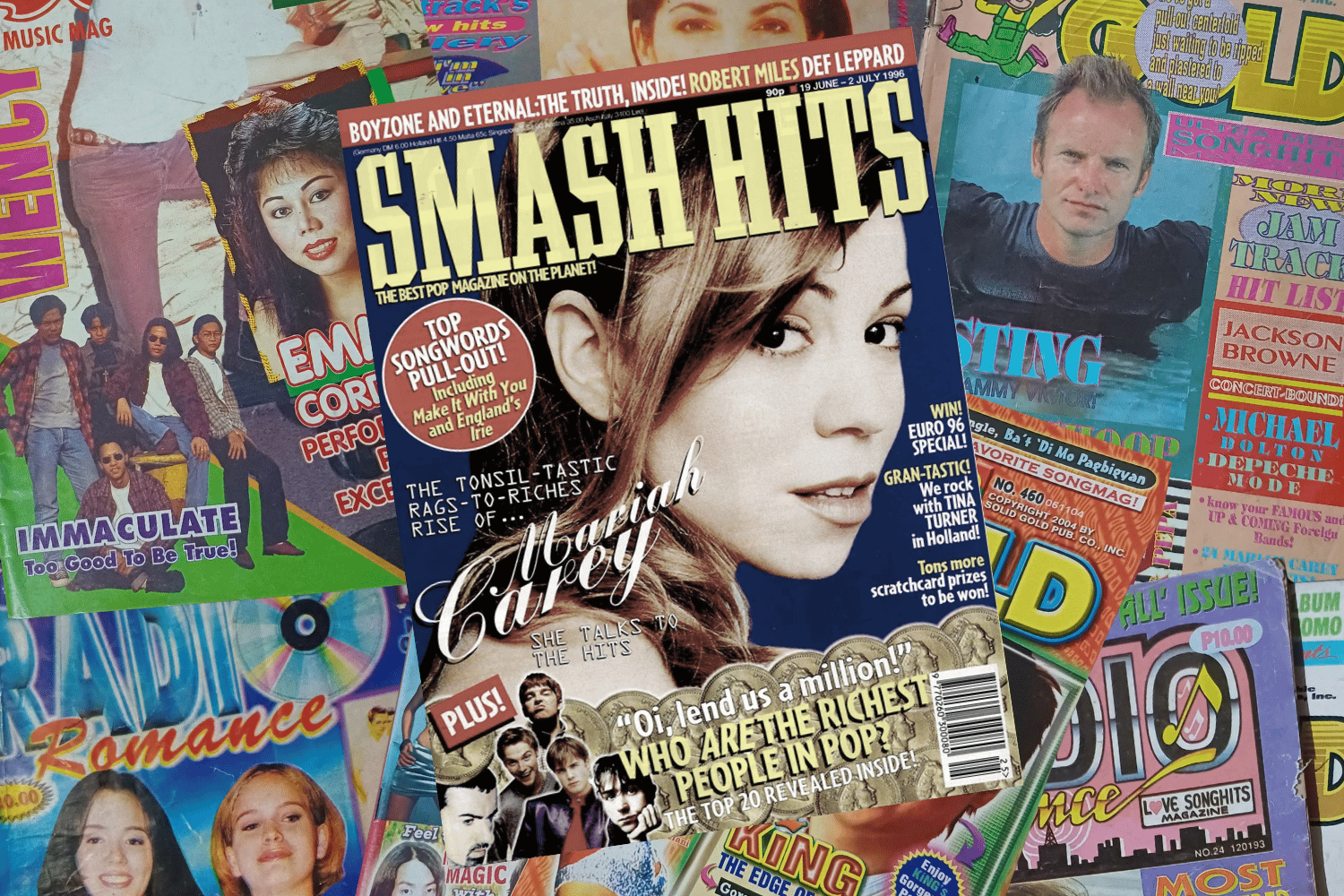
For years, the magazine helped fans learn lyrics, play songs on the guitar, and keep up with their favorite artists.
Before Spotify playlists and lyric websites, there was one magazine that was a must-have for many Filipino music fans. It was called the songhits.
For many years, songhits occupied a familiar spot on newsstands, often displayed alongside the day’s newspapers, as well as on the shelves of bookstores and magazine shops. For around ₱20 in the 1990s, each issue packed pages of song lyrics, guitar chords, artist photos and feature stories. It wasn’t expensive, and for young fans, it was money well spent.
I certainly thought so. As a teenager, I didn’t need much convincing to buy a copy. If an issue carried even just one Mariah Carey song or a new photo of her, I considered it worth the cash I had saved from my daily baon. Long before social media and streaming platforms made everything instantly available, songhits became my strongest connection to the artist I admired most.
The lyrics mattered just as much. Back then, there was no Googling the words to a song after hearing it on the radio. If I wanted to sing along to “Honey” or “Always be my baby” without getting the lyrics wrong, songhits was usually where I found them. Looking back, that little magazine probably shaped my love for music more than I realized at the time.
I remember trying to keep my copies in pristine condition. But because I usually fell asleep with one in my hands, it was a futile effort. The pages eventually curled, corners were folded to mark favorite songs, and the spine softened after weeks of being slipped in and out of a backpack. Looking through an old copy today, the wear almost feels like part of the story.
Back then, music wasn’t always available on demand. Radio and MTV remained the easiest ways to hear the latest hits, but hearing a song and actually knowing every word were two different things. Sometimes a favorite track would disappear before anyone could write down the lyrics. Songhits was always there to come to the rescue.
The magazine also had a way of introducing readers to songs they weren’t looking for. Buying an issue for one artist often meant discovering several more. There were no recommendations based on listening habits, only the thrill of turning the page and seeing what came next.
Then, almost without anyone noticing, the ritual began to fade.
The internet made lyrics easier to find as dedicated websites appeared. MP3 players replaced stacks of CDs and broadband became faster.
Then YouTube made official music videos available almost anytime, and eventually lyric videos became just as easy to find. Smartphones put all of it into a pocket. The monthly trip to buy a magazine slowly became unnecessary.
Newsstands reflected the change. Music magazines occupied less space with each passing year. Some disappeared altogether. Others struggled to compete with information that was now free and updated by the minute. By the time streaming services became the primary way people listened to music, songhits had become part of a bygone era.
It would be easy to say technology replaced the magazine. In many ways, it did.
Lyrics today appear before the first chord even plays. Guitar chords, piano tutorials, and karaoke versions are available within seconds. Entire discographies can be streamed with a tap. The convenience is remarkable, and few would willingly go back.
But something changed along the way.
Finding music used to require a little patience. There was excitement in finally spotting the latest issue on a newsstand after weeks of waiting, then rushing to the table of contents to see if a favorite song had made it in. There was satisfaction in flipping through every page, even after finding what you came for, because another great song was probably waiting nearby.
Old copies of songhits still turn up in secondhand bookstores, garage sales and storage boxes that somehow survived years of moving houses.
For many, those well-worn copies are more than collections of lyrics and chords. They are reminders of a time when discovering music wasn’t measured by search results or streaming recommendations.
Sometimes all it took was ₱20, a trip to the nearest newsstand after class, and the hope that this month’s issue included the song that had been playing on the radio all week.
READ:

The good ol’ days–or were they? Rosy retrospection isn’t exactly nostalgia
Gel G. Galang, RPsy
October 30, 2025

Patrons of the Arts – Nostalgia: a trip through 90s Pinoy childhood and AR Art
Mianne Cudal
January 28, 2026

OPM nostalgia back on repeat: how the Eraserheads topped Spotify’s OPM 30 years later
King Abalos
December 22, 2025


