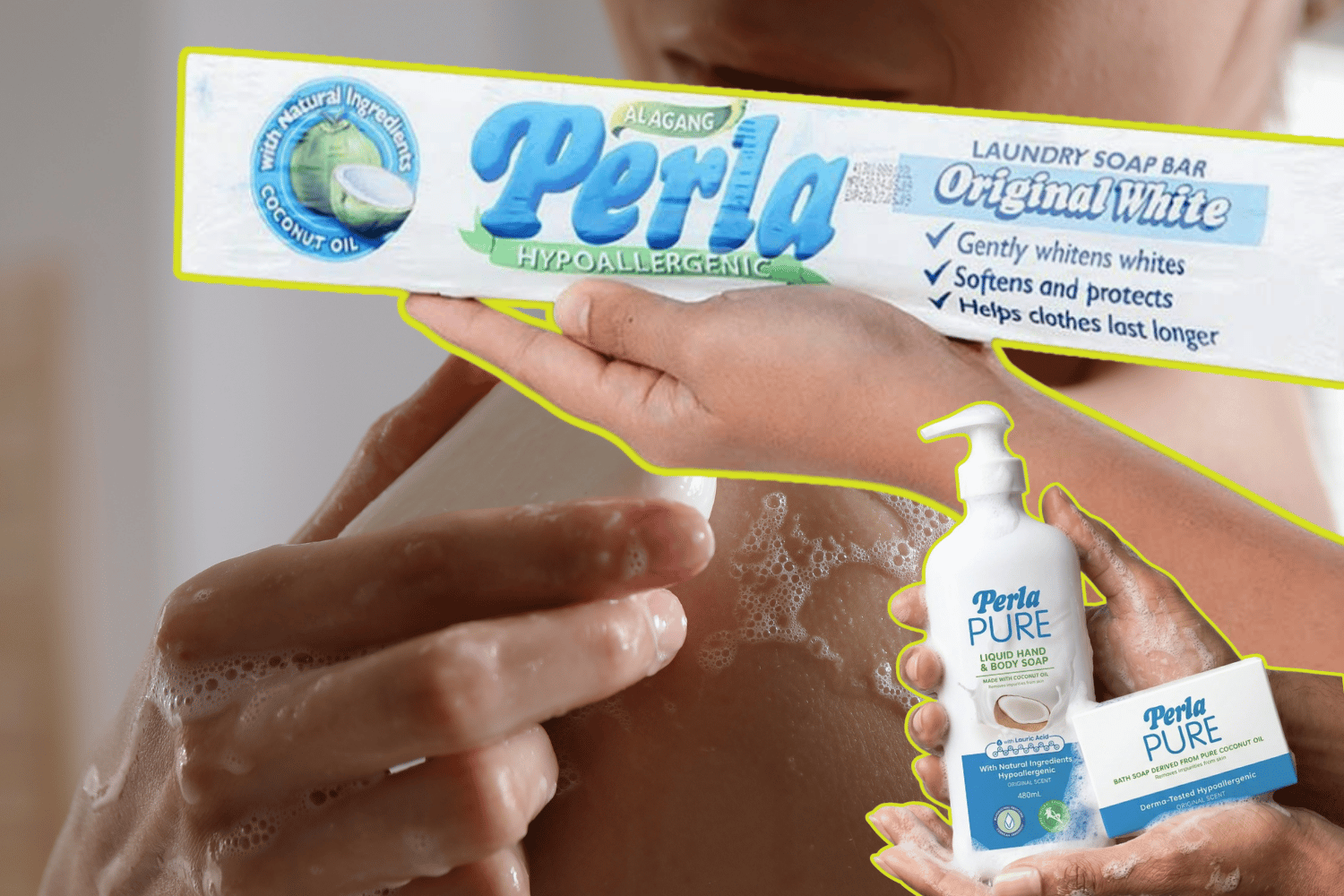
Perla Laundry Soap is made from 100% natural coconut oil rather than synthetic detergent ingredients.
Imagine sleeping over at your tita’s house and stepping into the bathroom for a shower. You reach for the soap, only to find a familiar white bar of Perla—the same one you just saw beside the laundry basin. Before you can ask why it’s there, your tita casually says, “Pampaligo ko ’yan.”
It may sound unusual to some, but for generations of Filipinos, using Perla Laundry Soap for bathing has been a perfectly normal routine.
Long before skincare trends dominated social media, Perla had already earned a reputation as a gentle alternative for people dealing with pimples, oily skin, eczema, skin allergies, or simply looking for a no-frills soap. The practice became so common that many Filipinos grew up believing Perla belonged as much in the bathroom as it did in the laundry area.
Part of that reputation comes from what makes Perla different from many ordinary laundry soaps. It is made from 100% natural coconut oil rather than synthetic detergent ingredients commonly found in many laundry products. Coconut oil naturally contains lauric acid, known for its antibacterial and antifungal properties, while the traditional soap-making process also retains glycerin, helping the skin feel less stripped after washing.
Because of these qualities, Perla became a favorite among many households and even gained a reputation as a hypoallergenic soap that some Filipino dermatologists recommended for people with sensitive skin.
Still, the iconic white bar was never actually designed for bathing.
Like most laundry soaps, the traditional Perla bar has a higher pH level than soaps formulated specifically for human skin. While many users have had positive experiences, prolonged use of high-pH cleansers may disrupt the skin’s natural moisture barrier and lead to dryness or irritation, especially for people with sensitive skin.
Instead of discouraging consumers from using Perla this way, the brand chose to embrace a habit that had already existed for decades.
Recognizing how many Filipinos had long been bathing with its laundry soap, Perla introduced Perla Pure Bath Soap, a dedicated personal care version formulated specifically for the face and body. It retains the coconut oil base, hypoallergenic qualities, and naturally occurring lauric acid that made the original famous, but with a formulation designed for skin rather than laundry.
It’s a rare example of consumers shaping a product’s evolution. Rather than convincing people to use Perla differently, the brand acknowledged what Filipinos had been doing all along.
After decades of sharing bathroom shelves with shampoos and facial cleansers, the country’s most iconic laundry soap finally became an official bath soap—not because of a marketing campaign, but because generations of Filipinos had already decided it was one.
READ: