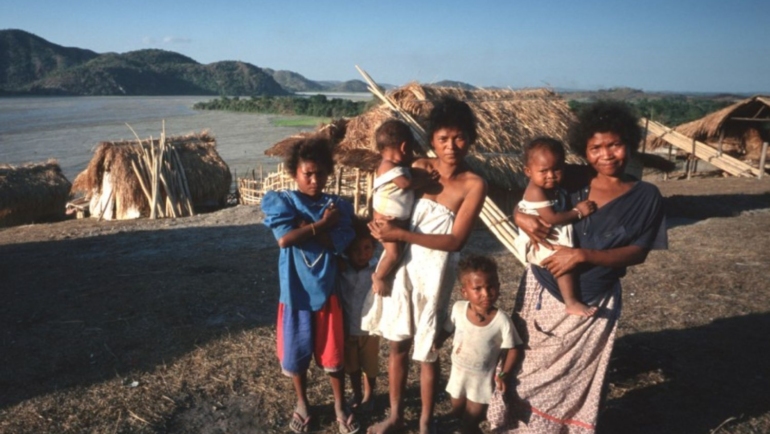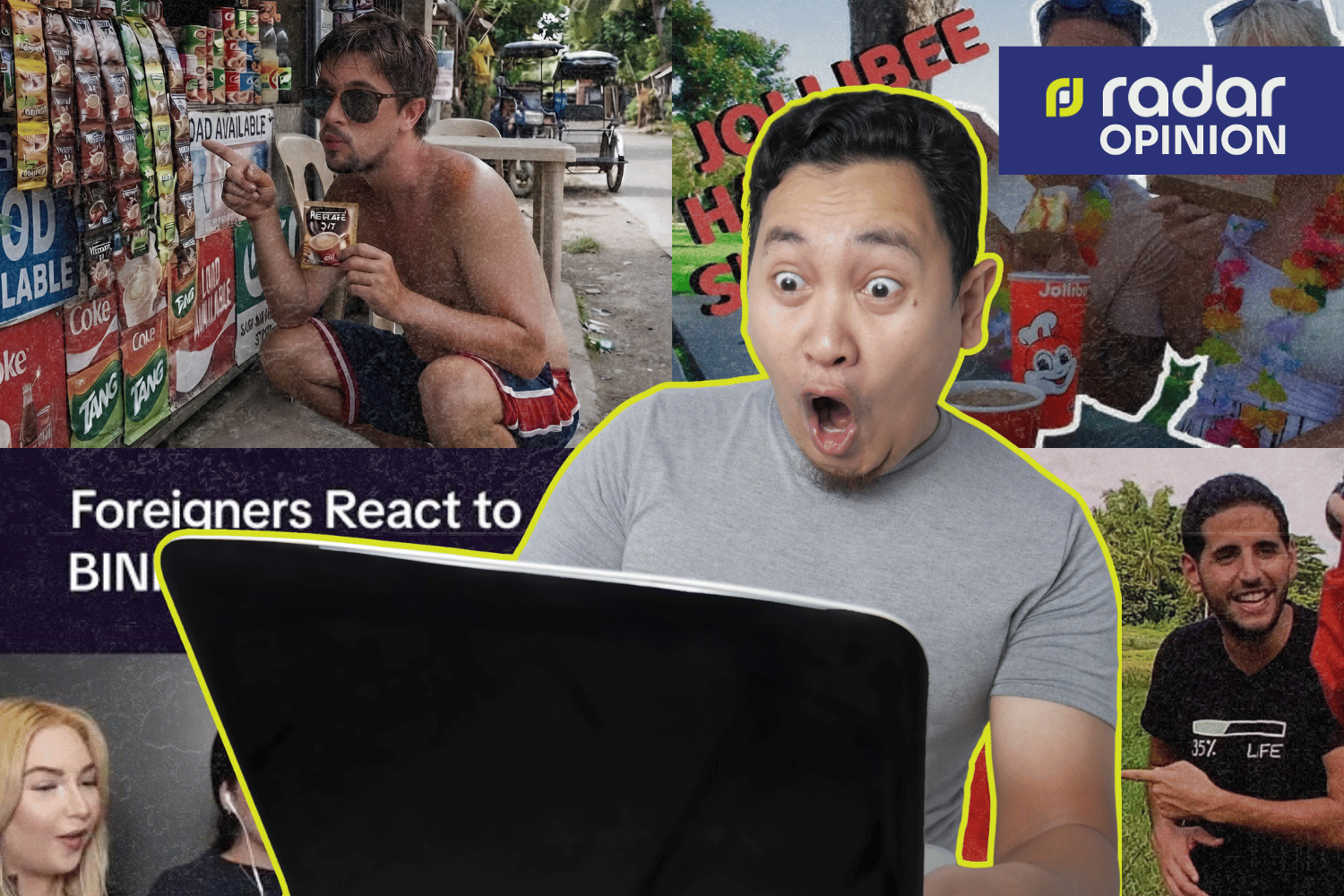
A single foreign compliment becomes a collective celebration.
You wake up, check Facebook, and see another feel-good post from Ukrainian content creator Denys Davydov thanking Filipinos for their support. Thousands of comments pour in. “We love you!” “Proud to be Filipino!” Before long, you’ve hit the share button too.
Later that night, YouTube recommends another foreign vlogger trying Jollibee’s Chickenjoy for the first time. Then someone tastes halo-halo. Another attempts to cook adobo. Another says “Mahal ko kayo” in slightly awkward Tagalog. Again, the views climb into the millions—and the comments are flooded with Filipino flags.
Welcome to the world of Pinoy baiting.
The term has become part of the Filipino internet vocabulary, describing content that deliberately courts Filipino audiences by mentioning, praising, or reacting to anything related to the Philippines. Sometimes the appreciation is sincere. Sometimes it’s little more than a business strategy.
Either way, it works.
Why Filipinos are such an attractive audience
There’s a simple reason creators keep making these videos: Filipinos respond.
The Philippines consistently ranks among the world’s most active social media populations. A single video mentioning the country can trigger hundreds of thousands of likes, shares, and comments within hours. That engagement signals algorithms to recommend the content even further, translating into more subscribers, more ad impressions, and ultimately, more revenue.
That’s why the formula rarely changes.
A thumbnail with the Philippine flag.
A title declaring “My First Jollibee Experience!”
A reaction to Marcelito Pomoy, Morissette, SB19, or another Filipino performer.
A few Tagalog phrases like “Salamat po” or “Mahal ko kayo.”
The audience already knows what’s coming—but watches anyway.
Why it feels so good
The more interesting question isn’t why foreigners make these videos.
It’s why Filipinos love them.
Psychologists and historians point to several overlapping reasons.
For more than three centuries under Spain and nearly half a century under American rule, Filipinos lived in a society where foreign approval often carried more prestige than local recognition. Scholars have long argued that this colonial experience contributed to what is commonly called colonial mentality—the tendency to unconsciously place greater value on foreign opinions, standards, or validation.
Then there’s history.
For much of the 20th century, the Philippines received relatively little attention in global entertainment and mainstream media. So when international celebrities, athletes, or creators mention the country—even briefly—it can feel like long-overdue recognition.
For millions of Overseas Filipino Workers and migrants, that recognition can feel even more personal. Seeing the Philippines appreciated abroad becomes a source of pride, a reminder that their homeland is being noticed in places where it was once largely invisible.
Social media amplifies all of this.
A single foreign compliment becomes a collective celebration. The comment section turns into a digital town plaza filled with “Proud Pinoy here!” messages.
When appreciation becomes a business model
Of course, not every foreign creator talking about the Philippines is engaging in Pinoy baiting.
Many genuinely fall in love with Filipino food, culture, or people.
The challenge is telling the difference.
Does the creator continue exploring the country beyond the most clickable topics?
Do they offer thoughtful insights instead of exaggerated praise?
Or does every upload simply recycle another “Filipinos are the best!” headline because it guarantees views?
The line between genuine appreciation and calculated marketing isn’t always obvious.
Filipinos are becoming more self-aware
Ironically, the people most responsible for exposing Pinoy baiting are Filipinos themselves.
Over the past few years, more viewers have begun calling out low-effort videos that rely solely on Filipino pride without offering meaningful content. Many now distinguish between creators who have built authentic relationships with the country and those who discovered that simply saying “I love the Philippines” is an easy way to game the algorithm.
That shift suggests something encouraging.
Filipinos still celebrate sincere recognition. But they’re becoming less willing to reward empty flattery.
Perhaps that’s the healthiest response.
There’s nothing wrong with feeling proud when someone abroad genuinely appreciates Filipino culture. There’s also nothing wrong with enjoying a foreigner’s first bite of Chickenjoy or their amazement at halo-halo.
The problem begins when praise becomes the product—and validation becomes the reason we keep clicking.
Because the greatest compliment the Philippines can receive isn’t someone saying we’re amazing.
It’s knowing we no longer need strangers to tell us that before we believe it ourselves.
READ:
This foreigner didn’t just adapt to the Philippines — he became Filipino
Top Dagohoy
July 25, 2026

Content creation evolves into a professionalized industry in the Philippines
Kenneth M. del Rosario
December 1, 2025

If a content creator checks these five boxes, it’s time to unfollow
Top Dagohoy
July 26, 2026