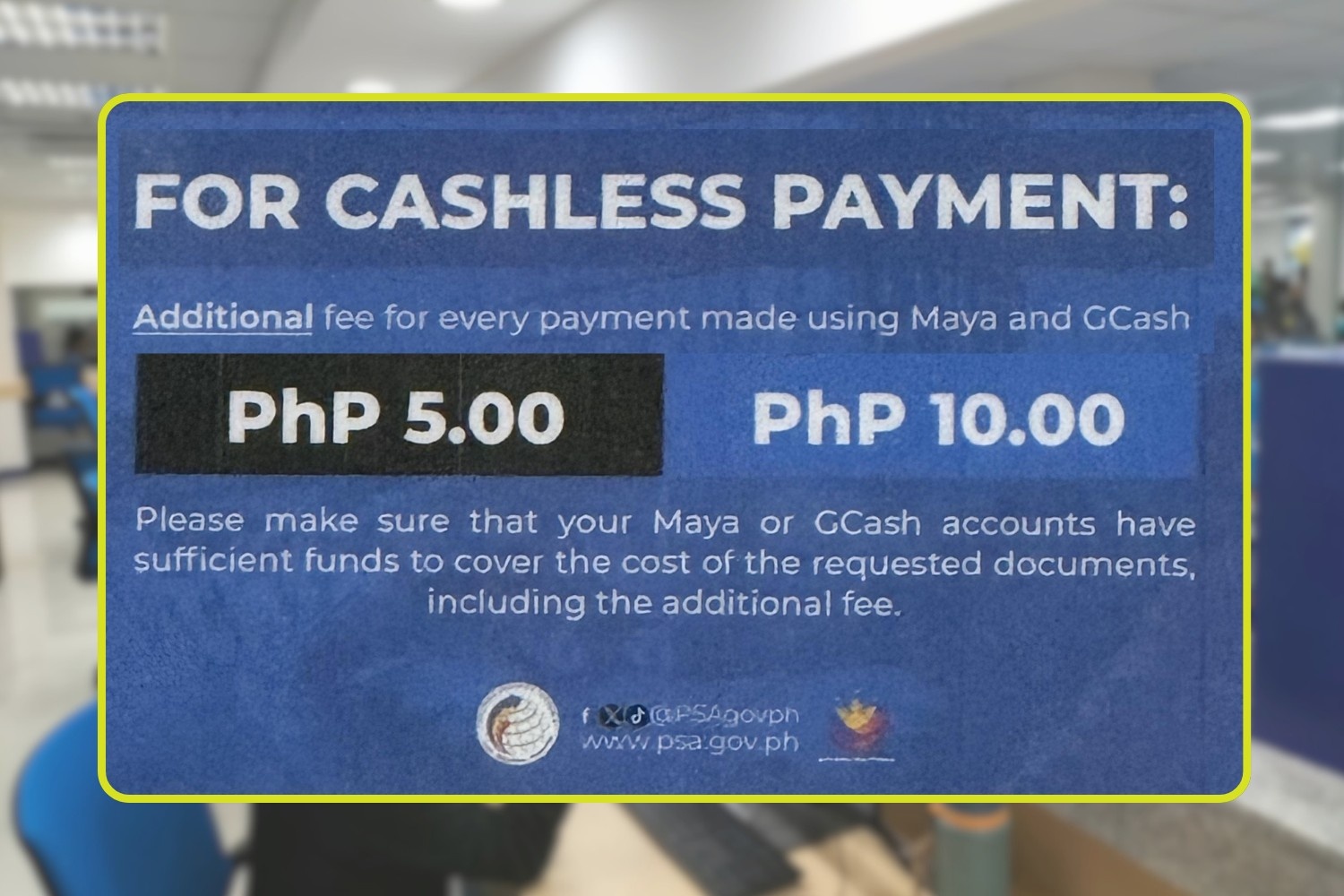
While some users claimed the fees were unauthorized, others pointed to a Joint Department Administrative Order issued by the Department of Trade and Industry and the Department of Finance. The order recognizes “convenience fees” collected by electronic payment service providers for certain government transactions.
Under Section 3 of DTI-DOF JDAO No. 10-01, series of 2010, a convenience fee refers to an additional amount charged for using an alternative payment channel outside the government’s customary over-the-counter transaction. The fee is added on top of government charges and goes to the electronic payment service provider, not the agency.
However, the scope of the order is limited. Section 2 states that it covers “only transactions made over the internet or other forms of transaction that do not require face-to-face with any government personnel or over the counter transactions.”
This makes it unclear whether it also applies to QR or e-wallet payments made in-person at a government office.
Meanwhile, the Anti-Red Tape Authority’s Memorandum Circular No. 2020-06, series of 2020, has required government agencies to adopt digital payment options. However, it does not specifically address additional charges for in-person cashless transactions.
The discussion comes as the Bangko Sentral ng Pilipinas studies whether additional measures are needed to reduce fees for online person-to-government payments.
BSP Deputy Governor Mamerto Tangonan previously told reporters that they are monitoring the market’s response to the Land Bank of the Philippines’ move to waive charges on select digital payment-to-government transactions.
“We will observe the market development,” Tangonan said. “Does that require regulation? At the moment, no.”
The issue also comes as several banks recently rolled out free interbank transfers. But unlike banks, e-wallets such as GCash and Maya rely more heavily on a transaction-based activity—making zero-fee transfers more difficult to implement.
READ: