For now, Nayong Pilipino lives mostly in memories.
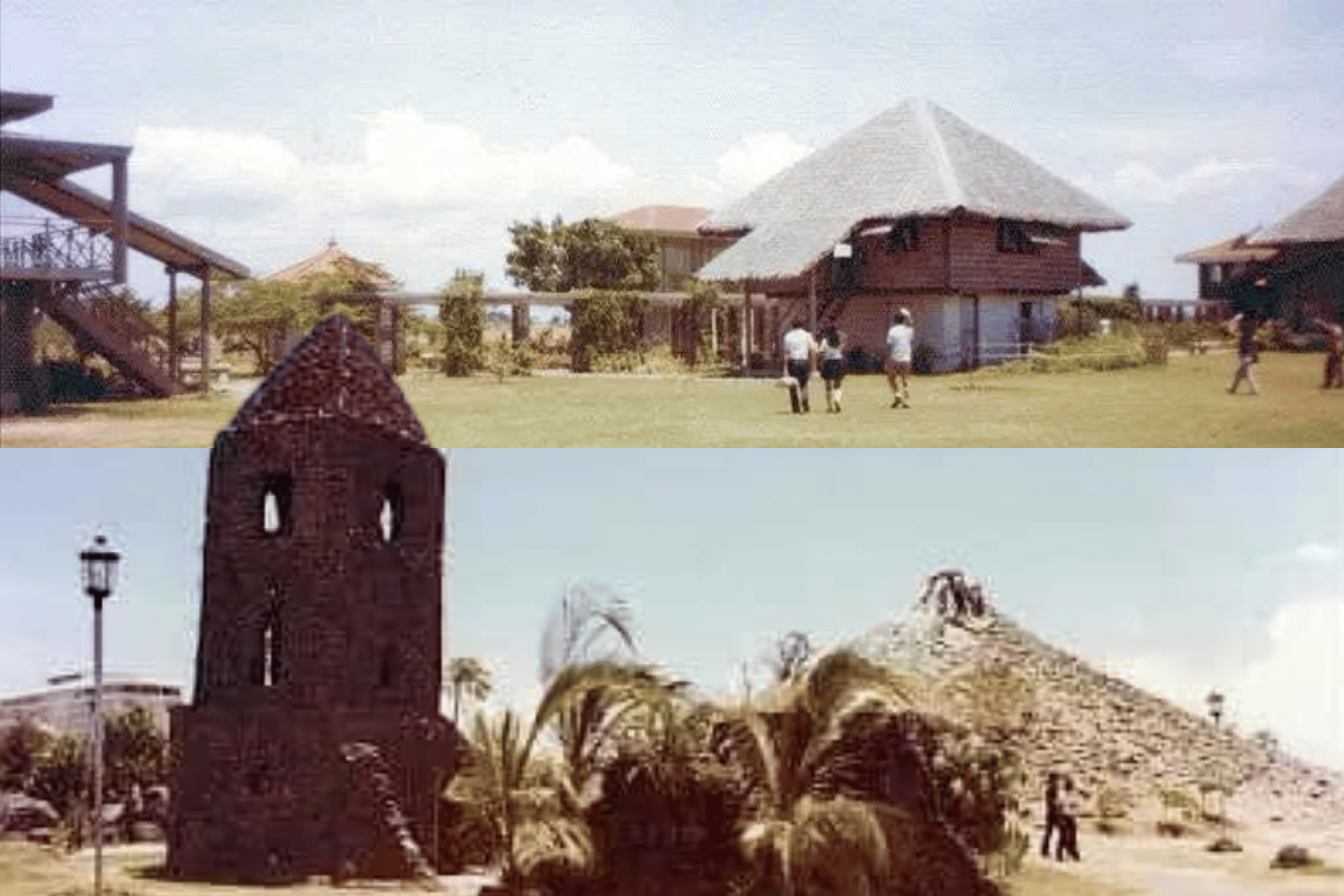
If you grew up in the ‘70s, ‘80s, or ‘90s, there’s a good chance one of your school field trips included a visit to Nayong Pilipino. In just one afternoon, you could “travel” from the Banaue Rice Terraces to Mayon Volcano, walk through Vigan’s heritage houses, and visit Magellan’s Cross—all without leaving Metro Manila.
For many Filipinos, it was the closest thing the country had to a cultural theme park.
So what happened to it?
The park that brought the Philippines together
Opened in 1970 beside the Manila International Airport in Pasay City, Nayong Pilipino was conceived as a living showcase of Philippine culture and heritage.
Spread across 45 hectares, it featured meticulously crafted replicas of the country’s most famous landmarks, traditional villages, churches, and historical sites. Instead of roller coasters and thrill rides, visitors explored the country’s geography, architecture, and history in miniature.
For generations of students, it became an educational rite of passage. Families also flocked there during weekends and holidays, making it one of Metro Manila’s most recognizable attractions.
Why it disappeared
Its closure had little to do with declining popularity.
In 2002, the government shut down the original park to make way for the expansion of what is now the Ninoy Aquino International Airport. Large portions of the property were converted into airport infrastructure, including roads, taxiways, and facilities serving NAIA Terminals 2 and 3.
The miniature landmarks that once defined countless childhood memories were demolished along with much of the park.
The Clark comeback that never took off
Five years later, Nayong Pilipino was given a second life inside the Clark Freeport Zone in Pampanga.
The new park opened in 2007 on a smaller, six-hectare site, continuing cultural performances and educational programs while introducing new exhibits.
But the revival proved short-lived.
In 2019, the Clark site closed for renovations ahead of the Southeast Asian Games. It never fully reopened as a commercial attraction. Funding challenges, changes in government priorities, and maintenance issues kept the park from returning to its former glory.
Today, the site remains largely dormant, with only its chapel occasionally used for Sunday Mass.
So where is Nayong Pilipino now?
Technically, Nayong Pilipino never disappeared.
What changed was its form.
The Nayong Pilipino Foundation, which manages the institution, has shifted away from operating a permanent theme park. Instead, it now focuses on cultural preservation through traveling exhibitions, educational programs, heritage research, and partnerships with other organizations.
A satellite exhibit in Tarlac served as a temporary home for some of its collections, but it also closed in June 2026 as the foundation prepared to relocate its artifacts.
Could it come back?
There’s still hope.
Rather than rebuilding the old park exactly as Filipinos remember it, the Nayong Pilipino Foundation is working with the Public-Private Partnership Center to develop plans for a new cultural destination.
The vision is no longer simply a park filled with miniature landmarks. Instead, planners are exploring a modern creative and heritage hub that combines education, tourism, culture, and technology.
Whether that dream becomes reality remains to be seen.
For now, Nayong Pilipino lives mostly in memories—of bus rides with classmates, packed lunches under the trees, souvenir keychains, and that magical feeling of seeing the entire Philippines in just one place.
It may no longer stand in the way many remember, but its original mission—to bring Filipinos closer to their culture—continues, just in a very different form.
READ: