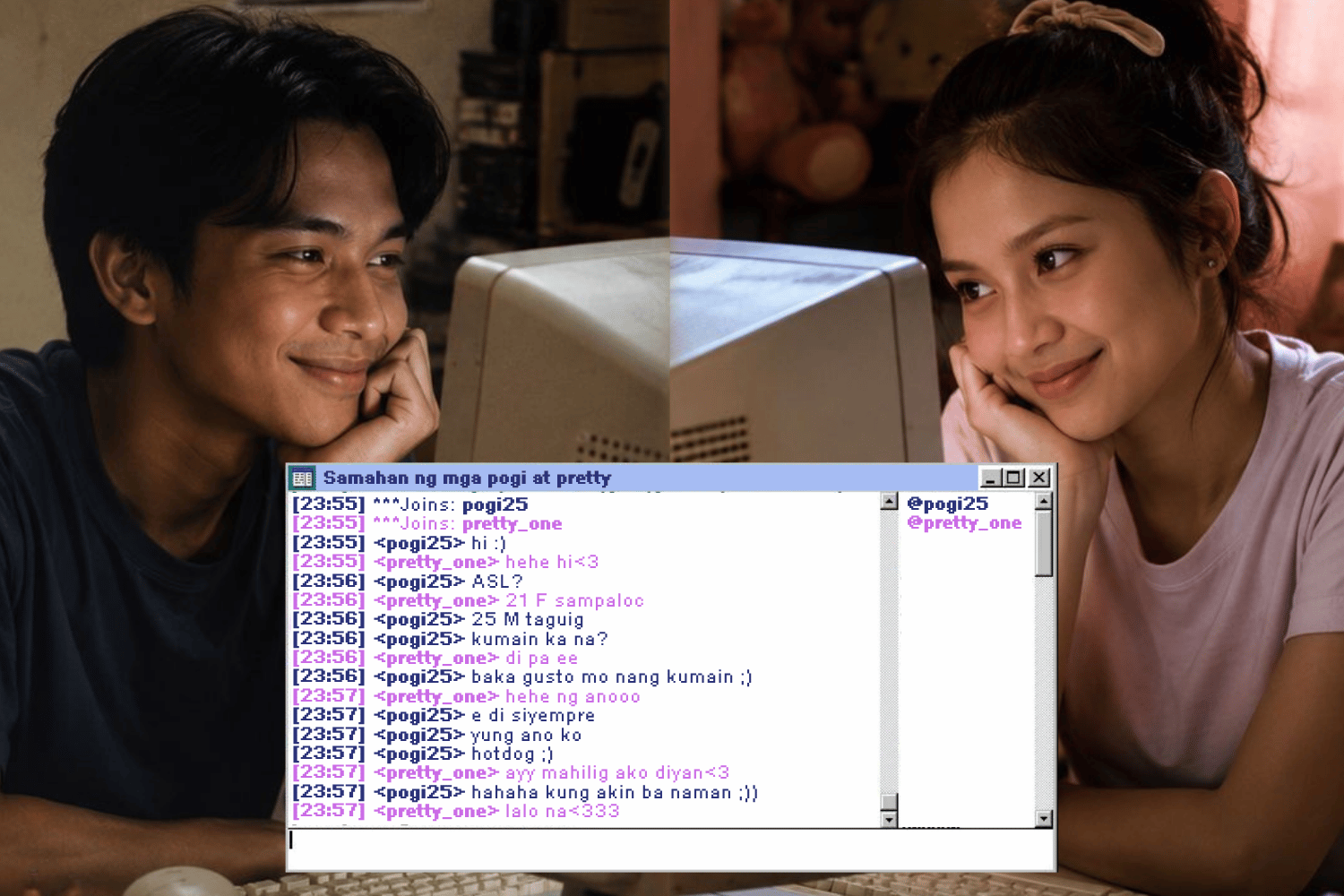
mIRC was an Internet Relay Chat client built for conversations, rather than a dating app.
The timer above the cashier kept counting down your remaining internet minutes. Around the computer shop, keyboards rattled as students downloaded MP3s, checked Friendster, or searched for school assignments. But for many Filipinos, one small window mattered more than everything else on the screen.
mIRC.
Long before Tinder introduced swiping or Facebook Messenger became the default place to flirt, mIRC was where thousands of Filipinos met strangers, found love, arranged hookups, and built friendships that eventually spilled into the real world.
Looking back, it’s hard not to see mIRC as the country’s first online dating app—even if it was never designed to be one.
It all started with “ASL?”
There were no profile photos, bios, or compatibility scores.
Every conversation began with one question:
“ASL?”
Age. Sex. Location.
Those three letters told you everything you needed to know. If the answer sounded promising, the conversation continued. If not, both users simply moved on.
It was crude by today’s standards, but it became the blueprint for the personal profiles every dating app now requires.
Chat rooms were the first matchmaking algorithm
Instead of swiping through strangers, users entered channels organized by location or interest.
Filipinos crowded into rooms like Philippines, Manila, and Cebu, while others joined channels for schools, music, gaming, or anime. If you wanted to meet people near you, you simply entered the right room.
Some IRC networks also hosted adult channels where flirting, cybersex, and casual hookups were common—years before dating apps normalized meeting strangers online.
Before DMs, there was “query”
The public chat room was only where people noticed each other.
The real conversation began after someone double-clicked a nickname.
That opened a private Query window where strangers spent hours talking, exchanging jokes, sharing phone numbers, and sometimes planning to meet.
Long before people slid into DMs, mIRC users were already doing exactly that.
Falling in love without photos
One reason mIRC relationships felt different was because almost nobody knew what the other person looked like.
Sending a photo over dial-up internet could take several minutes, while webcams were expensive and uncommon. Most people simply talked.
People fell for wit instead of selfies, humor instead of filters, and late-night conversations instead of carefully curated profiles.
Meeting in person was always a gamble.
The era of the “EB”
Sooner or later, someone would ask:
“EB tayo?”
Short for Eyeball, an EB was the moment online friends finally met face-to-face.
Most happened in malls, Jollibee branches, fast-food restaurants, or parks, often as group gatherings where everyone could finally match real faces to familiar screen names.
Some EBs produced lifelong friendships.
Some became marriages.
Others ended with someone quietly saying, “Hindi pala siya ang ine-expect ko.”
When geekiness was attractive
Back then, your online status wasn’t measured by followers.
It was measured by your mIRC script.
Users customized their chat windows with colorful text, animated greetings, ASCII art, and automated replies. Some even created bots to manage chat rooms or impress their online crushes.
Knowing how to tweak your script was today’s equivalent of having the coolest social media profile.
Before the swipe
mIRC was never marketed as a dating app. It was simply an Internet Relay Chat client built for conversations.
Yet somewhere between the endless “ASL?” exchanges, private Query windows, and unforgettable EBs, it quietly invented many of the rituals that still define online dating today.
The technology has changed. We now have AI matchmaking, verified profiles, video calls, and GPS-powered recommendations.
But the feeling hasn’t.
The excitement of a new message. The butterflies before meeting someone for the first time. The hope that the stranger on the other side of the screen might become something more.
For many Filipinos, online dating didn’t begin with a swipe.
It began inside a noisy computer shop, with a blinking cursor, an anonymous nickname, and three unforgettable letters:
ASL?
READ:
Back-to-school lists now include laptops, tablets, power banks
Annie Azucena
July 24, 2026
The ILOVEYOU hacker, who once disabled global networks, settled for fixing phones in Quiapo
Alyana Fabella
May 6, 2026
ISP Bonanza and the years of slow pre-paid internet access
radar Lifestyle
April 12, 2026