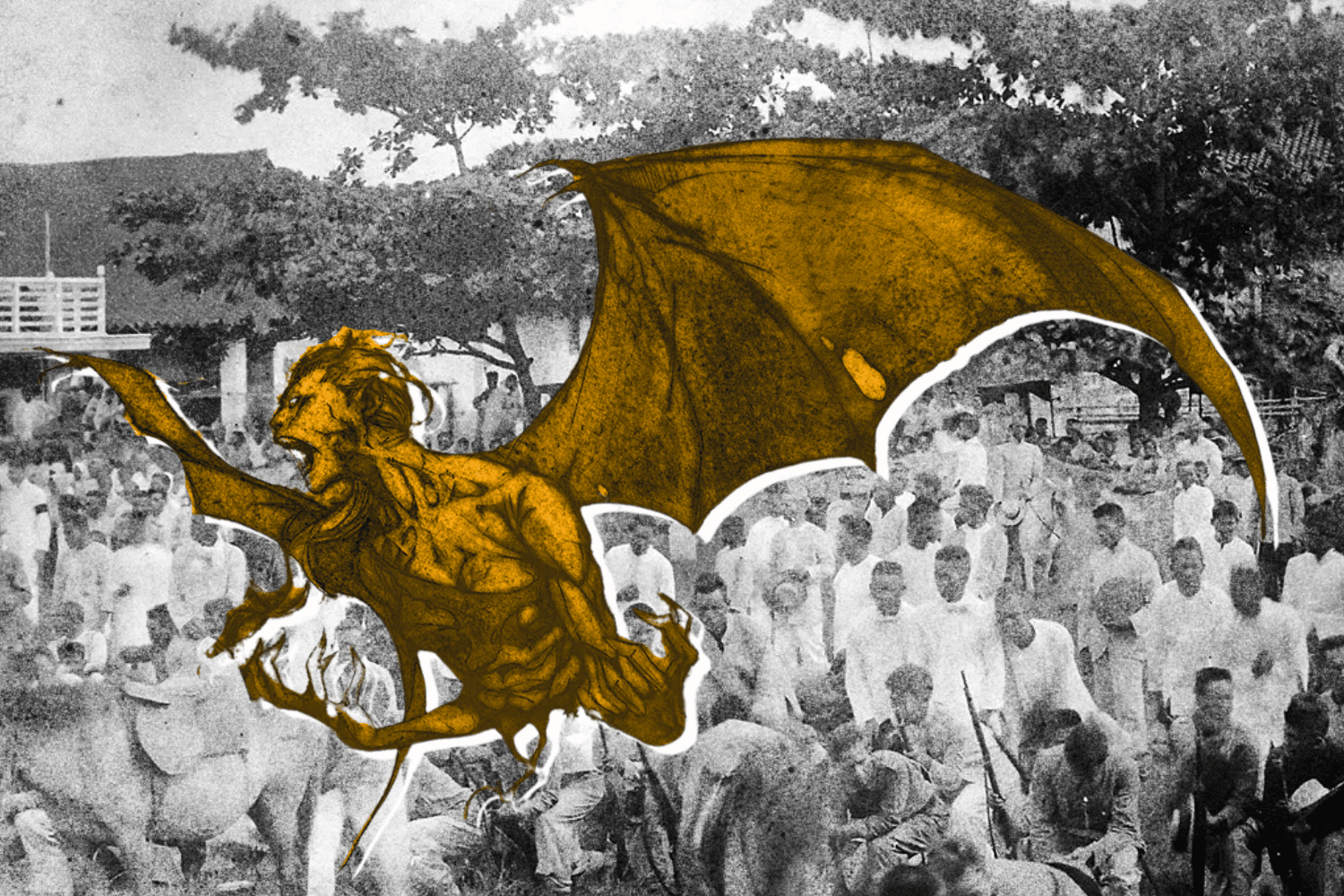
The operation remains one of the most striking examples of psychological warfare in Philippine history.
Every Filipino child has heard the warning.
Don’t stay out too late. Don’t wander into the mountains after dark. Don’t answer strange sounds at night. The aswang might be waiting.
For generations, the creature has haunted Philippine folklore as a terrifying shape-shifter, vampire, or flesh-eating ghoul. Long before Spanish colonizers arrived, indigenous communities across the archipelago already believed in supernatural beings that roamed forests and villages after sunset.
The Spaniards did not invent the aswang, but they were among the first to realize how useful the legend could be. As they expanded Catholic rule across the islands, Spanish friars demonized babaylan—indigenous spiritual leaders, healers, and midwives—by linking them to the dreaded creature. The centuries-old myth was transformed into a colonial tool to weaken native beliefs and strengthen foreign control.
But perhaps the darkest chapter in the history of the aswang didn’t happen during the Spanish era.
It happened during the Cold War.
When a monster became a weapon
In the early 1950s, the Philippines was battling the Hukbalahap rebellion in Central Luzon. The communist guerrilla movement had established strongholds across Pampanga, Nueva Ecija, and Tarlac, making it difficult for government troops to regain control of the countryside.
Instead of relying solely on guns and military force, American intelligence turned to something much older: fear.
Leading the campaign was CIA operative Edward Lansdale, a pioneer of psychological warfare who believed battles could be won not only by defeating enemies in combat but by manipulating what they believed.
Lansdale understood that many rural communities still held deep fears of the supernatural. Rather than dismiss those beliefs, he decided to exploit them.
The aswang psychological operation
According to Lansdale’s own memoir and later historical accounts, psychological warfare teams quietly spread rumors through villages that an aswang had been seen haunting a mountain where Huk rebels were believed to be hiding.
Then they waited.
When a Huk patrol passed through a secluded trail one night, operatives reportedly abducted the last man in the line without alerting the others.
The captive was killed. Two puncture wounds were made on his neck, his body was hung upside down, and his blood was drained. The corpse was then left along the trail for fellow rebels to discover the following morning.
The grisly scene was carefully staged to resemble the work of an aswang.
When the rebels found the pale, bloodless body, fear spread through the camp. Believing a supernatural creature was stalking the mountain, the Huk unit reportedly abandoned the area, allowing government forces to move in without firing another shot.
The power of belief
Historians caution against treating the incident as the single event that defeated the Huk rebellion. The insurgency eventually declined because of a combination of military campaigns, intelligence work, political reforms, and shifting public support.
Even so, the operation remains one of the most striking examples of psychological warfare in Philippine history.
It proved that myths can become weapons.
The Americans did not create the aswang, just as the Spaniards centuries earlier had not invented it. Both instead recognized the power of an existing belief and used it to achieve political and military objectives.
Today, the aswang continues to live on in horror films, television shows, novels, and stories shared between generations.
Yet behind one of the Philippines’ oldest monsters lies a forgotten historical reality: there was a time when the country’s most feared mythical creature became part of a real-life military operation, turning folklore into one of the Cold War’s most unsettling psychological weapons.
READ:

From PH to Portugal: “Tigkiliwi” brings Filipino aswang story to global audience
radar Entertainment
January 16, 2026

Siquijor: Back to Witches’ Island
Lester V. Ledesma
October 30, 2025

Nine underrated Filipino mythological creatures to know
Nikko Miguel Garcia
November 3, 2025