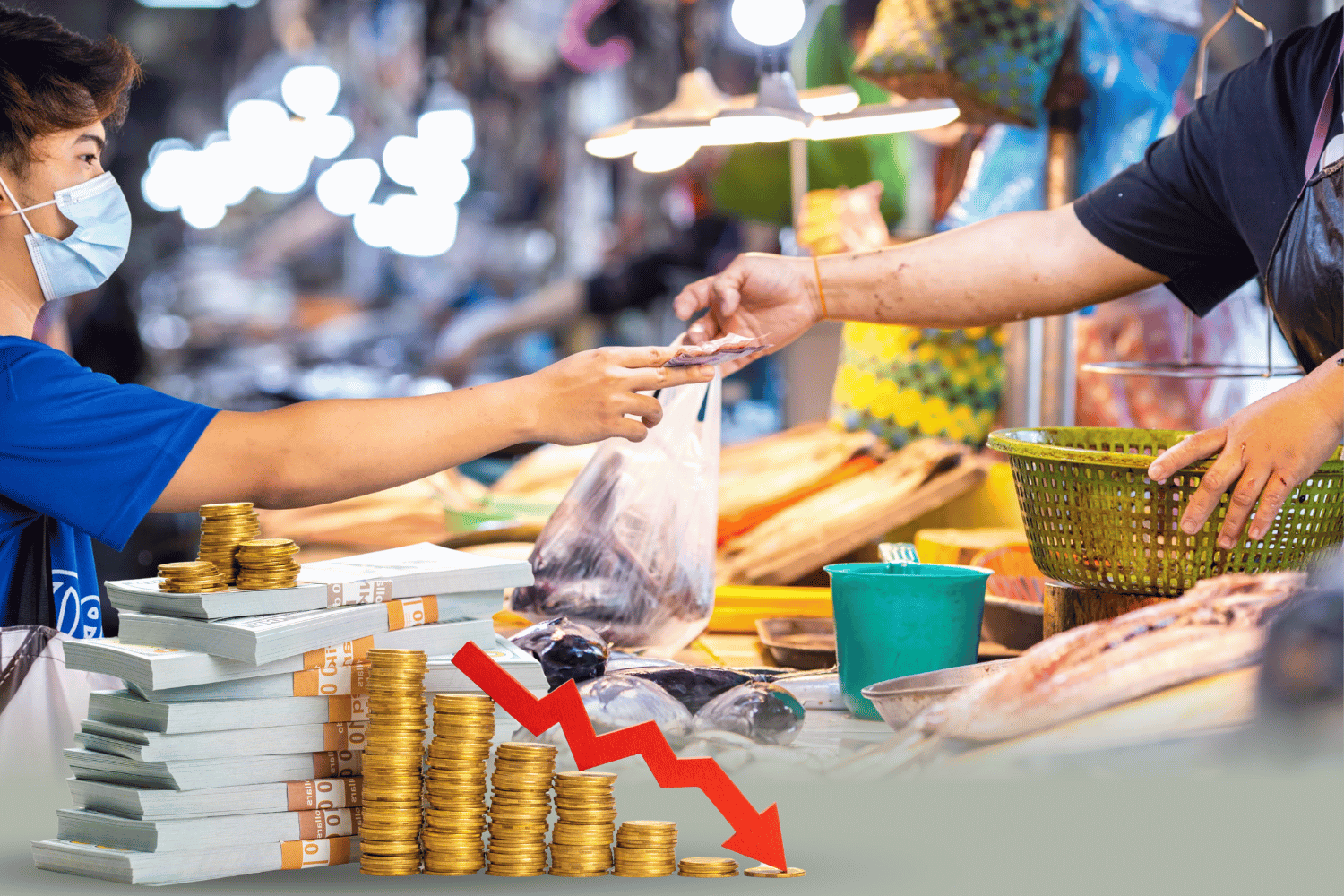
The economy grew 2.3% in the second quarter as weaker consumer spending, job losses, slower remittances, and lower public construction weighed on growth.
The Philippine economy lost momentum in the second quarter, growing just 2.3% from a year earlier as weaker consumer spending, fewer jobs, slower remittances, and a pullback in government construction weighed on growth.
The slowdown points to a more challenging environment for both households and businesses. When consumers tighten their spending, retailers, restaurants, manufacturers, and other businesses often see demand soften, prompting companies to be more cautious about hiring, expansion, and investments.
The Philippine Statistics Authority reported Friday that Gross National Income also slowed to 2.2% from 8% a year earlier.
Services remained the economy’s biggest growth driver, expanding 4.5%, while Agriculture, Forestry, and Fishing grew 2.7%. Industry, meanwhile, contracted 2.4%, reversing last year’s growth.
On a per capita basis, GDP grew 1.5%, while household spending rose 1.9%, both well below last year’s pace.
The Department of Economy, Planning and Development said softer domestic demand, job losses, lower remittances, and slower public construction weighed on growth, although government assistance, improving farm output, stronger manufacturing, and rising semiconductor exports offered some support. The department expects economic activity to improve in the coming months as infrastructure spending accelerates, business confidence strengthens, and efforts to attract more investments and expand trade gain traction.
READ: