Its architecture is designed to work with the Philippine climate at the time.
If you regularly pass through Carriedo and Avenida Rizal, chances are you have seen it without really seeing it.
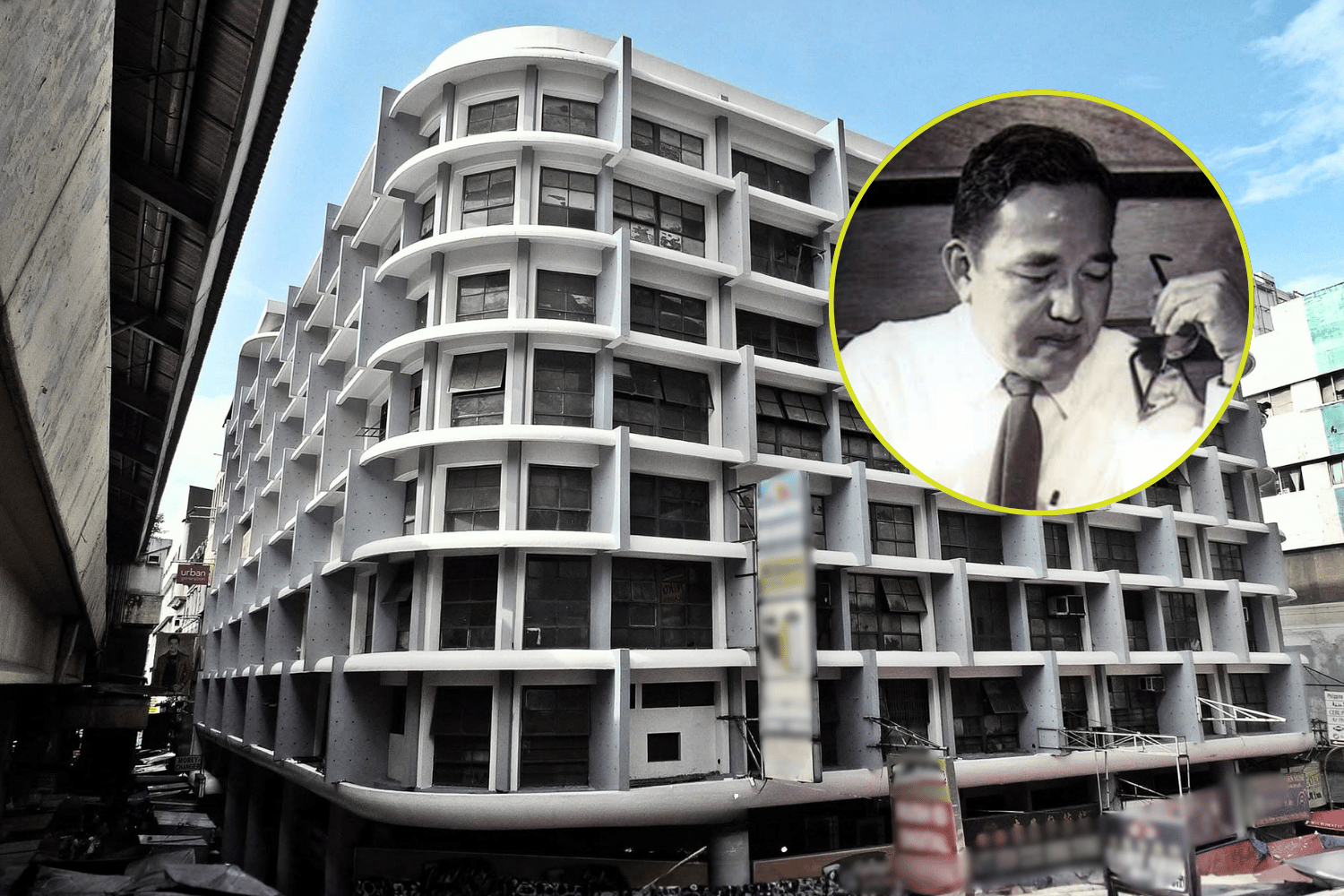
Behind the crowds, storefront signs and elevated tracks of LRT-1 stands an aging building with striking concrete slabs and geometric fins. It can easily disappear into the visual chaos of downtown Manila.
But look closer.
The Capitan Luis Gonzaga Building is not just another old commercial structure. Completed in 1953, it is a surviving example of post-war tropical modernism designed by National Artist for Architecture Pablo Antonio.
A National Artist designed it
Antonio was a pioneer of Philippine modern architecture who understood that buildings designed for Western climates could not simply be copied in a hot, humid and rainy country.
The Capitan Luis Gonzaga Building shows how he responded.
Its façade features concrete slab overhangs that function as sunshades, creating deep shadows to reduce direct sunlight and heat. Staggered vertical fins provide additional protection from sun and rain while allowing ventilation.
Curved concrete bands wrap around the building, giving the structure a streamlined appearance while emphasizing its prominent corner at Carriedo Street and Avenida Rizal.
It was architecture designed to work with the Philippine climate, especially during a period when air-conditioning was far from universal.
An older landmark stood here
The site already had an important architectural history.
Before World War II, it was occupied by the Kneedler Building, built in 1912 and regarded as the first multi-story reinforced-concrete building in the Philippines. It was also known for having a modern Otis elevator, an impressive feature at the time.
The building was severely damaged during the Battle of Manila in 1945. Eight years later, the Capitan Luis Gonzaga Building rose on the site as Manila rebuilt itself from the war.
Hiding in plain sight
Today, the elevated LRT-1 tracks and decades of commercial activity have obscured much of the building from street view.
Yet the structure survives.
Thousands may pass it without realizing that above the shops and behind the railway stands a work by one of the country’s greatest architects.
Sometimes Manila’s architectural treasures are not inside museums.
Sometimes they are buildings we pass every day without looking up.
READ: