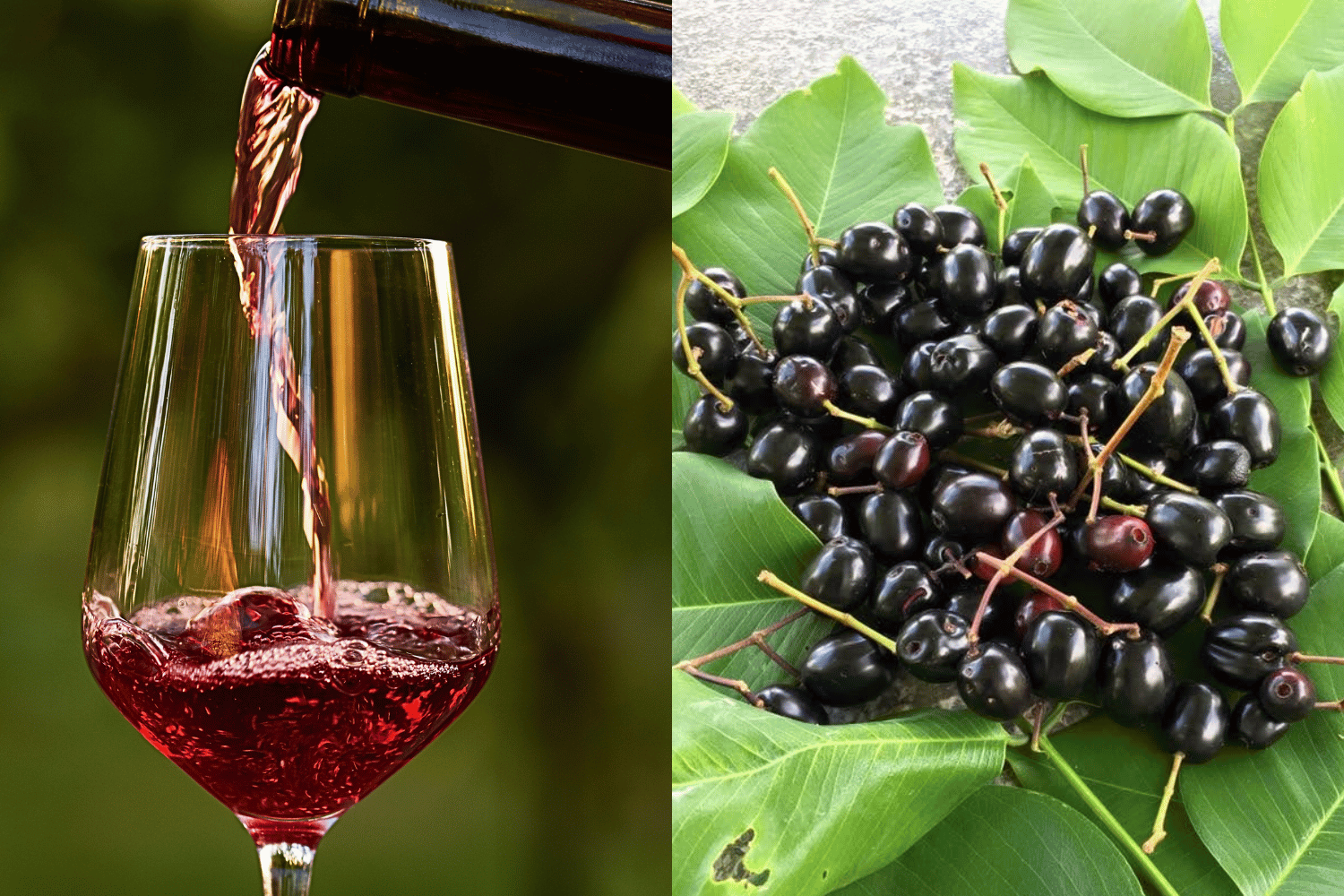
From backyard berries to premium bottles.
Every summer, countless ripe duhat fruits fall to the ground, staining sidewalks and children’s tongues a deep shade of purple. For most Filipinos, they’re simply nostalgic fruits picked from neighborhood trees. But inside each of those dark berries may lie one of the country’s most underrated premium products: wine.
While nations proudly export wines made from grapes, plums, berries, and cherries, the Philippines has long had its own distinctive vintage hiding in plain sight. Duhat wine—made from the fermented juice of the native Java plum—is slowly earning recognition among local wine enthusiasts, yet it remains largely overlooked despite possessing the qualities of a truly unique tropical wine.
A Filipino wine with character
Duhat wine is anything but ordinary.
Pour it into a glass and it immediately catches the eye with its deep ruby-purple color, a natural result of the fruit’s anthocyanins—the same antioxidants responsible for its rich pigmentation.
The aroma carries notes reminiscent of blackberries and ripe plums, while the taste balances sweetness with a pleasant tartness. A gentle tannic finish gives it structure, making it surprisingly sophisticated for a fruit wine. Most varieties contain between 10% and 13.5% alcohol by volume, placing them in the same range as many traditional table wines.
Unlike many sweet fruit wines that resemble juice, a well-made duhat wine has enough acidity and complexity to pair beautifully with Filipino cuisine. Its fruity character complements rich dishes like adobo, roasted meats, grilled pork, and even aged cheeses
Why it deserves more attention
The global wine industry has embraced fruits beyond grapes. Japan has its plum wines, Scandinavia produces berry wines, and many countries proudly market tropical fruit wines as part of their culinary identity.
The Philippines already has something equally distinctive.
Duhat grows abundantly across the country, particularly in Southern Luzon and parts of Mindanao. The fruit has been part of Filipino childhoods for generations, yet its value often ends at seasonal snacking.
Turning it into wine transforms a highly perishable fruit into a premium product with a longer shelf life and significantly higher market value. It also opens opportunities for farmers, cooperatives, rural entrepreneurs, and agritourism destinations eager to showcase local flavors.
A product ready for the world
Today’s consumers are increasingly looking for authentic regional products with compelling stories. Duhat wine has both.
It is unmistakably Filipino, naturally vibrant, and rooted in local agriculture. Some producers have even begun experimenting with modern variations, including honey-infused duhat wines that offer lighter, floral profiles, while others continue preserving traditional fermentation methods passed down through generations.
With thoughtful branding, improved production standards, and wider promotion, duhat wine could easily join products such as calamansi, tablea, and Philippine coffee as ambassadors of Filipino flavors abroad.
A toast to what could be
The Philippines has never lacked exceptional ingredients. What it has often lacked is the confidence to present them to the world.
Duhat wine proves that world-class products do not always have to come from imported grapes or centuries-old vineyards. Sometimes, they begin with a fruit that has quietly grown in Filipino backyards all along.
Perhaps the next great bottle worth uncorking isn’t from France, Italy, or Australia.
Perhaps it has been ripening on a duhat tree all this time.
READ:

As balimbing fruit slowly becomes rare, balimbing politicians become common
radar Lifestyle
May 29, 2026

EXPLAINER: Why Gen Z isn’t drinking like previous generations
radar Lifestyle
June 24, 2026

Discarded peels of breadfruit and marang might have anti-cancer properties
Nikko Miguel Garcia
May 29, 2026