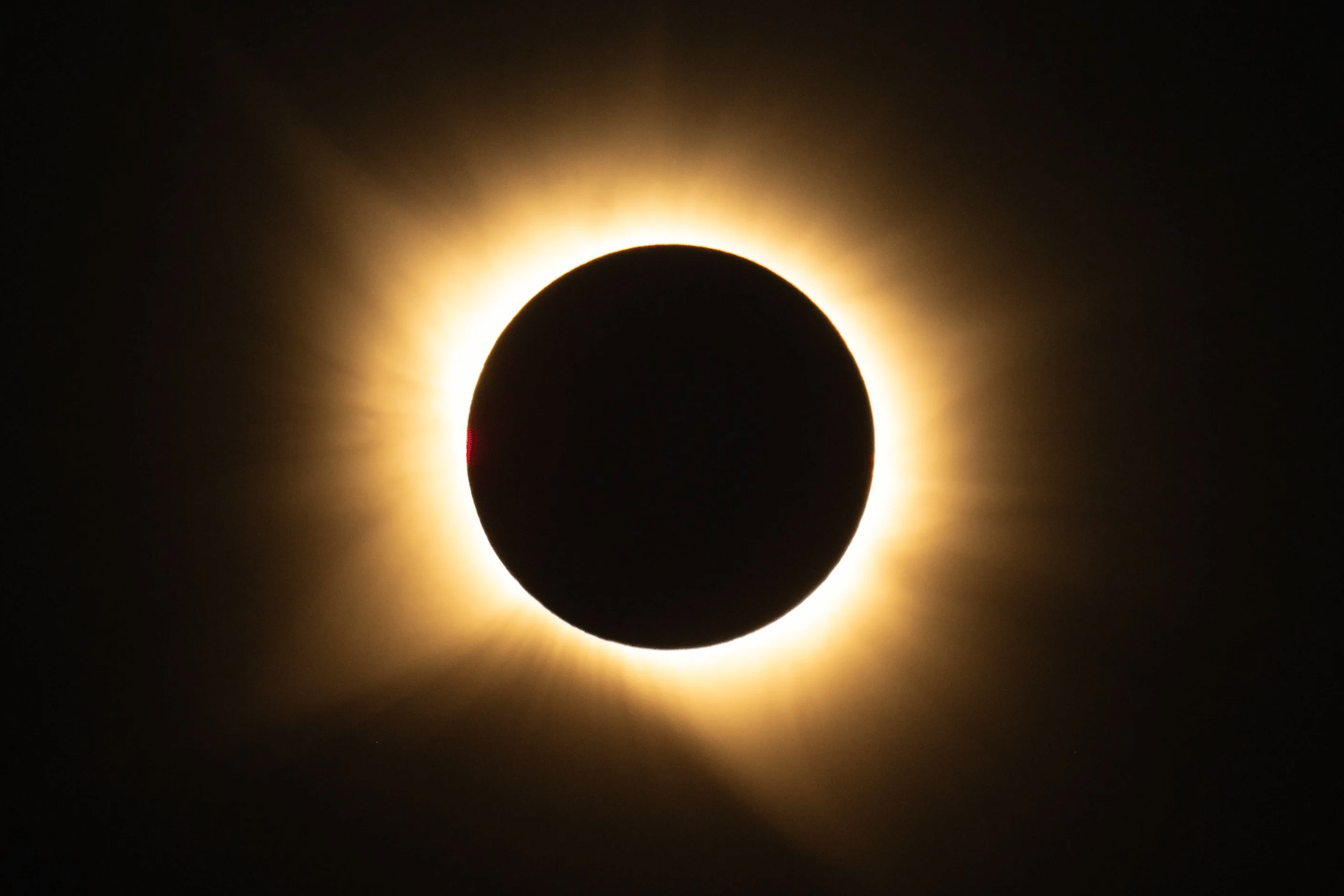
Areas where it will be fully visible include Aklan, Albay, Palawan, Romblon and Iloilo.
April 20, 2042, will bring a rare celestial event to the Philippines, with a total solar eclipse expected to cross parts of the country.
According to Norwegian-based astronomy website timeanddate, totality—the period when the moon completely blocks the sun—will last between one and five minutes, depending on the viewing location.
The path of totality will cross parts of Aklan, Albay, Palawan, Romblon, Iloilo, Masbate, Sorsogon and Camarines Sur.
A solar eclipse happens when the moon passes between the sun and earth, casting a shadow on Earth that blocks the sun’s light either fully or partially. There are three types of solar eclipses: partial, annual and total.
Total solar eclipses are relatively rare because the sun, moon and Earth must align closely enough for the moon’s apparent size in the sky to completely cover the sun.
The discussion comes as a total solar eclipse was witnessed on Aug. 12 across Greenland, Iceland, northern Russia and Spain.
NASA recommends using eclipse glasses or a handheld solar viewer when viewing the sun during the partial phases of a solar eclipse. Direct viewing without eye protection is safe only during the brief period of totality, when the moon completely covers the sun.
The Philippines last witnessed a total solar eclipse on Oct. 24, 1995, meaning the 2042 eclipse will come 47 years after that event.
For Filipinos, that means a 16-year wait. In the meantime, the country already had its own celestial spectacle this year, with a total lunar eclipse visible in the Philippines on March 3.
READ: