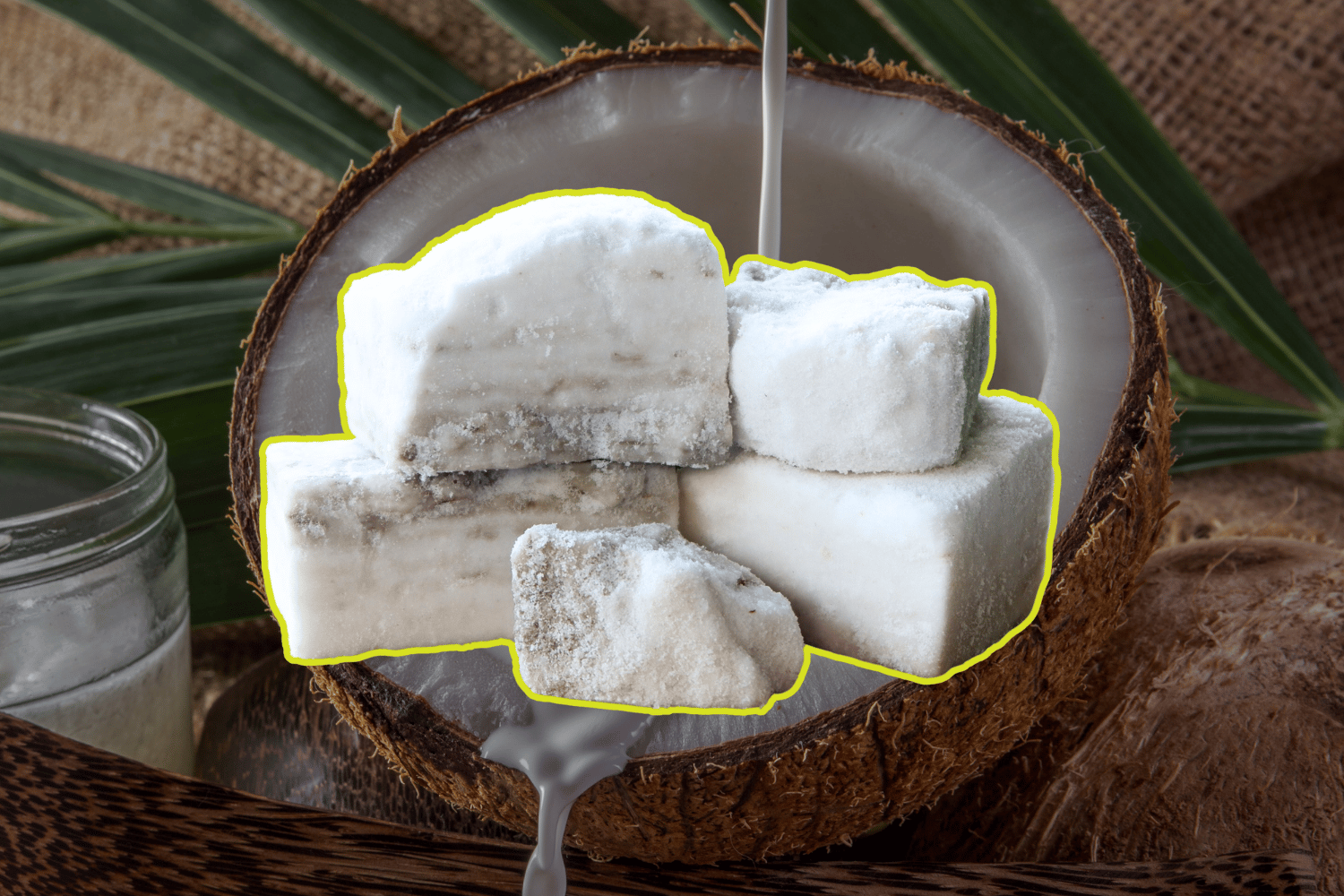
The greatest threat to tultul is the dwindling number of people who still know how to make it.
Imagine putting salt on your rice—not by sprinkling it, but by taking a solid brick and shaving a little off the top.
In Barangay Hoskyn in Jordan, Guimaras, this is tultul, also known locally as dukduk, a rare artisanal sea salt unlike the white crystals found in most Filipino kitchens.
Made into dense rectangular blocks called bareta, tultul is the product of a painstaking tradition passed down through generations. But today, only a few salt makers continue the centuries-old craft.
Slow Food’s Ark of Taste, an international catalog of endangered traditional foods, has recognized tultul as a heritage food worth protecting.
Salt made with gata
What makes tultul especially unusual is one very Filipino ingredient: coconut milk.
Fresh gata is incorporated during the cooking process, helping give tultul its distinctive mild, smoky and savory character.
Because the finished product comes in hard blocks, locals traditionally shave, grate or rub tultul over steaming rice and other dishes.
In leaner times, it could even become ulam itself—a little tultul eaten with hot rice to give an otherwise simple meal its salty, smoky flavor.
From driftwood to salt
Making tultul can take days.
Salt makers gather driftwood and other materials washed ashore, then burn them while repeatedly soaking them with seawater. The process eventually produces highly saline ash known as gasang.
The ash is placed into filters and flushed with seawater to extract a concentrated brine called tasik.
The brine is then boiled for hours as the water evaporates. Coconut milk is added during cooking until the mixture eventually thickens and solidifies.
Once cooled, the massive slab is cut by hand, traditionally using saws, into the brick-like blocks that are sold and eaten.
Production is also largely limited to the dry season, making tultul an extremely labor-intensive salt.
A tradition running out of hands
The greatest threat to tultul may not be a lack of seawater or coconut milk. It is the dwindling number of people who still know how to make it.
Only a handful of traditional salt makers, including members of the Padojenog and Ganila families, have continued the craft in Hoskyn.
The intense physical labor, seasonal nature of production, changes affecting coastal resources and competition from inexpensive commercially produced salt have made the livelihood increasingly difficult to sustain.
Meanwhile, younger generations have more employment opportunities, leaving fewer people willing to inherit such demanding work.
And when a salt maker stops, more than a product can disappear.
Making tultul requires knowledge accumulated through generations: which materials to gather, how the ash should be prepared, when the brine is concentrated enough, how much coconut milk to add and when the salt has reached the right consistency.
These are skills learned not simply from recipes, but through years of watching and doing.
Unless a new generation takes up the craft, Guimaras could eventually lose one of the Philippines’ most unusual culinary traditions—a centuries-old heritage slowly disappearing, one block of salt at a time.
READ:
This Binondo mami house has been feeding Manila since 1930
Top Dagohoy
August 8, 2026
Manila Copal, a natural resin, may soon disappear forever
radar Lifestyle
June 28, 2026

The humble talinum was a survival crop during World War II
Top Dagohoy
August 12, 2026