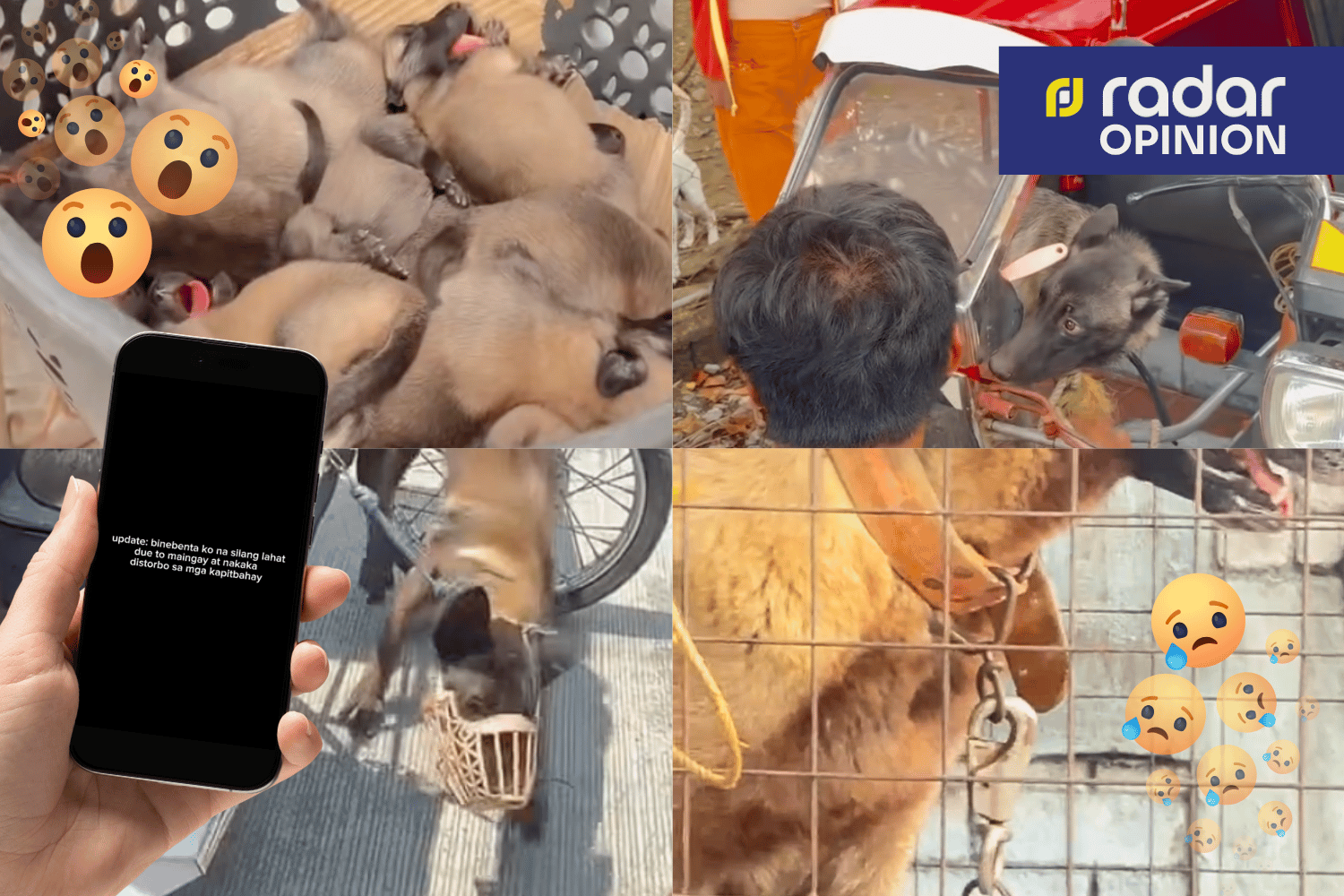
The creator traveled across Pangasinan to buy dogs, with more breeds delivered from Pampanga, including Belgian Malinois, wooly Husky, aspin-Siberian Husky mix, Dalmatian, Rottweiler, and Dutch Shepherd, seemingly all in one spree. Some arrived dehydrated, carried in what looked like a laundry basket instead of a carrier. He ran out of cages at some point, so the rest stayed on leashes.
“Magpapatayo na siguro ako ng kennel farm neto,” he joked at one point, a line that plays less like a joke and more like proof that none of this had been thought through.
The video ends with him announcing he’s selling the dogs, citing foul odor and noise complaints from the neighbors. That’s the detail that should sit heaviest with anyone who has ever loved a dog: these animals weren’t given up because someone realized they deserved better care. They were given up because the neighbors complained, and the complaint wasn’t in the plan.
Responsible pet ownership isn’t impulsively buying dogs because you can afford to. It’s preparing a home, a routine, and the patience for an animal that never asked to be someone’s content idea. It’s asking whether you can keep a dog before asking whether owning six of them makes a good thumbnail.
Content creation carries the same responsibility, especially when animals are the subject. A camera doesn’t excuse a creator from the planning any pet owner is expected to do beforehand: knowing where each dog would live, whether the household could handle it, what happens if a neighbor objects. None of that requires an audience to figure out. It requires it before the purchase, not after the upload.
The creator later clarified in the comments that the footage was filmed four to five months before it was posted. He said he personally returned some of the dogs by tricycle “to make sure none of them would be harmed,” and that it was the complaints, not a change of heart about the purchases, that pushed him to return them.
Even that explanation gives away the point that the dogs were never the priority. Getting a viral video was.
A puppy that arrives dehydrated in a laundry basket didn’t sign up to be a prop, and neither did the other dogs left on a leash because there weren’t enough cages to put them in.
If the plan was to give them a good home, the video would have shown one. Instead, it showed a man scrambling to offload what he could no longer manage, framed as a lesson learned only after it stopped being convenient. The dogs are the ones who paid for it.
READ: