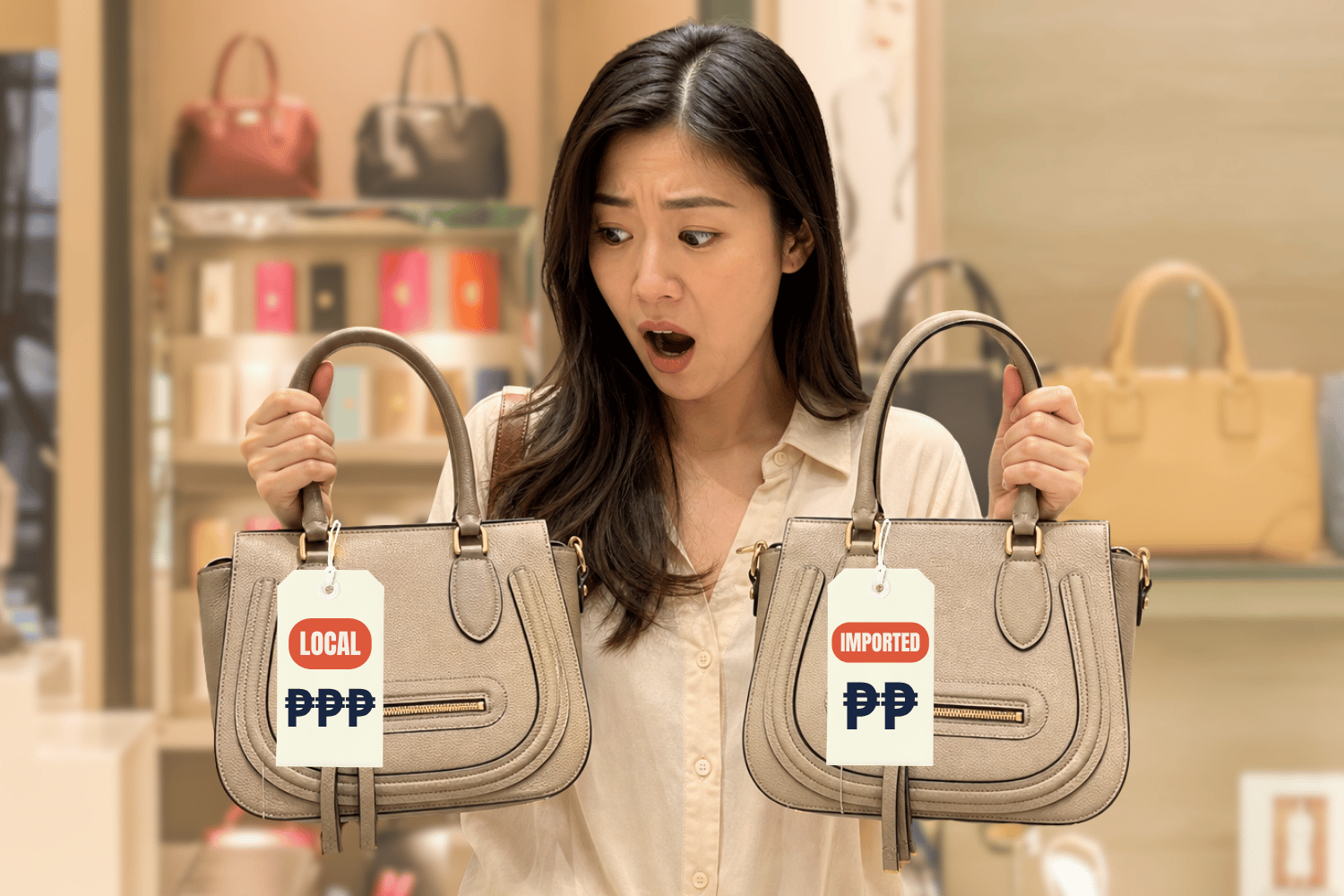
A locally made product in the Philippines can actually be more expensive.
You want to support Filipino businesses. Then you see a locally made shirt selling for ₱1,500 while a similar piece from a global chain costs ₱700.
It seems backwards. The imported shirt traveled thousands of kilometers. The local one was made here. So why can “support local” sometimes cost more?
That question gained traction on Threads after pau.macc posted: “i REALLY want to support locally made products pero bakit naman kasi sobrang mahal??”
The simplest answer is that small Filipino businesses and multinational brands are operating on completely different economies of scale.
Entrepreneur Shang explained it in the thread: “Big manufacturers buy raw materials in massive quantities, so naturally, they get much lower prices per unit.” They can negotiate directly with suppliers, automate production and spread overhead across thousands or millions of products.
A small local brand may produce only hundreds. Worse, Shang noted that some entrepreneurs buy raw materials at “retail or near-retail prices” because they cannot afford suppliers’ minimum order quantities.
But scale is only part of the story.
The Philippines also has relatively high electricity costs compared with many Southeast Asian manufacturing competitors. For businesses running sewing machines, ovens, refrigeration, air-conditioning or other equipment, those utility bills eventually become part of the price consumers pay. The Philippine Daily Inquirer has reported manufacturers being squeezed by rising production costs, including electricity.
Then there is logistics. Being “local” doesn’t necessarily mean the entire supply chain is nearby. BusinessWorld has documented the country’s costly logistics environment, particularly in an archipelago where products and materials move through trucks, ports and inter-island shipping.
Many Philippine-made products also rely on imported inputs. A garment may be designed, cut and sewn locally while its fabric, dyes, zippers or other components come from abroad. Those inputs can carry international freight, customs-related expenses and taxes, including the Philippines’ 12% VAT where applicable, before production even begins.
Small legitimate businesses must also shoulder registration, permits, taxes, labor and regulatory compliance. Moving from online selling into physical retail can add rent or consignment charges and other store expenses.
The small businesses replying to the Threads discussion illustrated the problem firsthand. Molinomicrobakery said its higher prices come from ingredients, small-batch production and overhead such as utility bills and sanitary tools. mscookie.ph similarly pointed to handmade production and the continuing rise in ingredient and material costs.
Meanwhile, entrepreneur Dijo Semaan shared a different experience. When developing local clothing brand HINGA, he initially estimated prices at ₱1,000 to ₱1,200. After repeatedly calculating expenses, he said the product could be sold at around ₱700, with discounts still possible. The brand uses linen-cotton fabric and coconut buttons.
There is another uncomfortable side to the debate. One commenter argued that high local prices also reflect “the reality in our economy”—that Filipinos are underpaid. A product can be reasonably priced from the maker’s perspective and still feel painfully expensive to the average worker.
That distinction matters.
A ₱1,500 locally made shirt isn’t automatically overpriced simply because a multinational sells one for ₱700. As Shang wrote, “The economics are completely different.”
Consumers still have every right to demand quality and value. “Support local” should never become an excuse for unjustifiable markups.
But sometimes you’re not paying more because something was made locally.
You’re paying more because making something small-scale in the Philippines can actually be expensive.
READ:

ANALYSIS: Can an Indian consumer goods company take Filipino brands regional?
Kenneth M. del Rosario
August 10, 2026

Local shapewear brands offer right support and comfort without the high price
radar Lifestyle
June 16, 2026

Language and culture signal class better than expensive logos
Top Dagohoy
August 8, 2026