There’s an almond-like nut hiding inside.
You’ve probably seen them scattered on sidewalks, school grounds and beaches: green or reddish oval fruits falling from the sprawling branches of a Talisay tree. Most of us stepped over them, kicked them aside or swept them away as garden litter.
What many Filipinos may not realize is that there is food hiding inside.
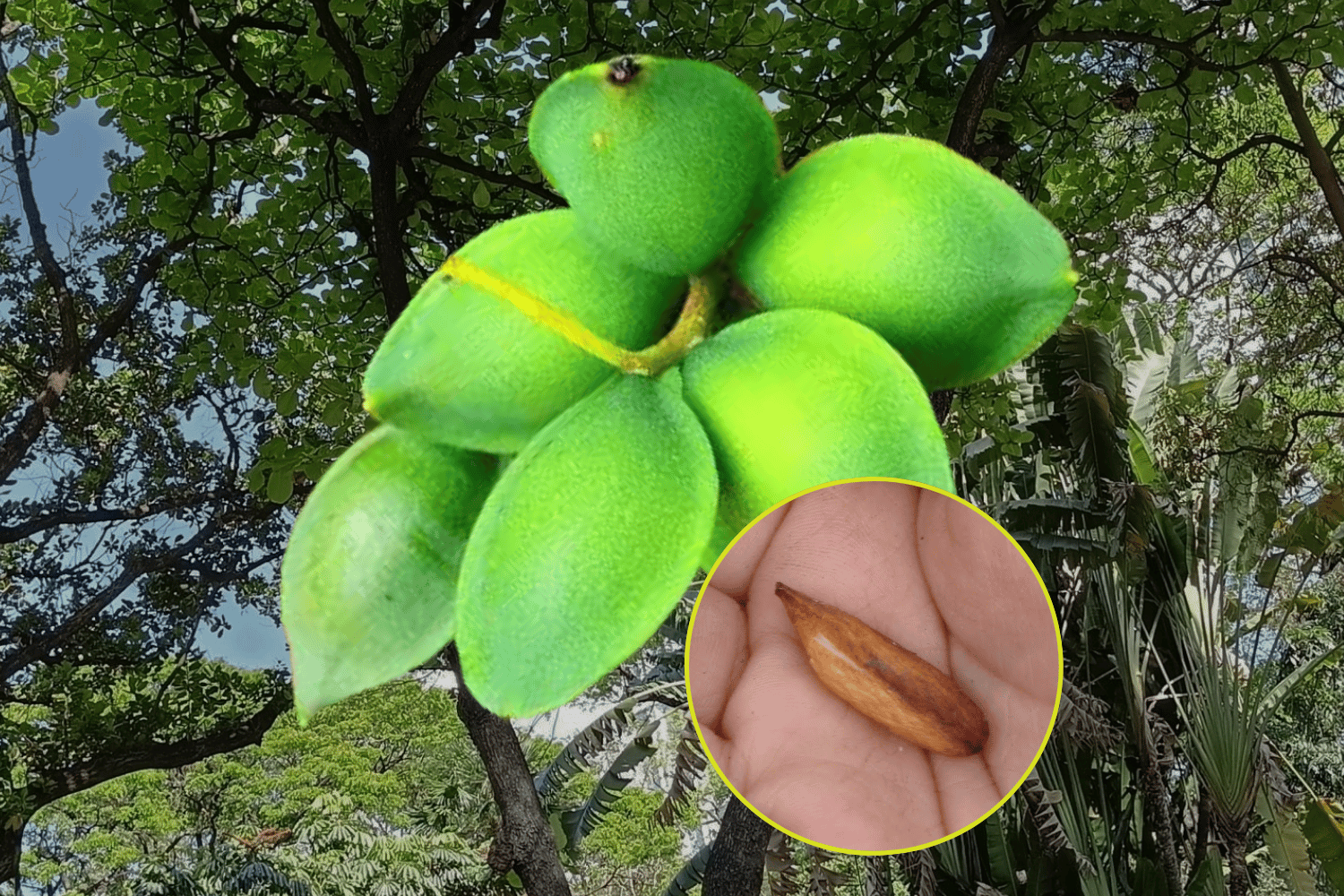
The Talisay, scientifically known as Terminalia catappa, is also called tropical almond, Indian almond or sea almond—and both its ripe fruit and inner kernel are edible.
When mature, the fruit usually turns yellowish to reddish. Beneath its skin is a thin layer of fibrous flesh that can be eaten raw. It has been described as mildly sweet to slightly acidic.
But the real surprise is deeper inside.
Remove the flesh and you reach an extremely hard, woody shell. Crack it carefully and it reveals a small, elongated kernel that resembles—and tastes somewhat like—an almond.
It isn’t just edible. Studies of Terminalia catappa kernels have found them rich in oil and protein, with unsaturated fatty acids such as oleic and linoleic acids among their major fat components. The kernels also contain minerals and other nutrients.
They can be eaten raw or roasted, while researchers have explored their potential for flour, baked products and edible oil. The biggest obstacle to turning Talisay into an everyday snack is obvious to anyone who has tried opening one: extracting the tiny kernel from that stubborn shell takes work.
Perhaps that explains why something growing so visibly around the Philippines rarely makes it onto our tables.
For generations, many Filipinos have known Talisay primarily as a hardy shade tree—the enormous leaves, wide canopy and fruits littering the ground familiar sights in parks and coastal communities.
All along, some of those fallen fruits were carrying tiny “almonds” inside.
Sometimes, food is not hiding in some exotic forest.
Sometimes, we’ve been sweeping it off the sidewalk.
READ: